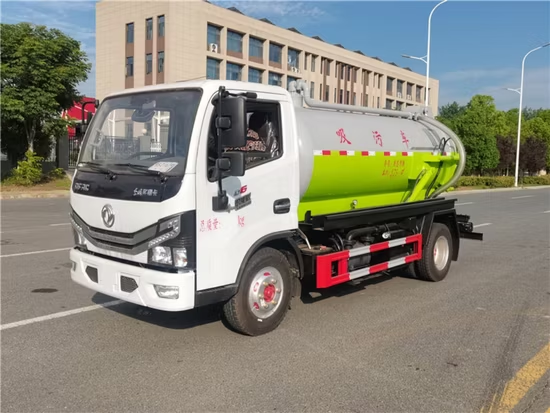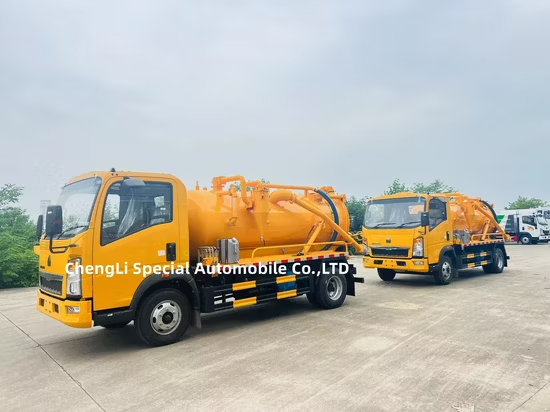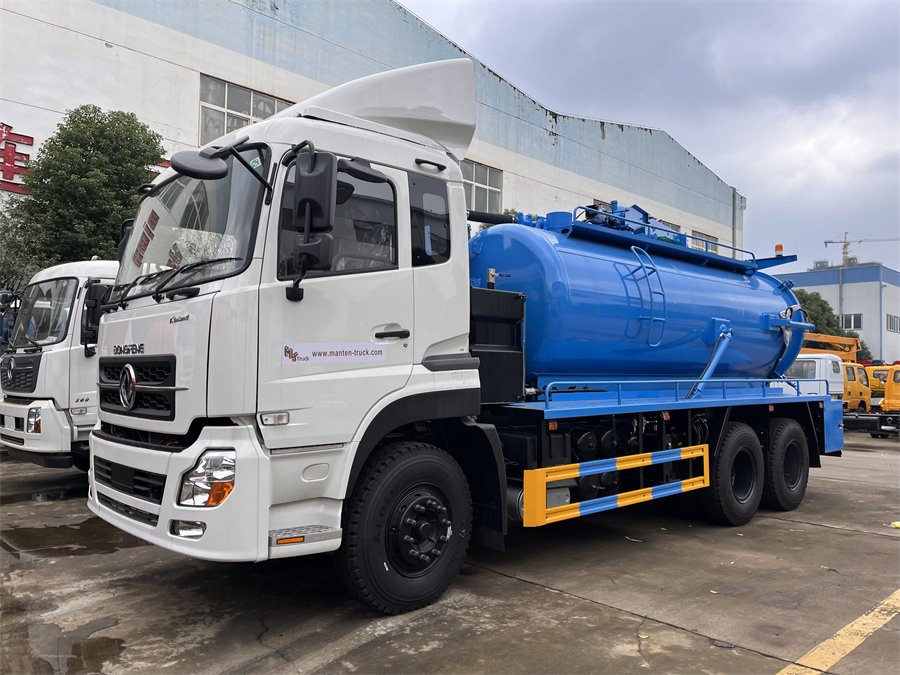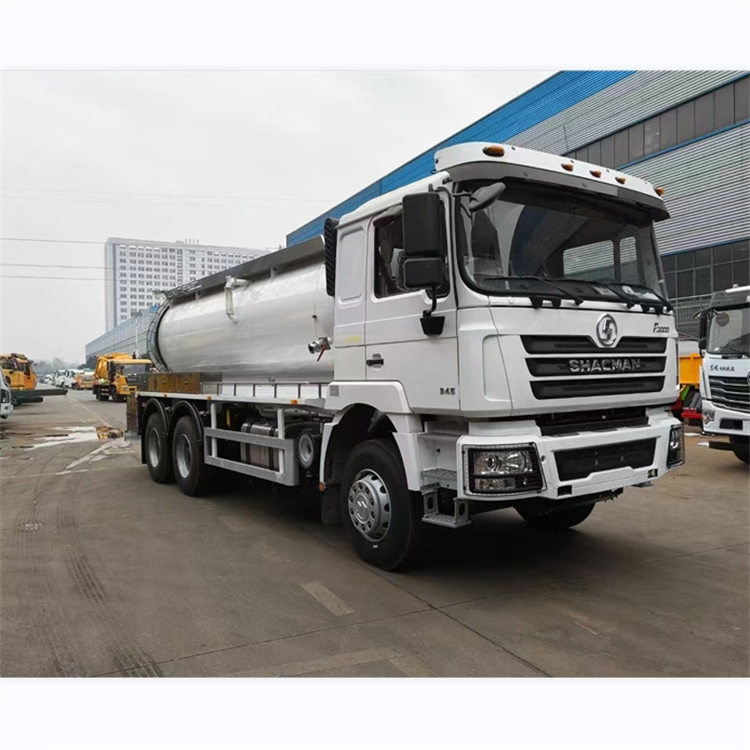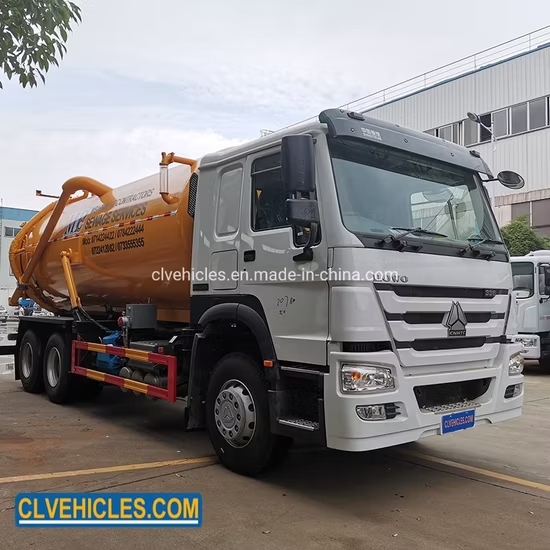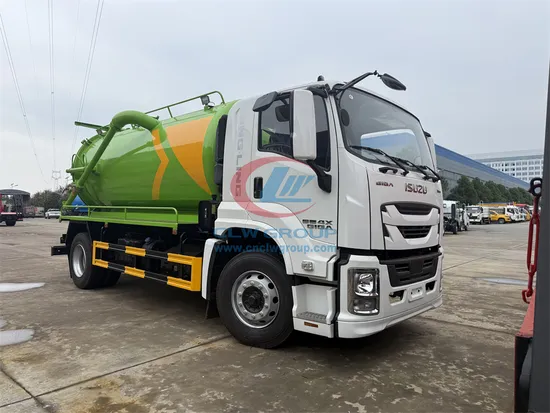
Read a vacuum tanker specification in four groups: the tank, the vacuum pump, the hoses and the discharge equipment. Each group answers a different question. Tank volume says how much waste one trip carries. Pump figures say how fast and how deep the truck can suck. Hose data says how far it reaches, and discharge equipment says how it empties.
Tank: volume, material and thickness
Start with tank volume, steel grade and plate thickness, each on its own line. The Isuzu Giga FTR 4x2 tanker has a 10,000 or 12,000 litre tank in 6 mm Q345 steel. The Dongfeng 4x2 5,000 litre truck uses Q345 manganese steel. The Dongfeng 6x4 tanker holds 16,000 to 18,000 litres in carbon steel. Volume does not tell you the legal load. Sludge and sand weigh more than water, so check gross weight and axle limits on your roads.
Vacuum pump: identity and performance
The pump line should name the maker, model, air flow and maximum vacuum. A brand alone is not enough. The Isuzu Giga FTR page gives a full set: 12 m3 per minute air flow, 95 percent maximum vacuum, 1000 rpm pump speed and 7 m suction depth. The Shacman 6x4 tanker offers an Italy BP, Weilong or Chinese pump, with a 93 percent vacuum rate. Where a quote gives two pump choices, the final order must name one. Do not compare the pump brand of one truck with the pump count of another.
Hoses: length and suction depth differ
Hose length is the physical length of the supplied suction hose. Suction depth is how far below the truck the pump can lift waste. They are different figures. A hose that runs along a lane and then down into a pit uses both. The Dongfeng 6x4 jetting truck comes with a 10 m, 102 mm PVC suction hose. The Shacman 6x4 tanker uses wire-strengthened hose. Ask for hose length, diameter, number of sections and coupling type. If the pits you serve sit far from the road, ask for extra hose sections.
Discharge: how the tank empties
Discharge equipment varies more than many buyers expect. Some tanks push waste out with air pressure. Others tip the tank and open a hydraulic rear door. The Shacman 6x4 tank tips 40 to 45 degrees. The Dongfeng 6x4 tanker has hydraulic tipping, a hydraulic rear door, water-gas and oil-gas separators and an anti-overflow valve. Separators and overflow valves protect the pump. They are not extra tank space. Thick sludge needs tipping and a wide door, while liquid septic waste can flow out by gravity or air pressure.
Put the four groups in one table
| Group | Fields to request | Keep separate from |
|---|---|---|
| Tank | Volume, steel grade, plate thickness | Legal payload and pump speed |
| Vacuum pump | Maker, model, air flow, maximum vacuum, drive | Tank volume and hose length |
| Hoses | Length, diameter, sections, couplings | Suction depth |
| Discharge | Tipping angle, rear door, air pressure discharge, outlet valve | Suction side equipment |
| Protection | Separators, overflow valve, level alarm, sight glass | Tank capacity |
Add your own job details to this table: the type of waste, the depth of the pits and the distance from road to pit. That turns a list of parts into a schedule you can compare across quotes.
Vacuum tankers to compare
- Isuzu Giga FTR 4x2 Vacuum Tanker 10000 or 12000 Litre, 4HK1 205hp: full pump data and a tipping tank.
- Dongfeng 4x2 Septic Tank Suction Truck, 5,000 Litre Sewage Tanker, 120 hp: overflow guard, sight glass and level alarm.
- HOWO Light 4x2 Vacuum Truck, 5 m3 Elliptical Tank, Moro Pump: narrow streets and pit latrines.
- Dongfeng 6x4 Vacuum Tanker, 16-18 m3 Sewage Tank, 260 hp Cummins: separators and a hydraulic rear door.
- Shacman 6x4 Vacuum Tanker, 380 hp Weichai, Tipping Sewage Tank: pump choice and a 40 to 45 degree tipping tank.
- HOWO 6x4 Septic Tank Truck, 16,000 Litre Tank, 336 hp, 10-Speed: large septic tanks and sumps.
- Dongfeng 6x4 Jetting and Vacuum Truck, 13 m3 Sewage + 8 m3 Water, 290 hp: sewer cleaning with jetting and suction.
See all vacuum tankers, and refuse trucks for solid waste. Read how a vacuum truck works and the vacuum tanker buying guide. For a quote with a full pump and hose schedule, see how to buy from the CLW factory.