Before you order a vacuum tanker, decide five things and get each one in writing: the tank volume that suits your chassis and the streets you work in, the vacuum pump and its rated airflow, the suction hose length and diameter, whether you need suction only or high-pressure jetting as well, and the tank build with its rear door and overflow protection. Then check where you will discharge the waste and how you will get spare parts.
Names differ by region. In Kenya, Uganda, Tanzania and Rwanda the truck is usually called an exhauster or exhauster truck. In South Africa, Zimbabwe, Botswana, Zambia and Malawi it is often called a honey sucker, while tenders use vacuum tanker. In Nigeria and Ghana buyers often say sewage truck or septic truck.
1. Tank size, chassis and site access
A bigger tank means fewer trips to the disposal site, but only if the truck can reach the septic tank or pit latrine. Narrow township lanes, soft ground and tight corners favour a short 4x2. Choose the chassis for the full weight of sludge, tank and pump, and stay within the axle limits in your country. As a rough guide:
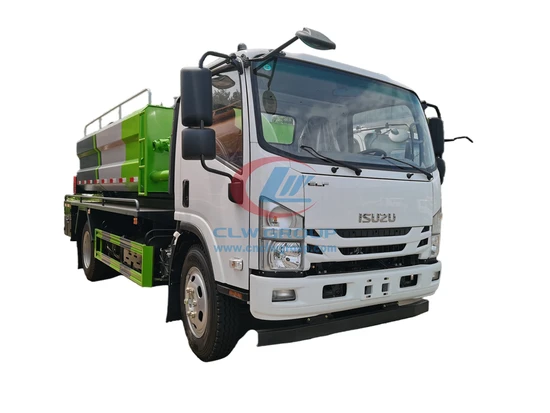
- Light 4x2, about 3,000 to 6,000 litres: household pits and septic tanks in narrow streets, such as the Dongfeng light 4x2, 3,000 to 5,000 litres (US$12,000-14,000) and the Qingling Isuzu QL1070 (US$8,692-32,307).
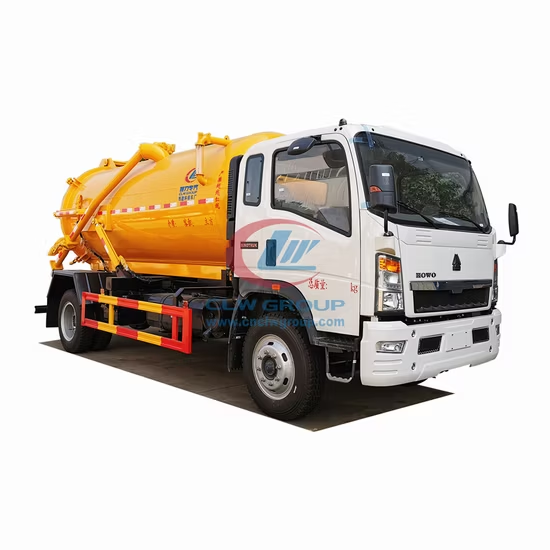
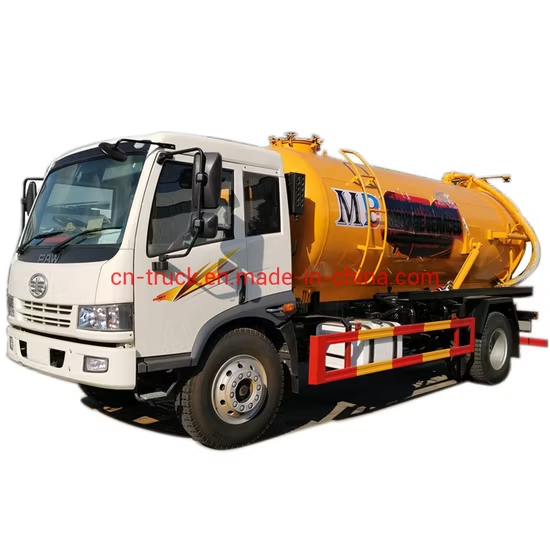
- Medium 4x2, about 6,000 to 16,000 litres: town councils and contractors, such as the Sinotruk HOWO 4x2, 10,000 litres (US$25,000-35,000) and the FAW 4x2, 6,000 to 10,000 litres (Price on request).
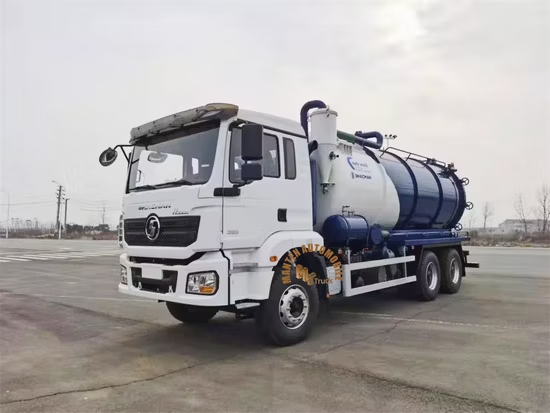
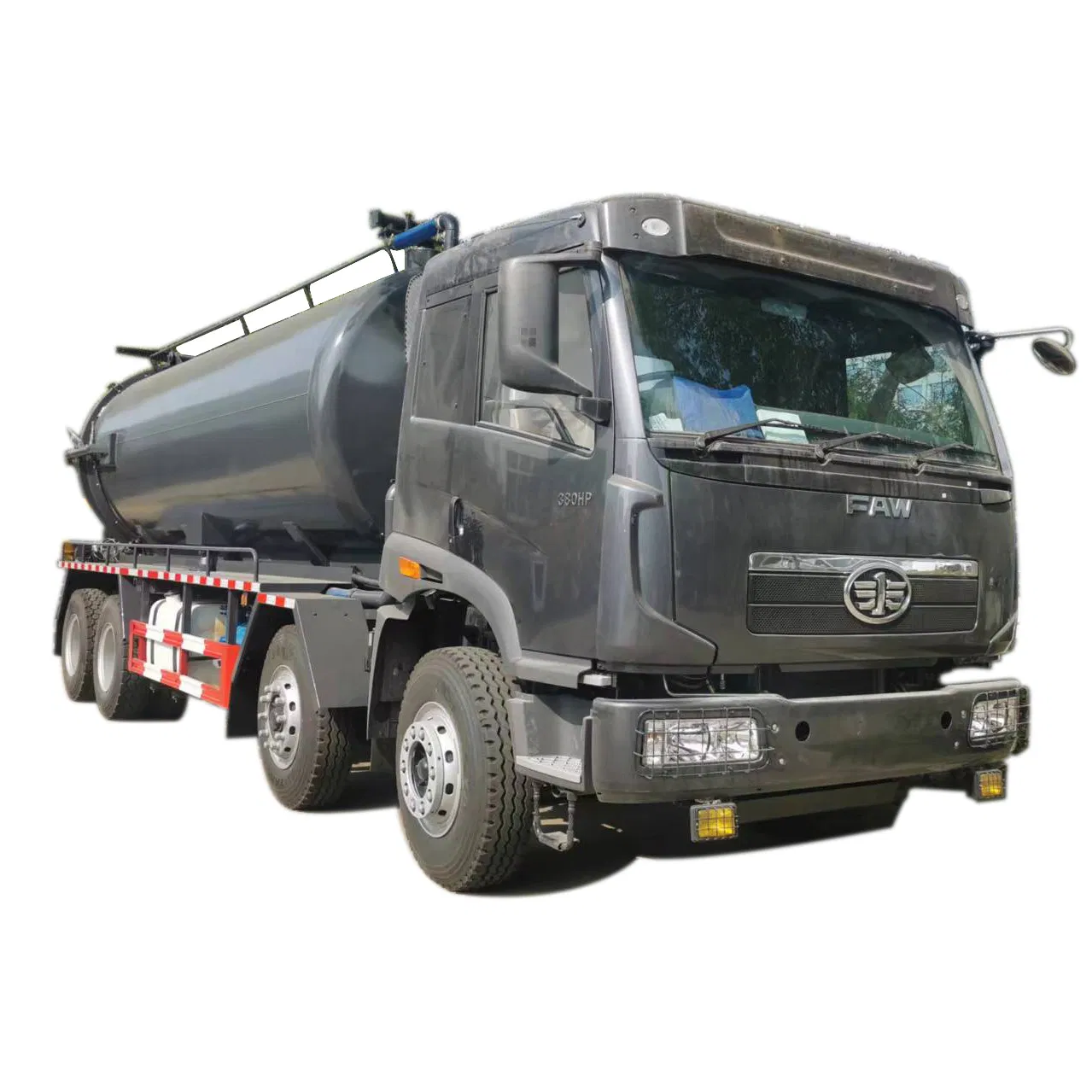
- 6x4 and 8x4, about 15 to 24 m3: large septic systems, treatment works and long runs to the disposal site, such as the heavy 6x4, 15 to 20 m3 (US$39,500-42,800) and the FAW 8x4, 24 m3 (Price on request).
2. Vacuum pump and airflow
The vacuum pump is the working heart of the truck. It is driven from the engine through a PTO and creates the vacuum that pulls sludge into the tank. Pumps differ in make, type, rated airflow and maximum vacuum, and these decide how fast the tank fills and how well it handles thick sludge. Ask for the pump make, model and rated airflow in the quotation, whether the pump is air-cooled or water-cooled, and whether a moisture trap or secondary shut-off protects it from liquid carry-over.
3. Suction depth, hose length and diameter
Suction lift is limited by physics, so a deep pit or a truck parked far from the tank will empty slowly or not at all. Measure the usual depth and the distance from where the truck can park, then ask:
- What suction depth is the truck rated for with this pump?
- How many metres of suction hose are supplied, in what diameter, and with which couplings?
- Is there a hose rack or tray on the truck, and can extra hose lengths be added?
Wider hose moves thick sludge better but is heavier to carry along a lane, so match it to how your crews work.
4. Suction only, jetting or combined suction and pressure
A suction-only truck empties pits and septic tanks. A jetting truck adds a clean water tank and a high-pressure pump with a hose reel to clear blocked sewers and drains, as on the Isuzu 700P jetting vacuum tanker (US$35,000). A combined suction and pressure truck, such as the Dongfeng 8x4 suction and pressure unit (US$138,800), is a specialist machine for municipal and industrial work. Buy jetting only if you will clean drains, since it adds cost and maintenance.
5. Tank steel, rear door and tipping
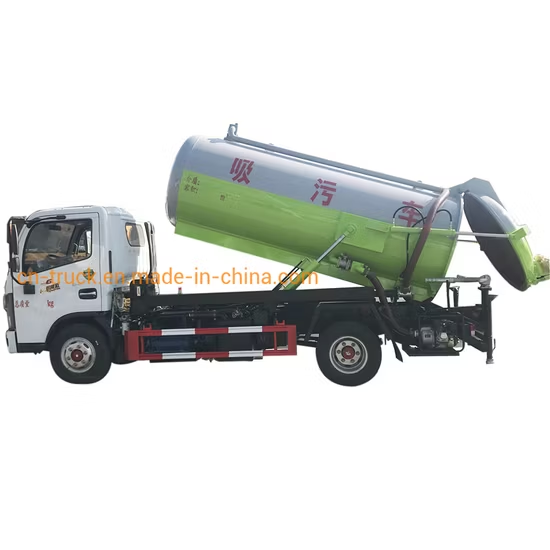
Sewage is corrosive and carries sand and grit, so tank build matters. Ask for the shell and end plate thickness and the steel grade, the internal coating, and the number of baffles. A rear door that opens fully, with hydraulic tipping of the tank, lets you clear thick sludge and sand instead of digging it out by hand. Check how the door is sealed and locked.
6. Overflow protection and controls
- A float valve or overflow protection that stops sludge reaching the pump when the tank is full.
- A level gauge or sight glass you can read from the working side.
- Vacuum and pressure gauges, a relief valve, and controls placed where the operator can see the hose.
- A wash-down tap or hand washing water for the crew.
7. Discharge, disposal site and local rules
Find out where you are allowed to discharge before you buy: a treatment works, a disposal pond or a sewer manhole. Check the discharge valve size and coupling that the site accepts. Emptying businesses may need a waste transport or operating licence, so check with your local authority. Confirm RHD or LHD on the drive side by country page; the Kenya and South Africa pages give a starting point.
8. Service and spare parts
CLW builds the tank and fits the pump and pipework on a bought-in chassis from HOWO/Sinotruk, Dongfeng, FAW, Isuzu or Qingling Isuzu. Chassis parts come through the chassis dealer network; for the body, ask for a spare parts list with the quotation: pump vanes or seals, valves, gaskets, gauges and suction hose. Choose a chassis brand already serviced in your area.
Prices and next steps
Prices shown are reference prices (FOB China, ex-factory list). The final price depends on chassis, tank, pump, jetting, fittings, drive side and shipping, and is fixed in the written quotation. See the vacuum tanker price guide, browse all vacuum tankers, or compare with water bowsers and refuse trucks. Read how to buy, and send your answers to the questions above through the contact page.