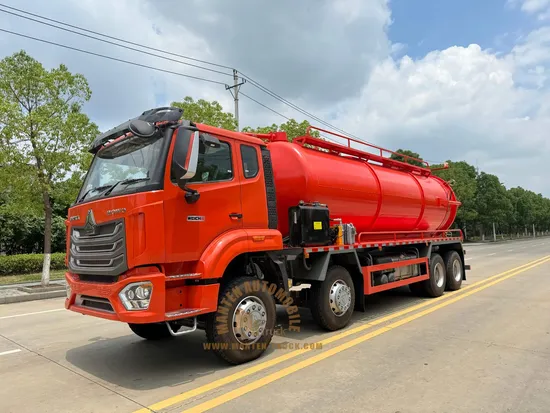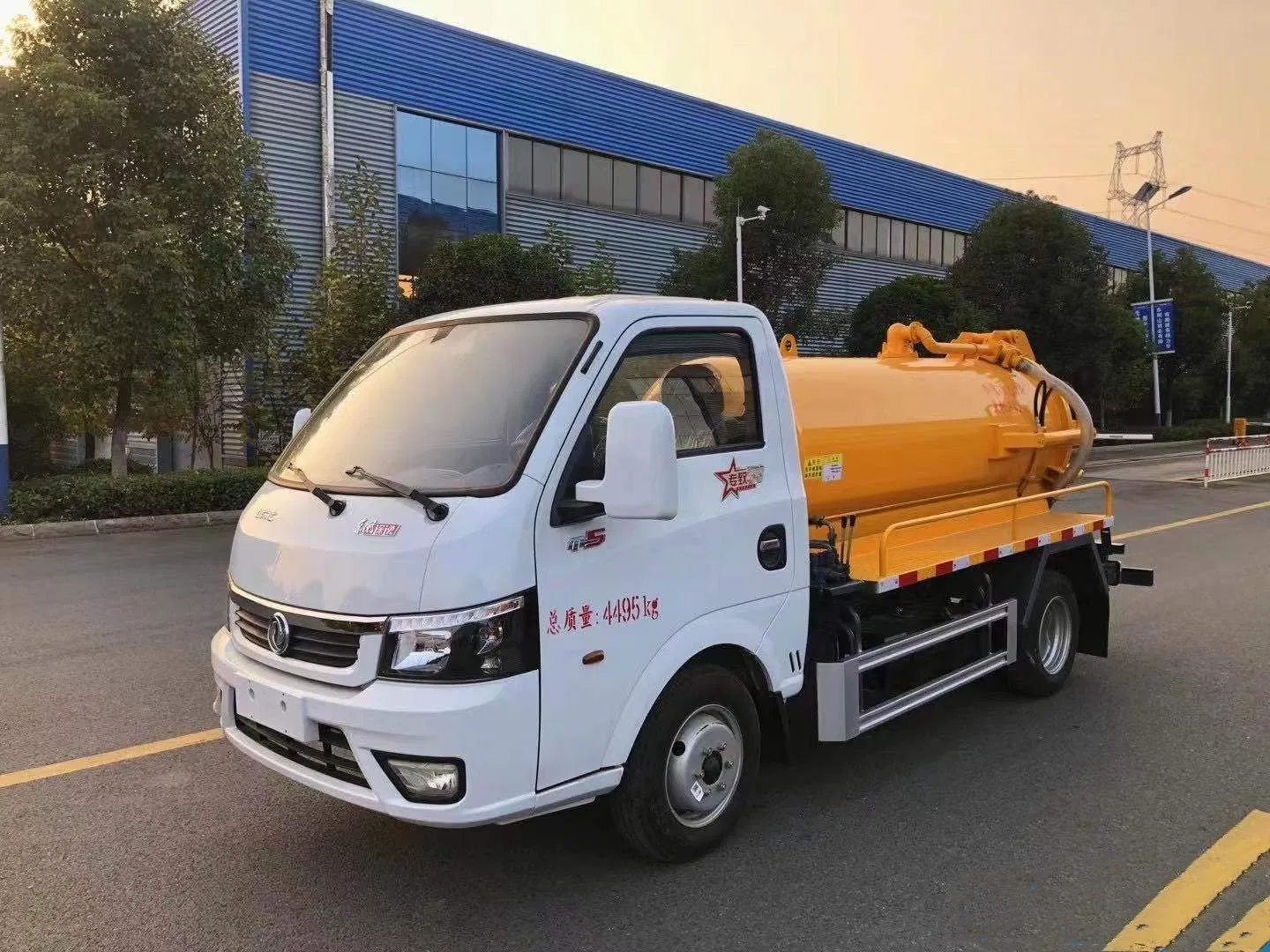
A vacuum truck works by pumping air out of a sealed steel tank. The pressure inside drops, so the outside air pressure pushes liquid and sludge up the suction hose into the tank. The vacuum pump is usually driven by the truck engine through a power take-off (PTO). To empty, the pump blows air back in, or the tank tips and the rear door opens.
The same truck goes by several names. In East Africa people often call it an exhauster or a honey sucker. Engineers call it a vacuum tanker or a sewage suction truck. All of these work in the same way.
The main parts
- Sealed tank. Usually Q235 or Q345 carbon steel, 4 to 8 mm thick. The tank must hold a vacuum without leaking or collapsing.
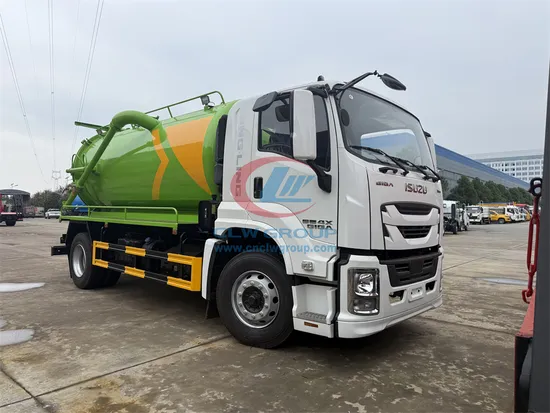
- Vacuum pump. CLW trucks use makes such as Moro, Jurop, BP or Weilong. The Isuzu Giga FTR truck below has a pump that moves 12 m3 of air per minute at 1,000 rpm.
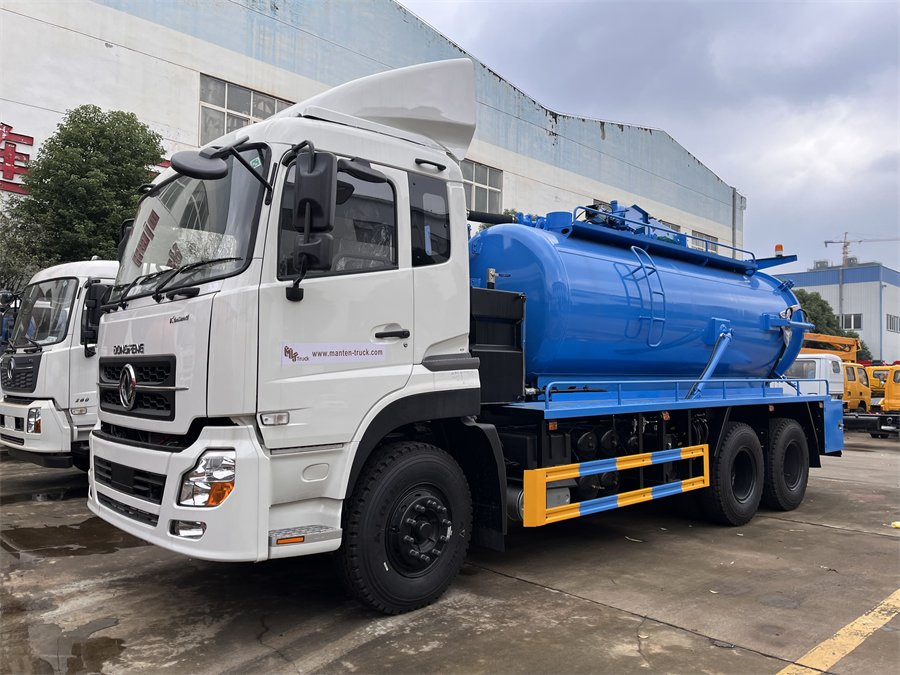
- PTO and drive shaft. They carry engine power from the gearbox to the pump. The Dongfeng 6x4 vacuum tanker below lists both in its equipment.
- Pump protection. An anti-overflow valve, a sight glass and water-gas and oil-gas separators stop waste and water from reaching the pump.
- Suction hose. A wire-strengthened hose that will not flatten under vacuum.
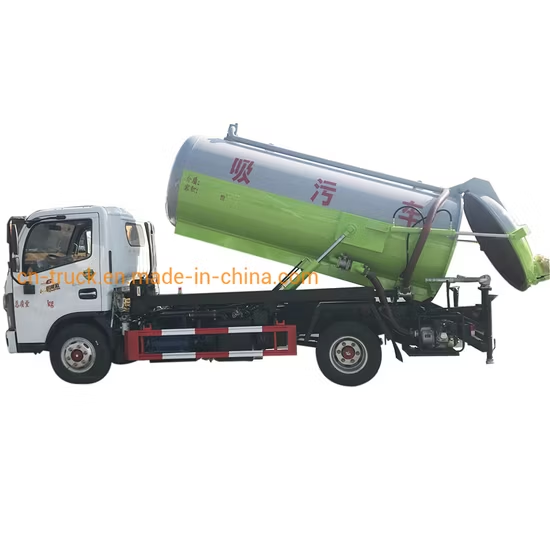
- Discharge system. A rear valve, and on many trucks a hydraulic rear door and tipping tank.
A suction job step by step
- The driver parks close to the pit, tank or manhole and sets the parking brake.
- The crew connects the suction hose and places the other end in the waste.
- The driver engages the PTO. The pump starts to draw air out of the tank.
- The crew opens the inlet valve. Waste flows up the hose and into the tank.
- The operator watches the sight glass and stops before the tank is full.
- At the disposal site, the operator empties the tank by one of the methods below.
How deep can a vacuum truck suck
Air pressure does the lifting, so there is a hard limit. At sea level a perfect vacuum could lift water about 10 metres. Real trucks quote less. The Isuzu Giga FTR page shows a 7 metre suction depth at 95 percent vacuum. The Dongfeng light truck page shows 8 metres.
Altitude matters too. Air pressure is lower in Nairobi, Kampala or Addis Ababa than in Mombasa or Dar es Salaam. Lower air pressure means less lift. Long or narrow hoses lose some suction as well. Tell us the pit depth, hose length and altitude, and ask for the suction depth in the quotation.
How the tank is emptied
| Method | How it works | Suits |
|---|---|---|
| Pressure discharge | The pump is reversed and pushes air into the tank, forcing waste out of the rear valve | Liquid waste and fast unloading |
| Gravity outlet | The rear valve opens and the waste drains out | Thin liquid at a treatment works inlet |
| Hydraulic tipping | A ram lifts the tank about 40 to 45 degrees and the rear door opens | Thick sludge from pit latrines |
After each job, rinse the hose and clean the overflow valve and separators. Check the pump oil daily, as the pump maker advises.
Vacuum truck or jetting truck
A plain vacuum truck only sucks and carries. A sewer jetting truck adds a water tank and a high-pressure pump to clear blocked pipes. Read vacuum tanker vs sewer jetting truck to decide. For tank size, pump and chassis choices, see the vacuum tanker buying guide. Road sweepers in road sweepers also use suction, but with a fan that moves dust and litter, not a sealed liquid tank.
Vacuum trucks on this site
Prices below are the listed reference price (FOB China, ex-factory list), and the written quotation fixes the final price.
- Dongfeng Mini 4x2 Vacuum Truck, 3,000 Litre Septic Tank, 100 hp: engine-driven pump for narrow lanes, from US$7,000.
- Dongfeng Light 4x2 Vacuum Sewage Truck, 3000 to 5000 Litre Tank: 8 metre suction depth for estates and schools, from US$12,000.
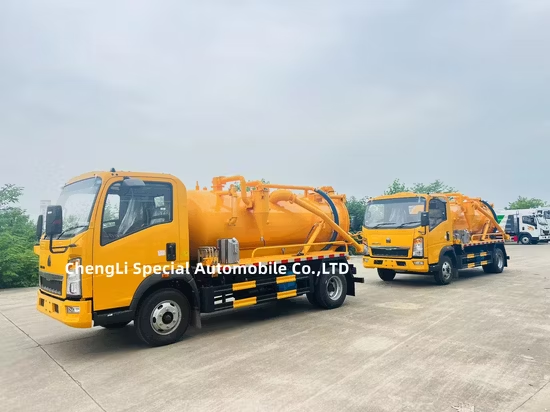
- HOWO Light 4x2 Vacuum Truck, 5 m3 Elliptical Tank, Moro Pump: a tipping tank for thick sludge, from US$22,000.
- Isuzu Giga FTR 4x2 Vacuum Tanker 10000 or 12000 Litre: 12 m3 per minute pump and hydraulic rear door, US$29,000.
- Dongfeng 6x4 Vacuum Tanker, 16-18 m3 Sewage Tank, 260 hp Cummins: PTO drive and hydraulic tipping for council work, from US$43,000.
- Sinotruk HOWO 8x4 Vacuum Tanker 20 m3, Weichai WP12 400hp: high volume with hydraulic tipping, from US$45,500.
- Shacman 6x4 Vacuum Tanker, 380 hp Weichai, Tipping Sewage Tank: 93 percent vacuum and a tipping tank, from US$48,500.
See every model in vacuum tankers. Send us your site details through contact and the CLW team will suggest a tank and pump.