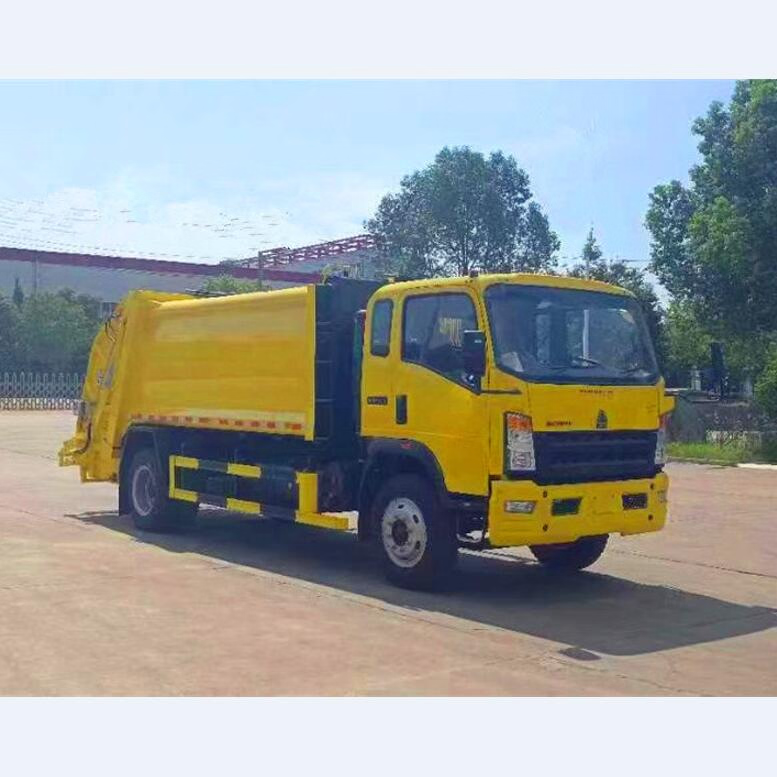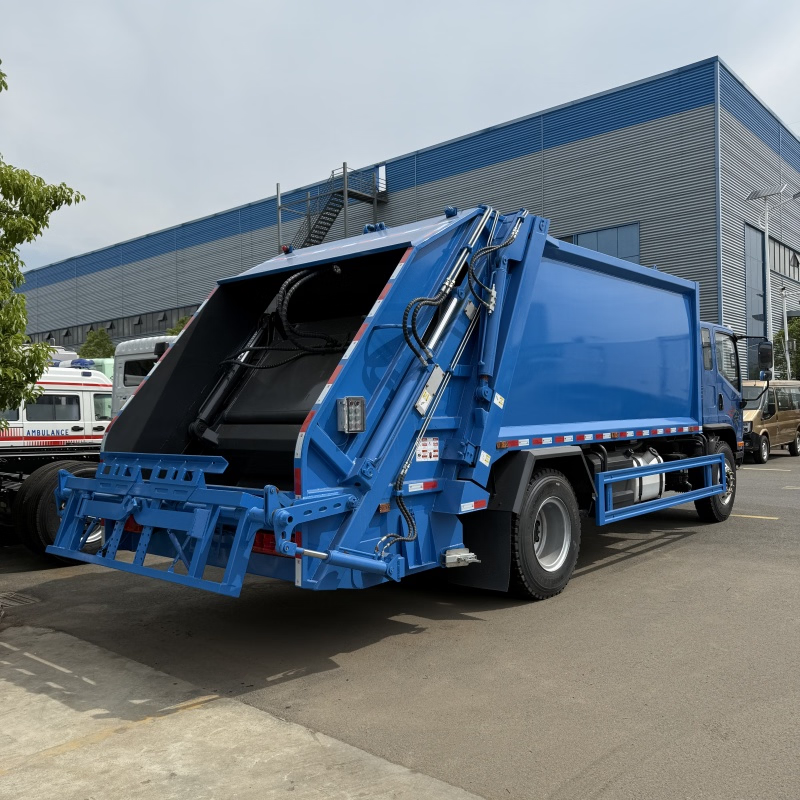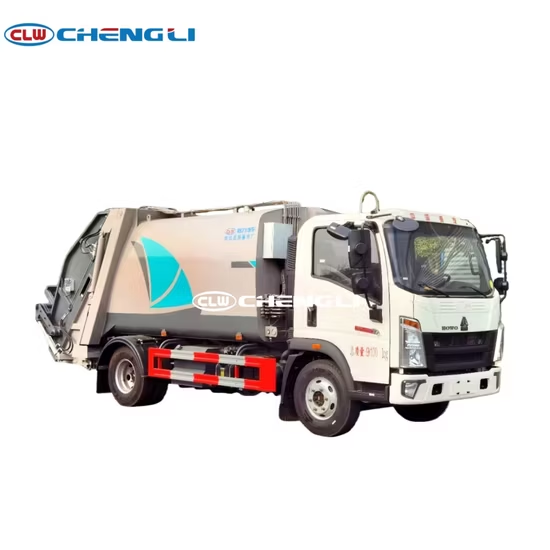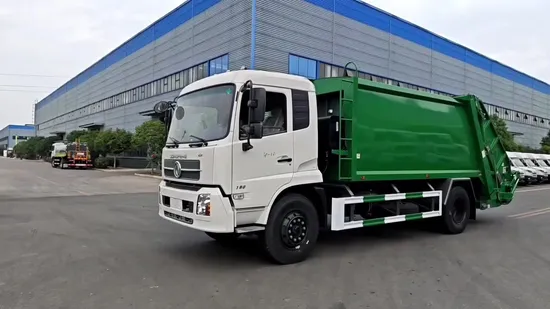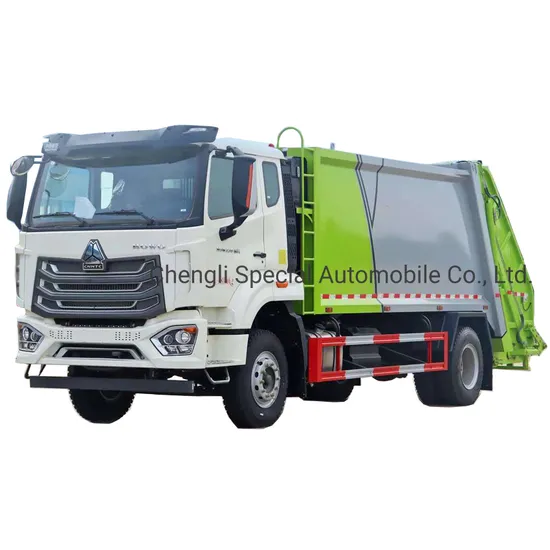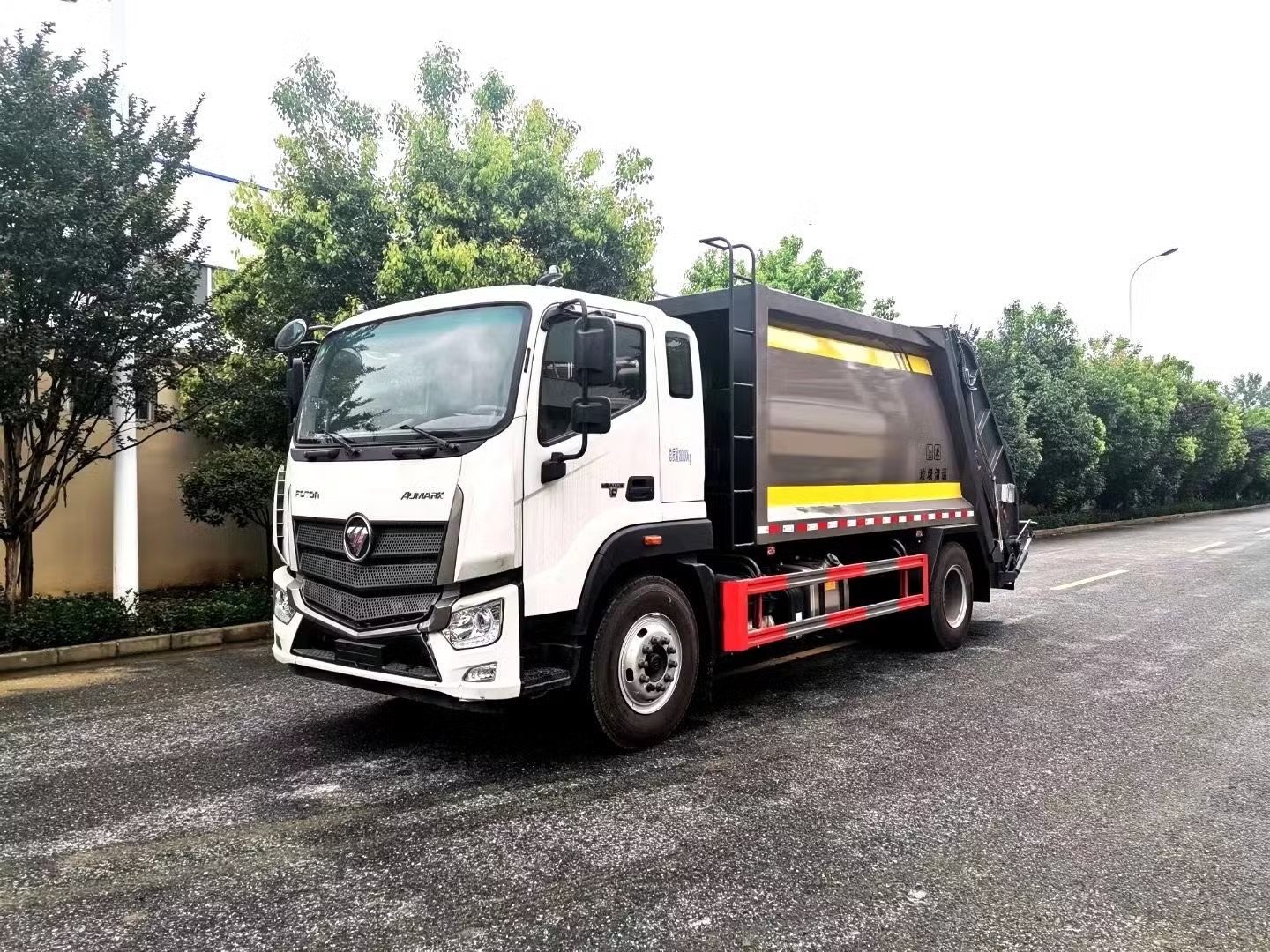
A refuse compactor spec sheet describes one system in stages. The hopper receives the waste, the packer presses it, the sealed body and sewage tank hold it, the hydraulics drive it, and a push plate empties it. Read each figure in that order, keep its unit and label, and do not let a figure from one stage stand in for another.
This page uses figures from compactors built at the CLW factory in Suizhou to show how to read each field.
Follow the waste through the truck
| Field | Stage | What it tells you | What it does not prove |
|---|---|---|---|
| Hopper volume | Receiving | Space at the rear for one tip of bins or bags | Total body capacity |
| Filling or lifting time | Receiving | How long one machine movement takes | Time per stop on a real street |
| Cycle time and compaction ratio | Packing | How fast and how tightly the packer works | Tonnes carried per trip |
| Body volume and plate thickness | Storage | Space and steel of the sealed body | Legal payload |
| Sewage tank | Storage | Space for liquid pressed out of the waste | Extra body volume |
| Hydraulic pressure | Drive | Working pressure of the oil system | Packing force on its own |
| Unloading time | Discharge | How long the push plate takes to empty the body | Total time spent at the tip |
Hopper volume and loading times
The hopper is the open space at the rear where the crew tips bins or bags. It is not the body. The 4x2 rear loader with a Yuchai engine has a 1.5 m3 hopper. The Sinotruk HOWO light compactor has a 600 litre hopper.
Loading times come with labels, and the label matters. The HOWO light page gives a filling time of 8 to 10 seconds. The Yuchai rear loader gives a hopper lifting time of 12 seconds or less. These are machine movements. Walking, bin handling and traffic add to the real time per stop. Plan your round from a trial day, not from the sheet.
Compaction ratio and cycle time
The compaction ratio says how far the packer squeezes loose waste. Several pages, such as the FAW 10-12 m3 compactor, state 3:1. The HOWO light states 1/3 to 1/4. The Dongfeng D7 with bin lift arm states 1 to 2.5, with a lift-and-press cycle of about 20 seconds. The HOWO light gives a 30 second compression cycle.
A ratio is a guide for typical household waste. Wet food waste packs tighter, while crates and branches spring back. The ratio does not tell you the tonnes in the body. For that, use the rated payload, or the GVW minus the kerb weight.
Body steel and the sewage tank
Plate thickness should always name the surface. The Yuchai rear loader uses Q345 steel with a 5 mm floor, 4 mm sides and a 3 mm roof. The Dongfeng 4x2 compactor at 18 tonne GVW uses 5 mm sides and a 5 mm floor. The HOWO 5,000 litre compactor uses Q235B steel with 3 mm sides and a 4 mm floor. The Shacman L3000 compactor uses 4, 5 and 10 mm plate in different areas. The floor wears fastest, so compare floors with floors.
The sewage tank catches dirty water pressed out of the waste. The HOWO light has a 200 litre tank, and the Yuchai rear loader has 300 litres or more. The FAW pages show two tanks. Do not add the tank to the body volume. Do ask where the drain valve sits and how the tailgate is sealed.
Hydraulic pressure and controls
Hydraulic pressure is the working pressure of the oil system. The HOWO light and the HOWO 5,000 litre compactor state 16 MPa (160 bar). The Yuchai rear loader states 19 MPa. The FAW compactors state 180 to 200 bar. Pressure alone does not give the packing force, because cylinder size and plate geometry matter too. Compare it only between trucks of a similar body size.
Controls range from levers at the rear to electric switches and remote handsets. The Isuzu 12 m3 compactor uses PLC automatic cycles, with manual operation as a back-up. The HOWO light uses electric control with manual levers. Ask where each control sits and where the emergency stops are.
Unloading method and time
Most compactors empty with a push plate. The tailgate lifts and the plate drives the load out at the rear. The Dongfeng 18 tonne GVW compactor states about 23 seconds. The HOWO light states about 30 seconds, and the HOWO 5,000 litre unit 30 to 40 seconds. The Yuchai rear loader states 40 seconds or less. A short unload helps at a busy tip, but the queue at the gate often matters more.
The guide how does a garbage compactor truck work explains the full packing cycle step by step.
Compactors with full body data
- 4x2 Rear Loader Refuse Compactor, 240 hp Yuchai Diesel, Rear Bin Lifter: full hopper, steel and hydraulic data for council rounds.
- Sinotruk HOWO 4x2 Light Refuse Compactor, 7,350 kg GVW, 110 hp: hospitals, campuses and narrow town streets.
- FAW 4x2 Refuse Compactor, 10-12 m3 Body with Rear Bin Lifter: town districts with communal bins.
- Dongfeng D7 4x2 Garbage Compactor with Bin Lift Arm, 10 m3 Body: estates and schools with wheelie bins.
- Dongfeng 4x2 Refuse Compactor Truck, 18 Tonne GVW, 210 hp: busy town rounds with a quick unload.
- HOWO 4x2 Light Refuse Compactor, 5000 L Body with Bin Lifter, 116 hp: lanes, compounds and markets.
- Shacman L3000 4x2 Refuse Compactor, 12-16 m3 Rear Loader Body: suburbs and medium towns.
- Isuzu 4x2 Refuse Compactor, 12 m3 Rear Loader Body, 240 hp: crews that want automatic PLC cycles.
Browse all refuse trucks, or see the road sweepers that often work the same streets. The refuse compactor buying guide covers body choice and safety fittings. Ask for every figure above in your written quotation, then read how to buy for the next steps.