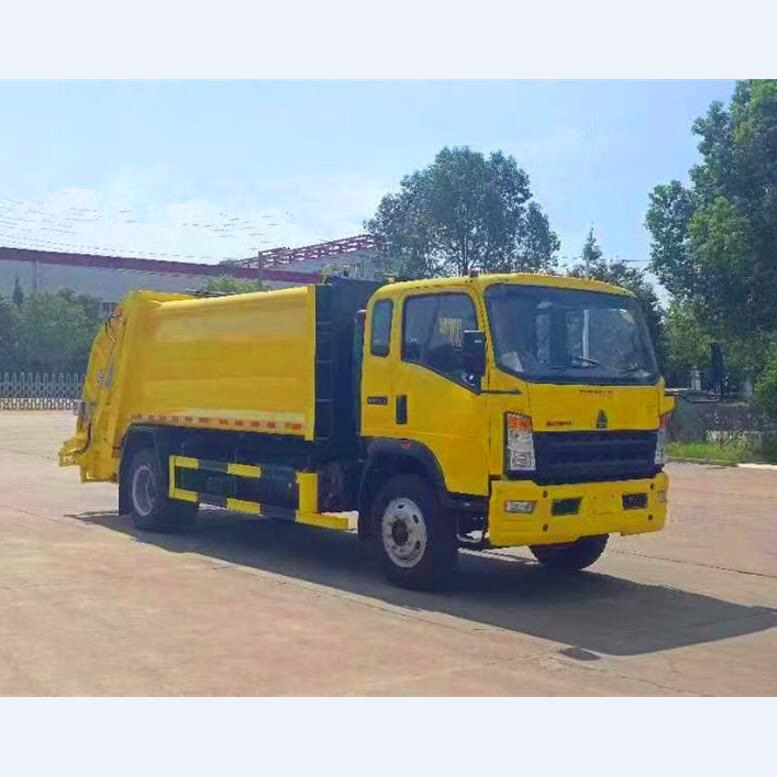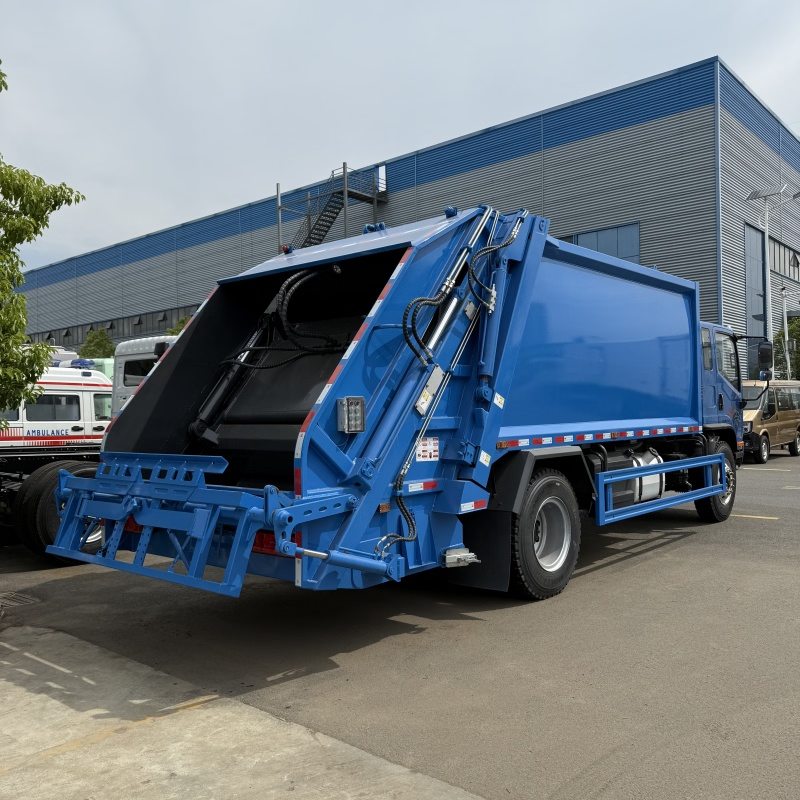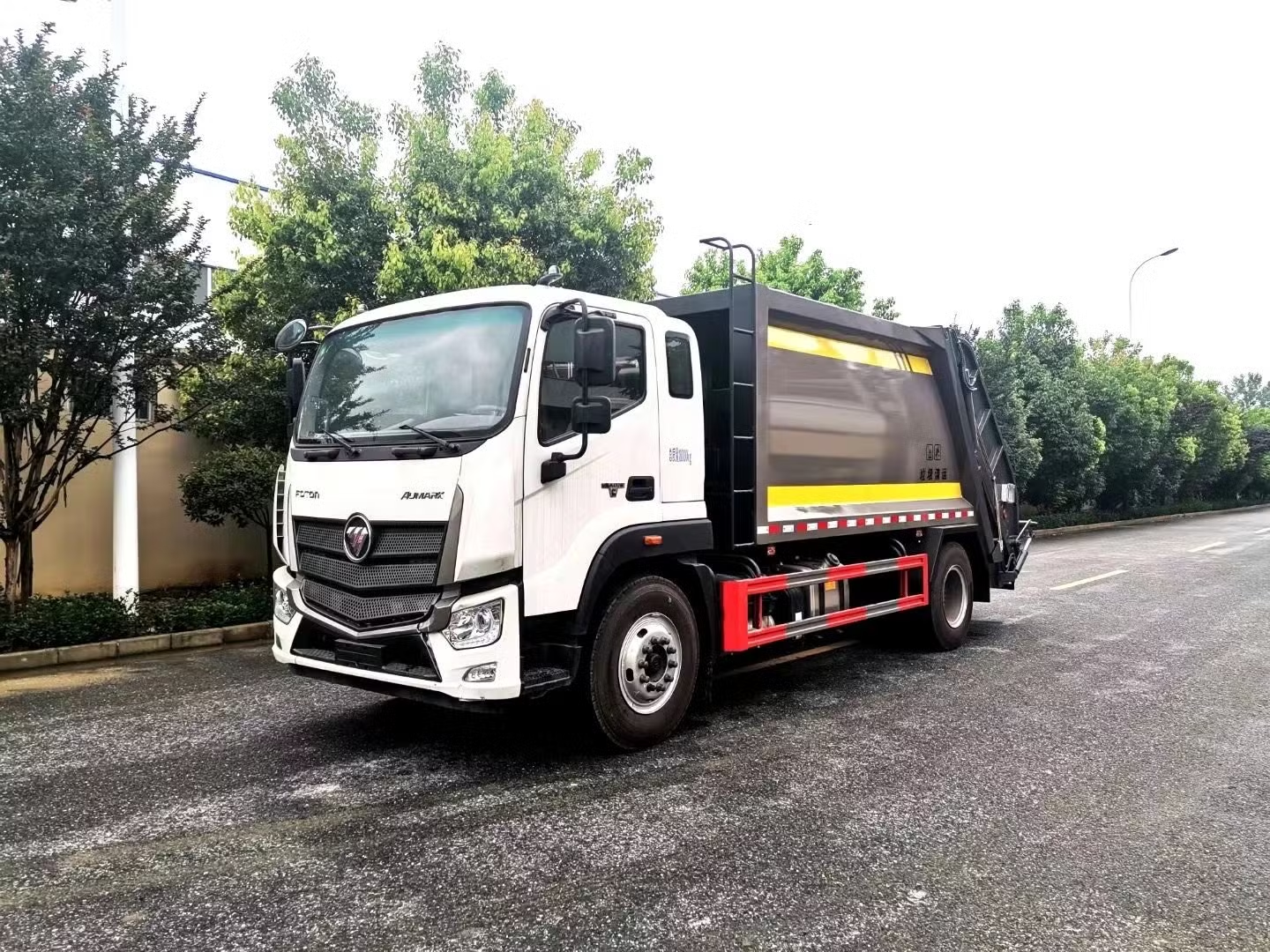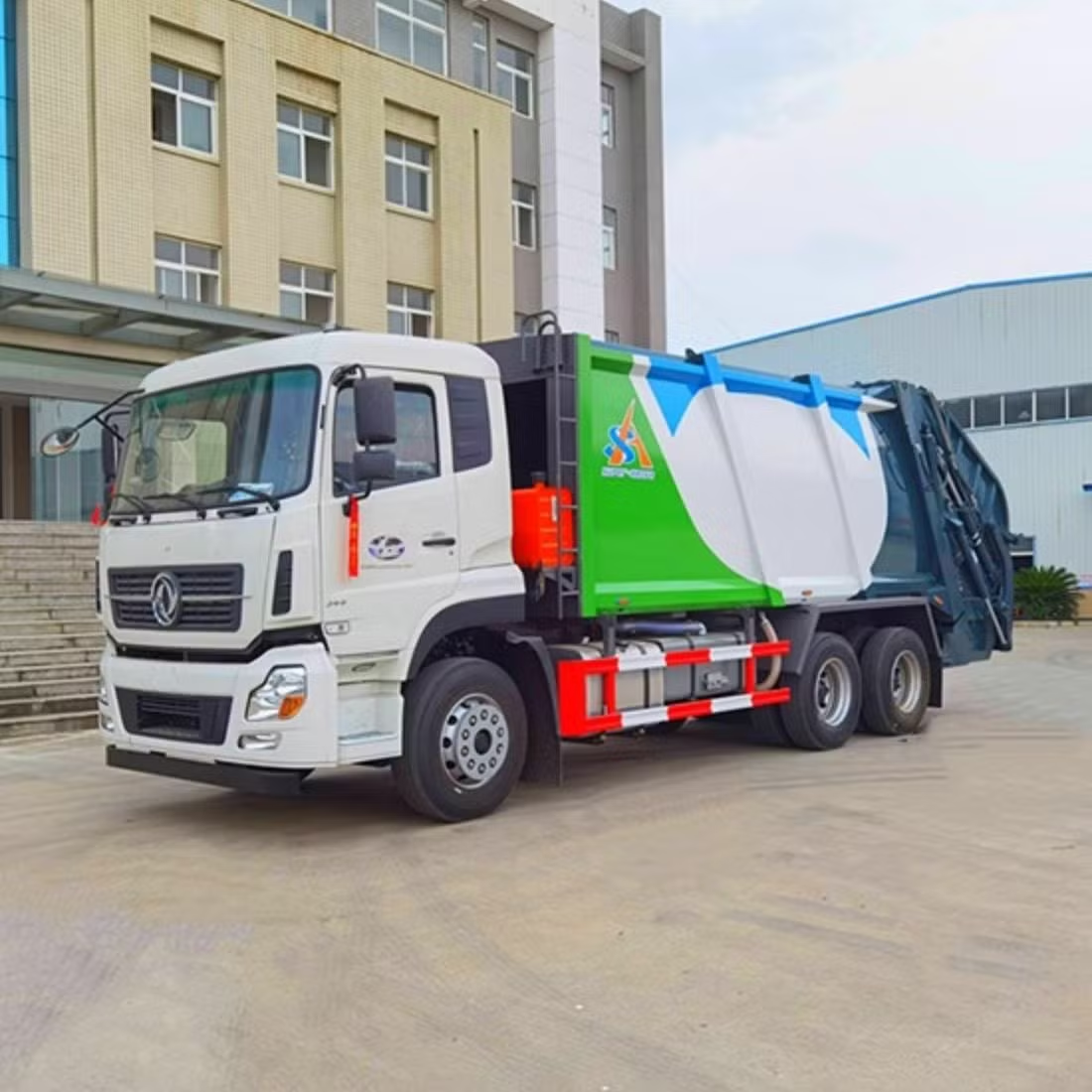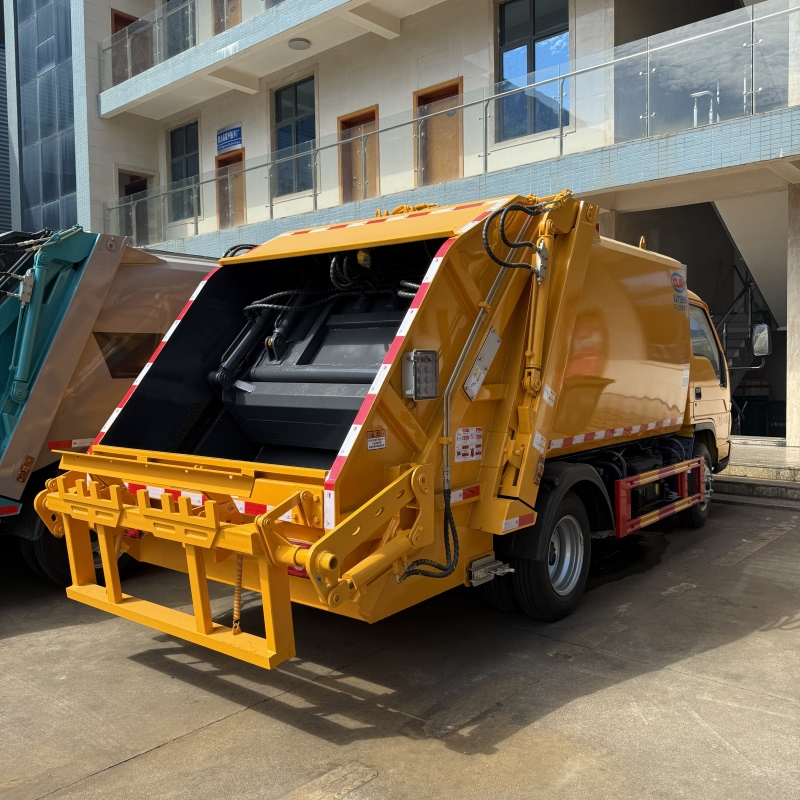
A garbage compactor truck collects waste in a hopper at the rear and uses hydraulic plates to press it into a closed steel body. Each press squeezes the waste into a fraction of its loose space. The truck can then serve more streets before it drives to the landfill, where a push plate empties the whole load.
Councils and waste firms also call it a refuse compactor, a rear loader or simply a garbage truck. This page explains each stage of the work and the figures to check before you order a compactor from the CLW factory.
The loading and packing cycle
The crew tips bins or bags into the hopper. The hydraulics then run one packing cycle:
- Waste falls into the open hopper. On the 4x2 Rear Loader with a Yuchai engine, the hopper holds 1.5 m3.
- A scraper plate drags the waste out of the hopper toward the body opening.
- A packer plate pushes it up and forward and presses it against the load already inside.
- Both plates return to the start position, and the hopper is ready for the next bins.
One cycle is short. The Sinotruk HOWO 8x4 with a 35 m3 body states 12 to 25 seconds per loading cycle. The light HOWO 4x2 compactor states a 30 second compression cycle. As the body fills, the plates meet more resistance. A relief valve in the hydraulic circuit then protects the cylinders.
How much smaller the waste becomes
Truck pages give the result as a compression ratio. Several CLW compactors state 3:1. That means three loads of loose waste fit in the space of one. The light HOWO 4x2 states 1/3 to 1/4. The HOWO 8x4 states that the volume of loose waste falls by about 60 to 70 percent.
Real results depend on the waste. Wet food and market waste packs tight. Branches, boxes and plastic crates spring back. So treat the ratio as a guide, and plan your routes by weight as well as by volume.
What drives the hydraulics
On a diesel compactor, a power take-off (PTO) on the gearbox drives an oil pump. The pump sends oil through control valves to the cylinders. The oil then returns to a tank. The 4x2 Rear Loader states a working pressure of 19 MPa. Control layouts differ by model:
- Manual valves at the rear of the truck.
- A rear control box plus switches in the cab.
- A remote handset, on models such as the FAW 4x2 10-12 m3 compactor.
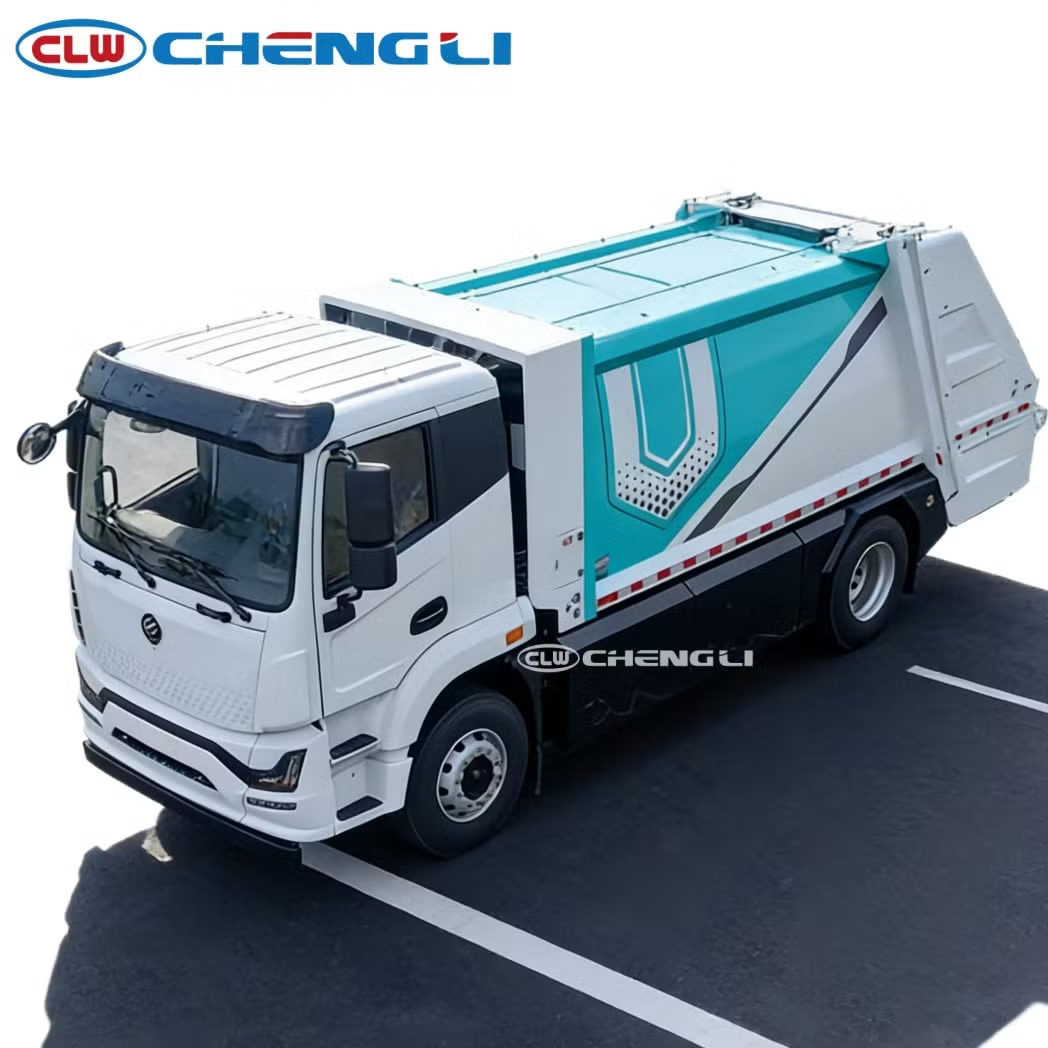
- Electric drive on the CLW 4x2 Electric Refuse Compactor, which runs from a 194 kWh battery.
Body, sewage tank and unloading
Packed waste pushes hard on the walls, so the body is a sealed box of thick steel. The 4x2 Rear Loader uses Q345 steel with a 5 mm floor, 4 mm sides and a 3 mm roof. Larger units such as the Dongfeng Tianlong 6x4 use T700 high-strength plate.
Pressing squeezes dirty liquid out of the waste. A sewage tank catches it, so it does not drip on the road. Sizes range from 200 litres on the light HOWO 4x2 to 520 plus 450 litres on the CLW electric unit. At the landfill, the tailgate lifts and a push plate drives the load out. The Dongfeng 4x2 with an 18 tonne GVW states about 23 seconds to empty.
Bin lifters for wheelie and communal bins
Many councils in Kenya, Ghana and Zambia now use wheeled bins. A rear bin lifter tips them into the hopper, so the crew does not lift heavy bins by hand. The FAW 4x2 and Foton mini compactors take 120, 240, 660 and 1,100 litre bins. The lifter on the 4x2 Rear Loader is rated at 600 kg or more. Match the lifter to the bins on your routes before you order.
Compactor trucks to compare
Each price below is the listed reference price (FOB China, ex-factory list). The written quotation fixes the final price.
- Foton 4x2 Mini Refuse Compactor, 3 m3 Body with Rear Bin Lifter: narrow streets, estates and markets, US$15,800-17,000.
- Sinotruk HOWO 4x2 Light Refuse Compactor, 7,350 kg GVW, 110 hp: hospitals, campuses and light town roads, US$23,000-25,000.
- FAW 4x2 Refuse Compactor, 10-12 m3 Body with Rear Bin Lifter: town districts with communal bins, US$14,500-16,500.
- 4x2 Rear Loader Refuse Compactor, 240 hp Yuchai Diesel, Rear Bin Lifter: daily council rounds through markets and estates, US$30,000-50,000.
- CLW 4x2 Electric Refuse Compactor, 13 m3 Body, 194 kWh Battery: quiet work in city centres and airports, US$60,000-77,000.
- Dongfeng Tianlong 6x4 Refuse Compactor, 18-22 m3 Sealed Body: long routes to a distant landfill, US$35,500-60,700.
- Sinotruk HOWO 8x4 Refuse Compactor, 35 m3 Body, Weichai 350 hp: big city loads to a transfer station, US$22,800-53,600.
See the full refuse truck range for hook lifts and skip loaders as well. Councils that also clean streets can compare road sweepers. To pick a body size, read the refuse compactor buying guide. For budgets, see the refuse truck price guide.
You can inspect the truck at the CLW factory in Suizhou, by live video, or through a third party such as SGS or BV. The how to buy page explains the buying steps.