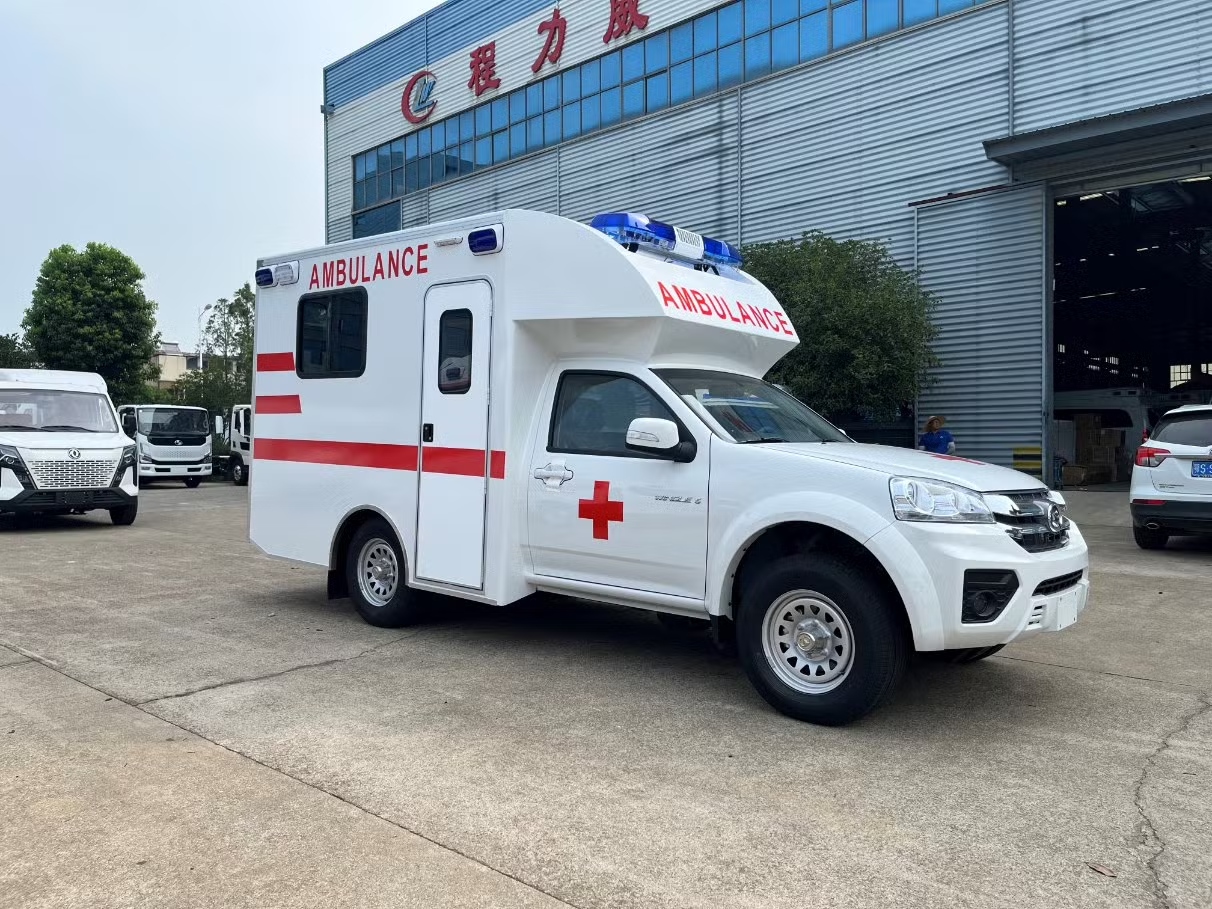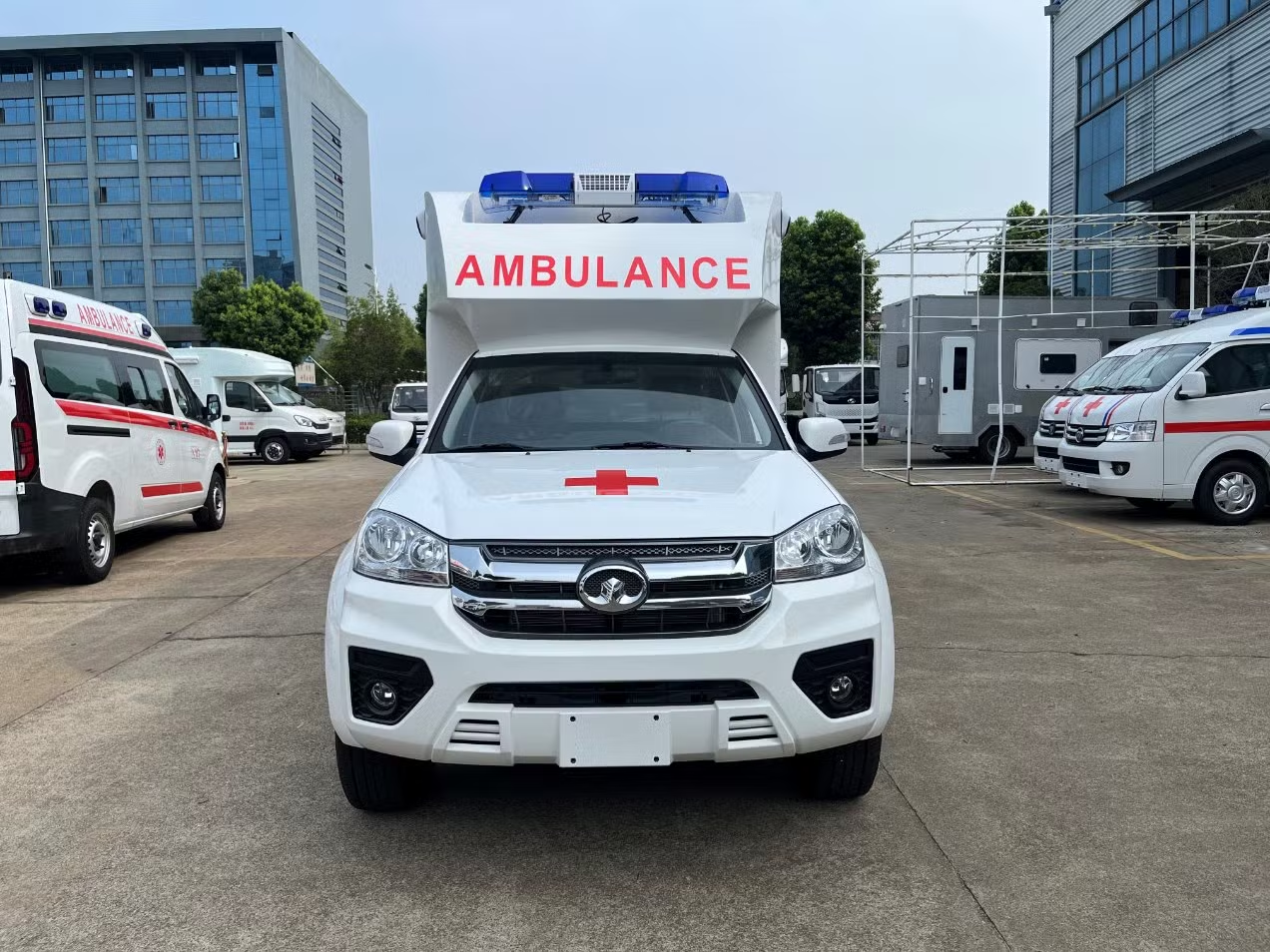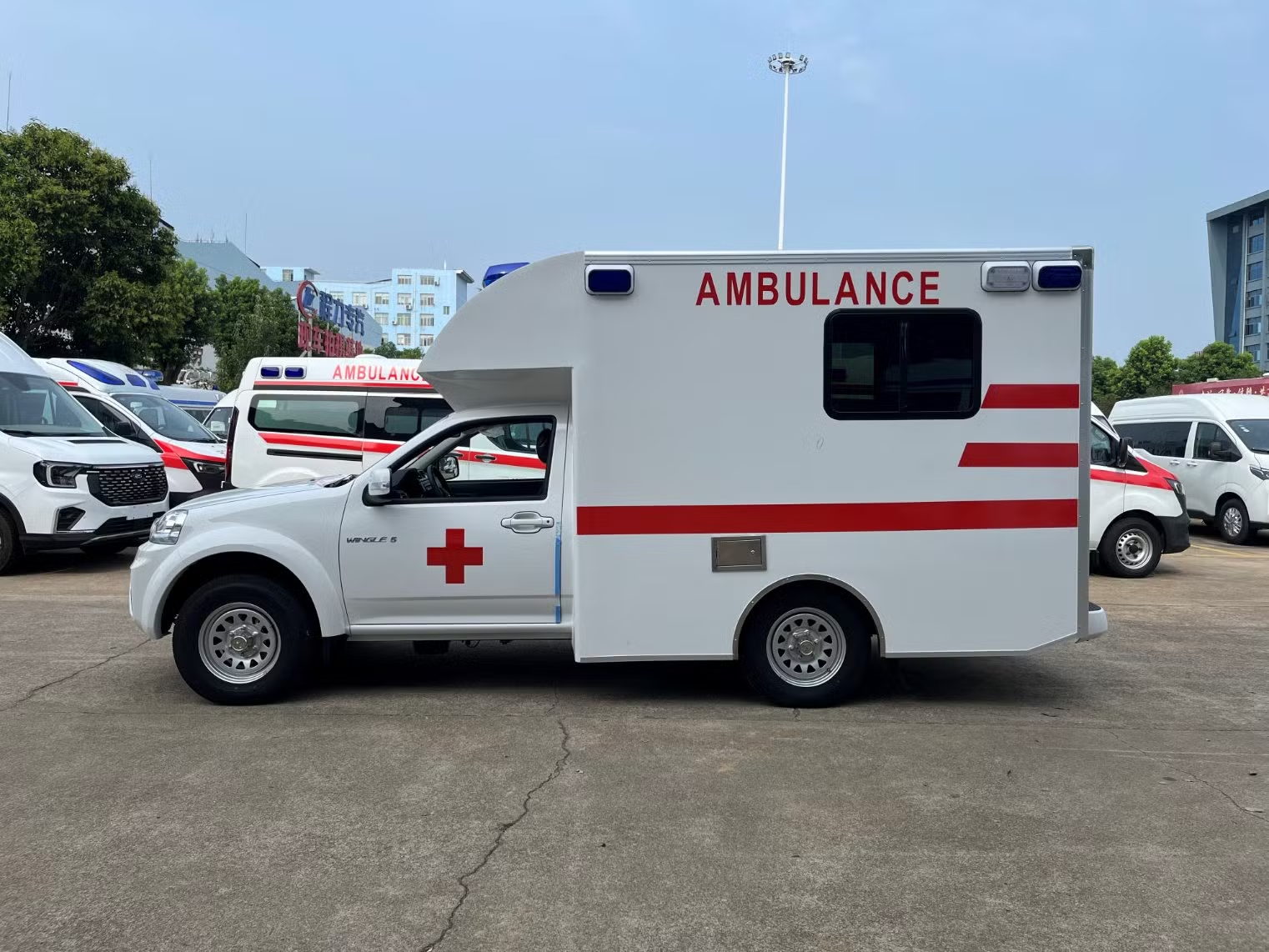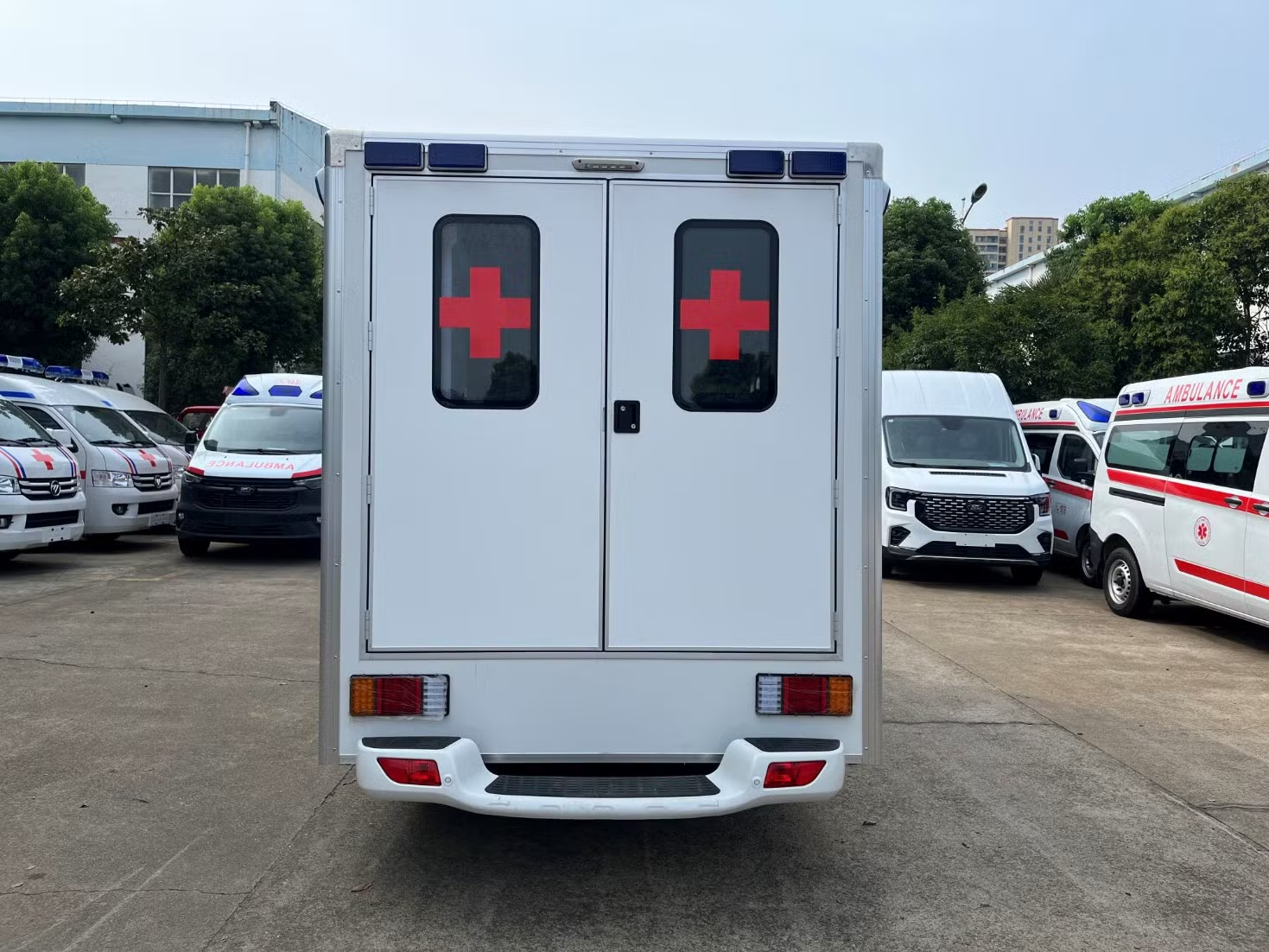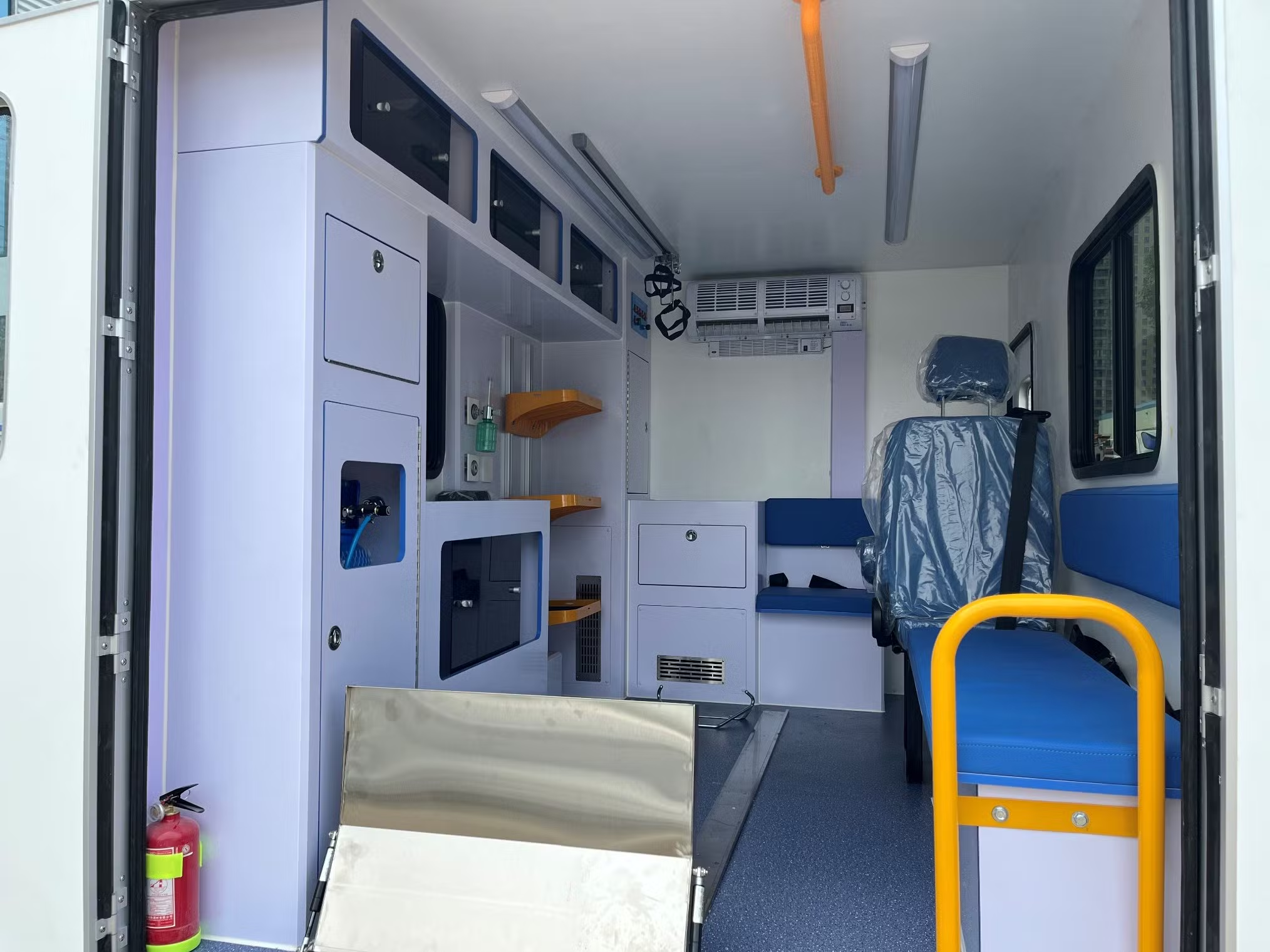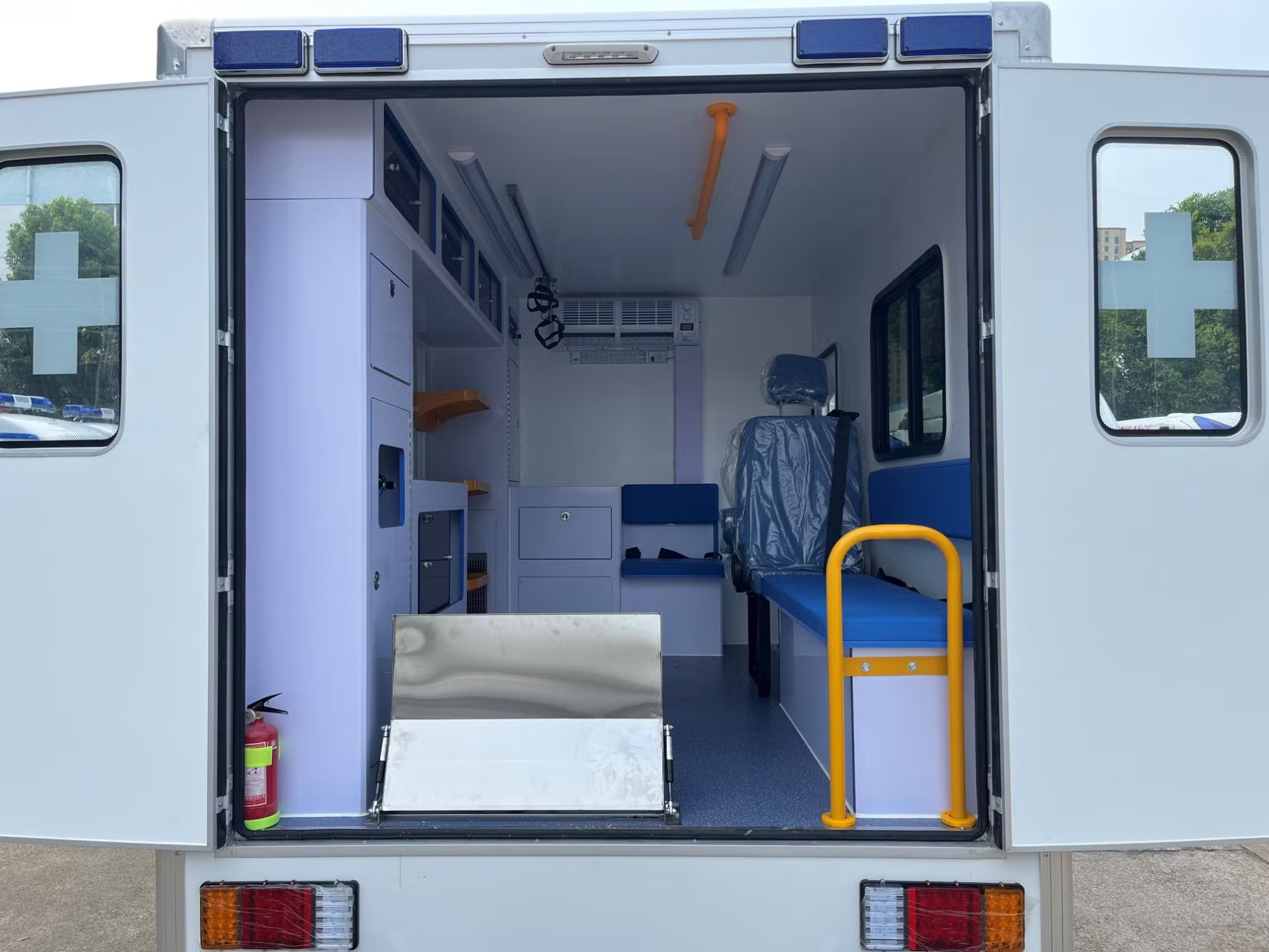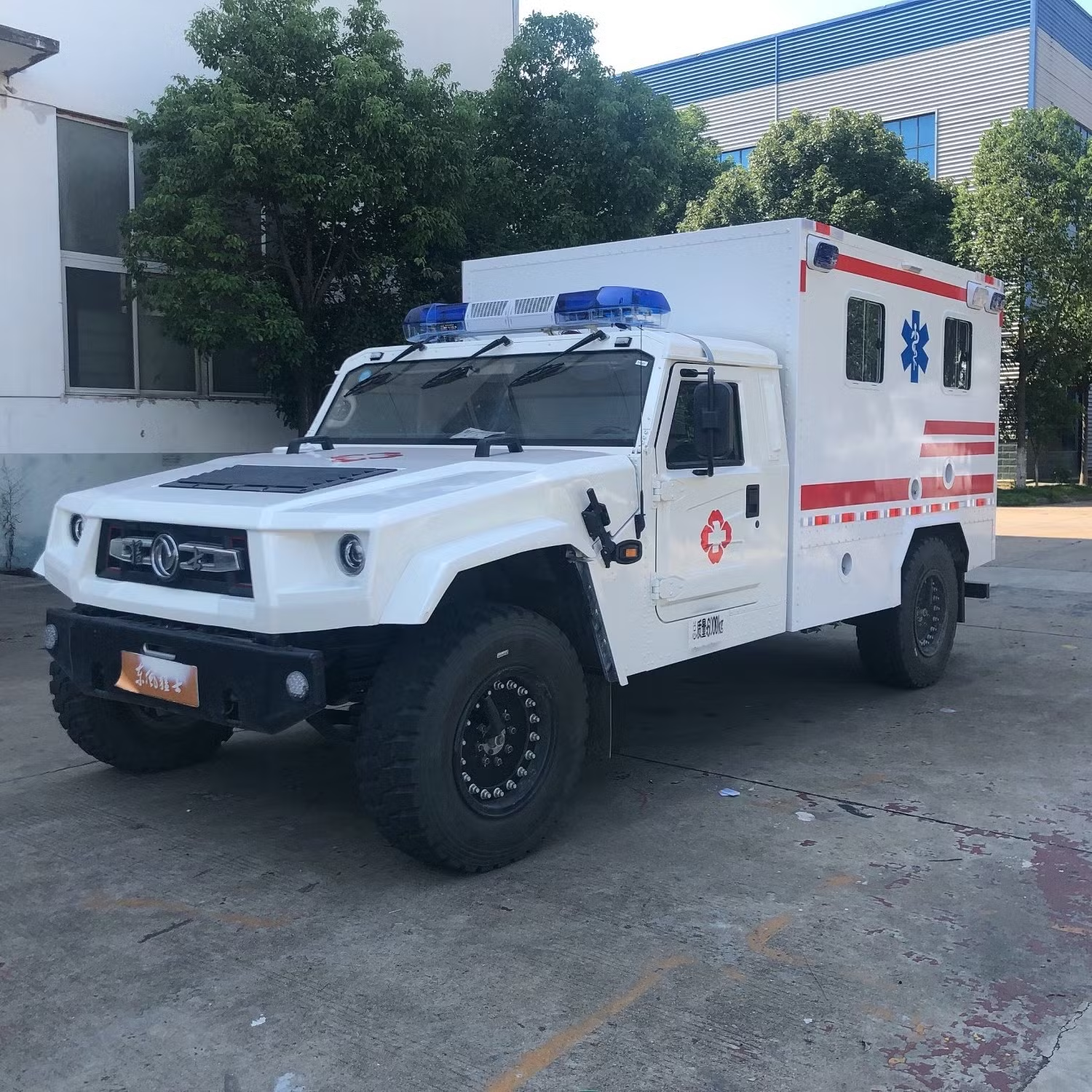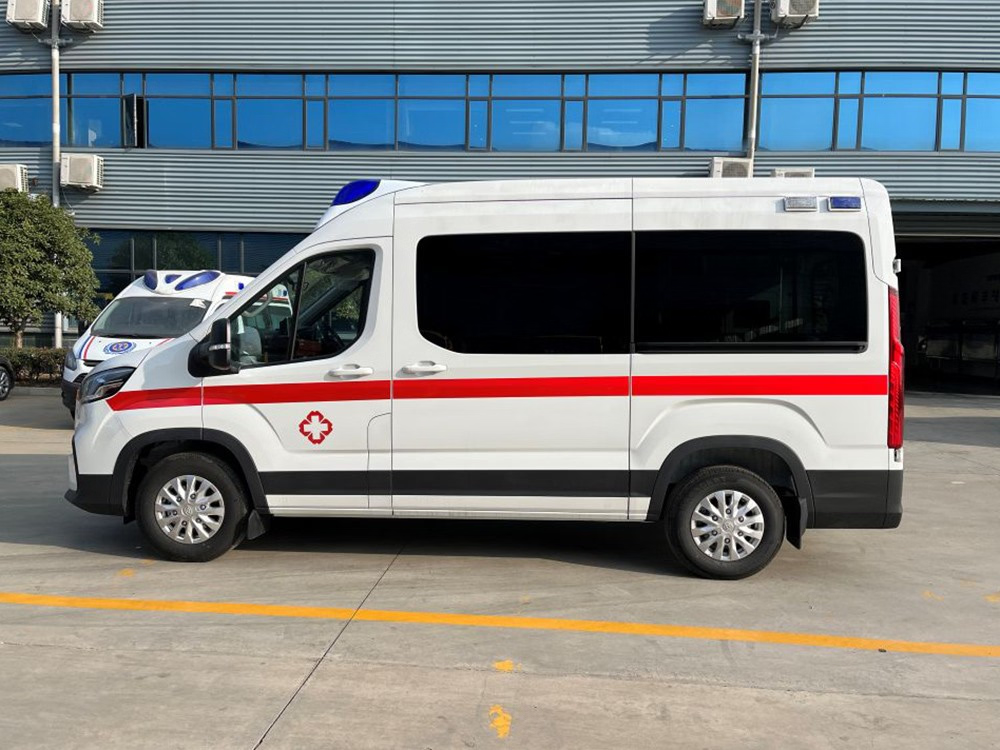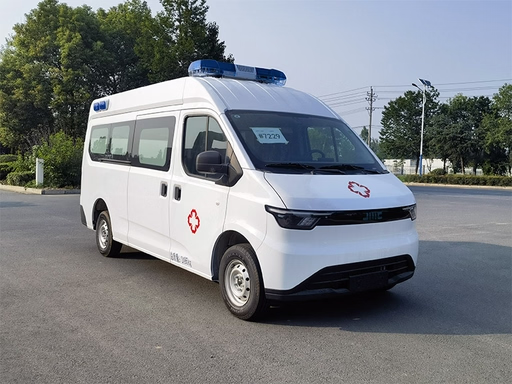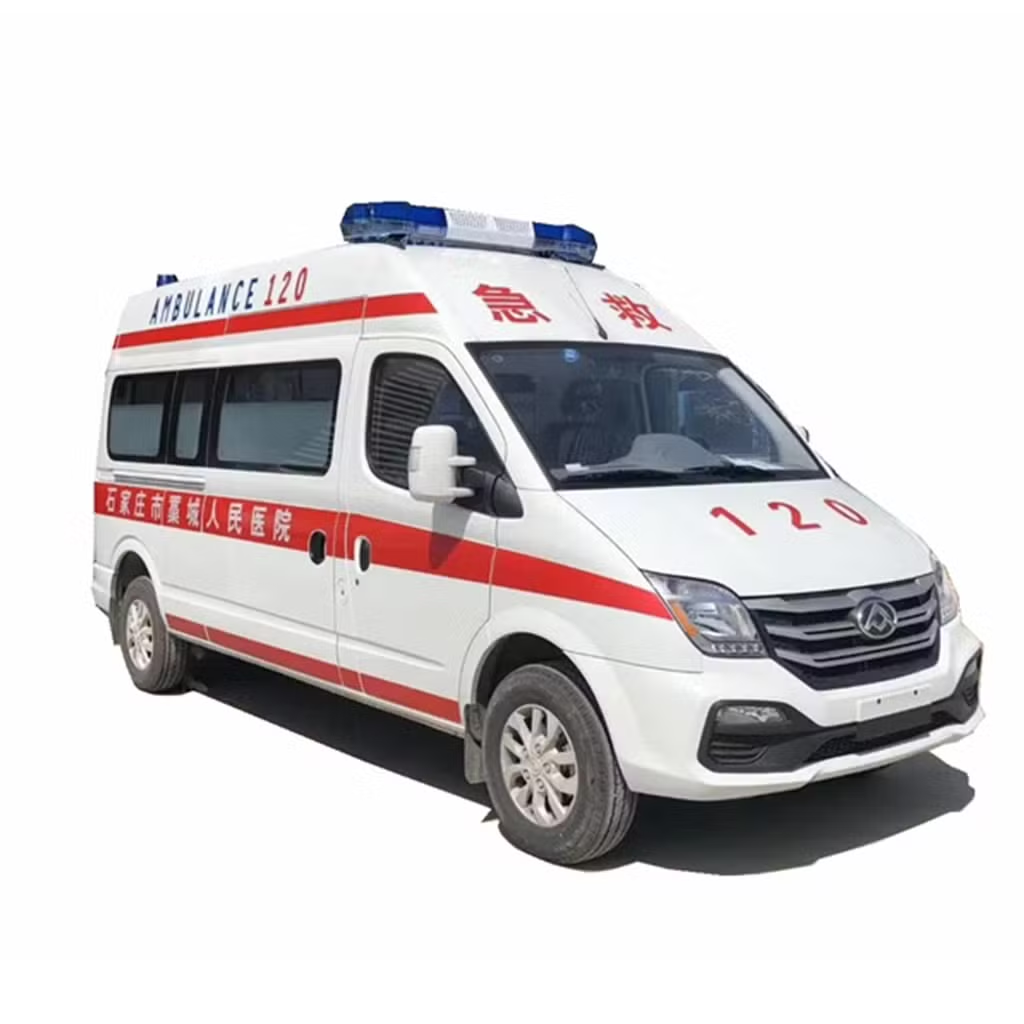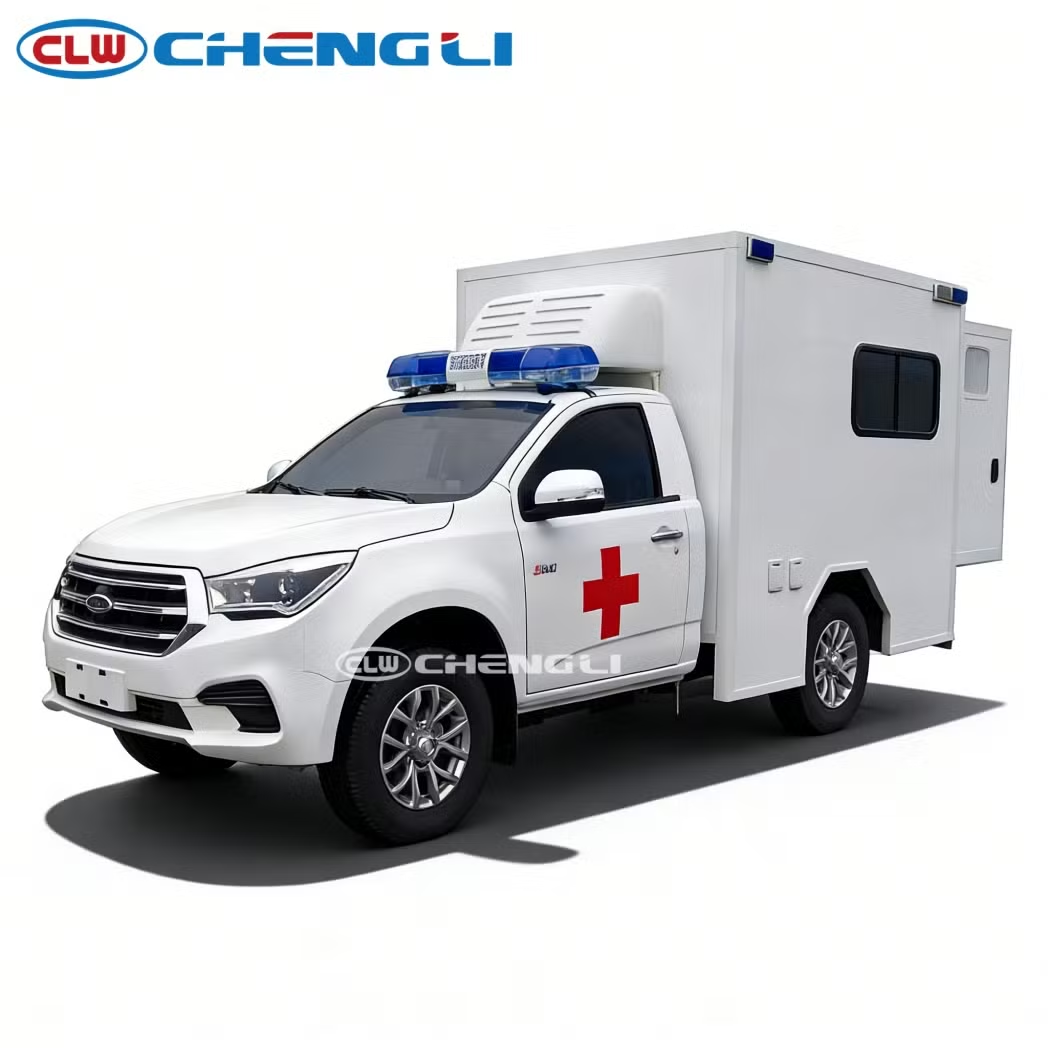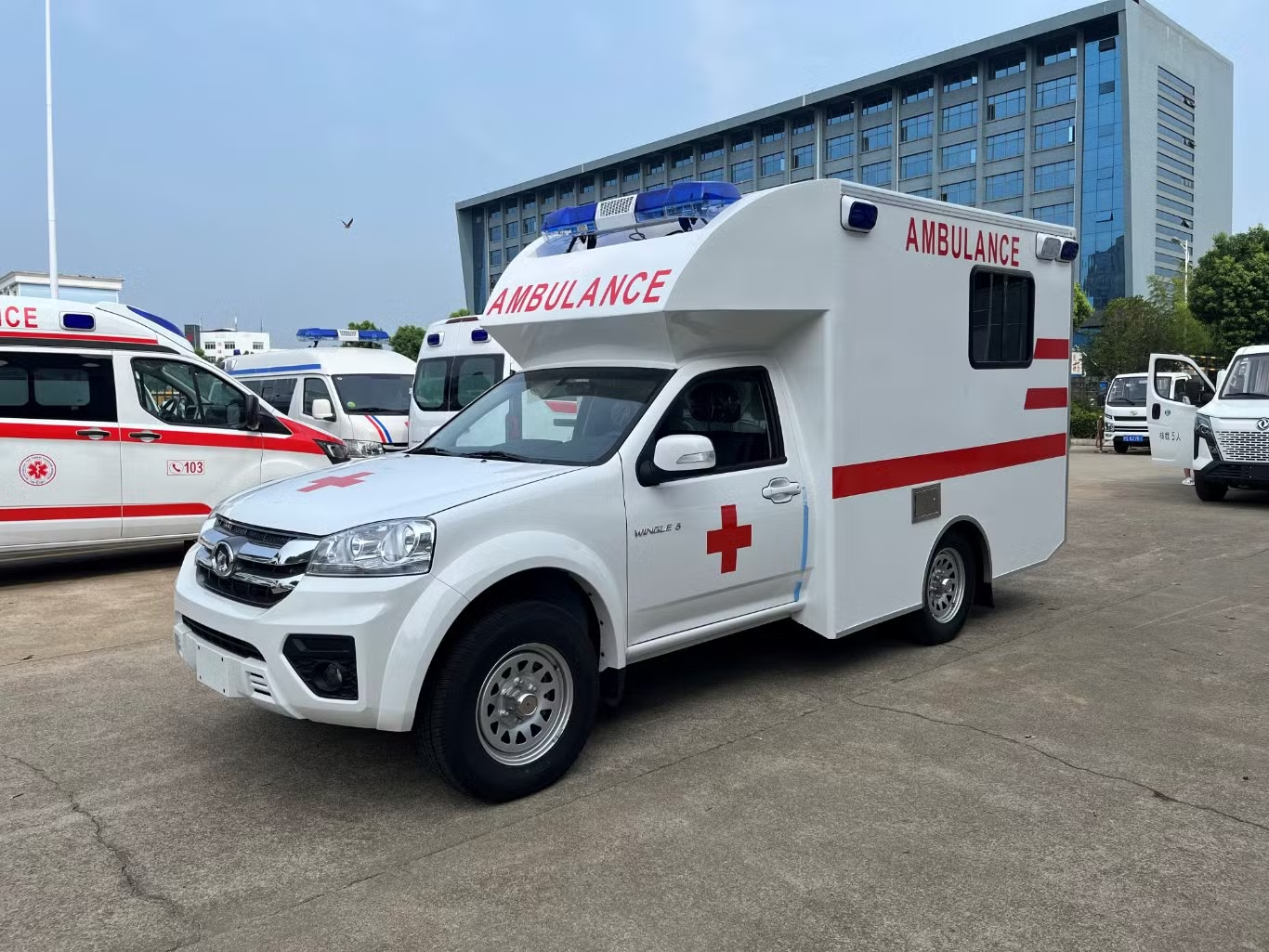
This ambulance carries one patient on a stretcher, with medical staff in a closed rear cabin. It is a monitoring type ambulance, so the crew can watch and treat the patient during the trip. It suits hospitals, clinics and emergency services. The base vehicle is a 4x2 van (two axles, one of them driven) with a 2.0 litre diesel engine of 100 kW (136 hp).
Vehicle and engine
- Model: CLW5050XJHE6
- Engine: 2.0 litre, 4-cylinder in-line diesel, turbocharged with intercooler
- Power: 100 kW (136 hp)
- Gearbox: manual
- Wheelbase: 3,050 mm
- Size: about 5,600 x 1,900 x 2,560 mm
- GVW (gross vehicle weight: the vehicle plus its full load): 2,885 kg
- Kerb weight (the empty vehicle): about 2,500 kg
- Tyres: 235/70R16, with power steering
- Top speed: 150 km/h
Patient area and medical equipment
A sealed wall separates the driver cab from the medical cabin. The wall has a lockable sliding window. An intercom links the driver and the crew in the back.
- Stretcher, plus a bench seat at the right rear
- Two 10 litre steel oxygen cylinders with pressure reducing valves
- Medicine cabinet and overhead cabinets
- Negative pressure air purification device
- UV sterilisation lamp
- Separate air conditioning and heating for the medical cabin, plus two-way ventilation
- 12 V and 220 V sockets from an inverter, with a second 80 Ah battery
- LED ceiling lights and drip (infusion) spotlights
- 100 W siren, blue roof warning lights and white side flash lights
- Waterproof, anti-slip floor and a fire extinguisher
Where it works in Africa
This size of ambulance fits busy city streets and narrow hospital gates. Hospitals and health ministries can use it to move patients between clinics and referral hospitals. NGOs and mine sites can keep it as a site ambulance. The negative pressure cabin is meant for patients who must be kept apart from others. On rough rural roads, drive with care. This is a 4x2 vehicle, not all-wheel drive.
Right- or left-hand drive
Left-hand drive is standard. Right-hand drive is built on request. Kenya, Tanzania, Uganda, Zambia, Zimbabwe, Botswana and South Africa drive on the left and need RHD. Nigeria and Ghana drive on the right and use LHD.
Confirm in your quotation
- Final chassis and model number
- Engine and emission standard
- Medical equipment list and stretcher type
- Roof height and warning light layout
- Drive side
- Body colour and markings