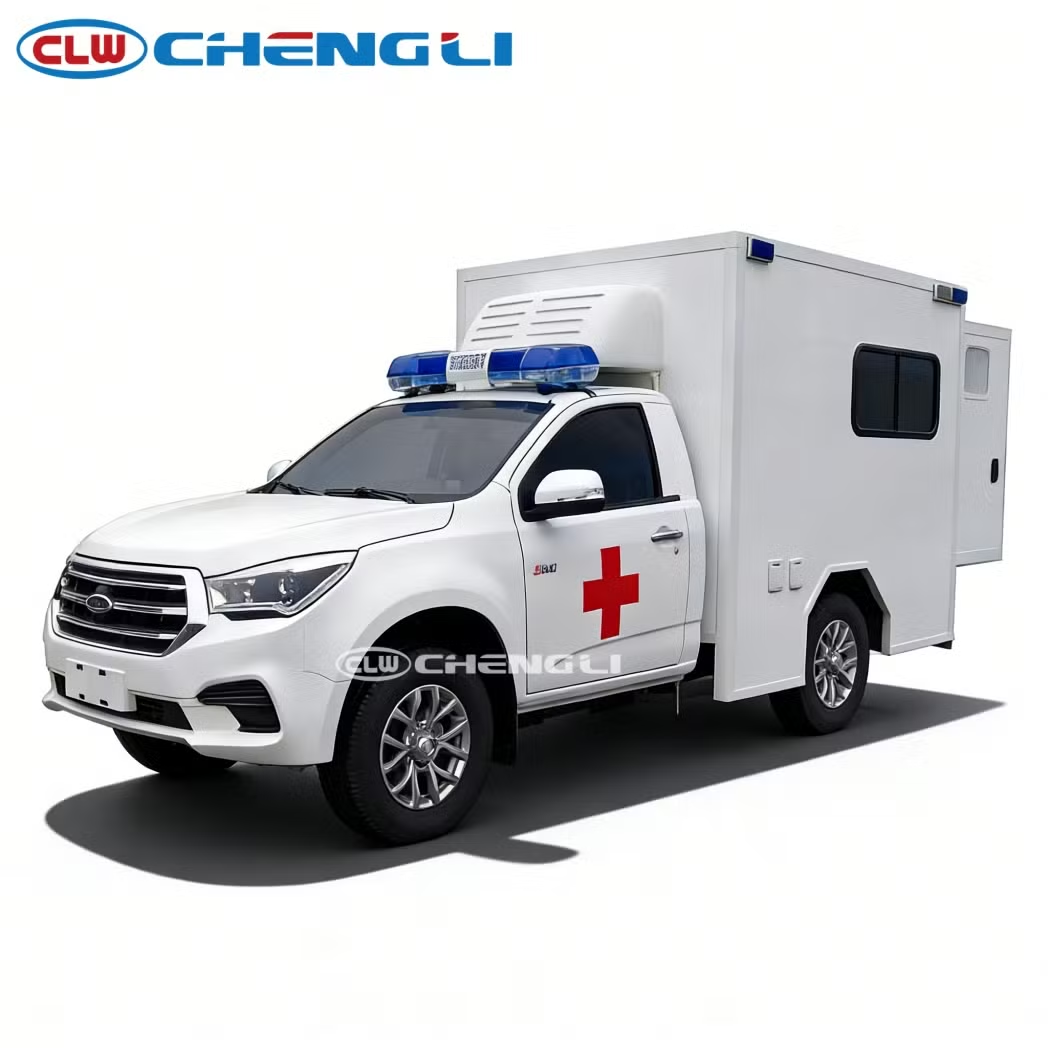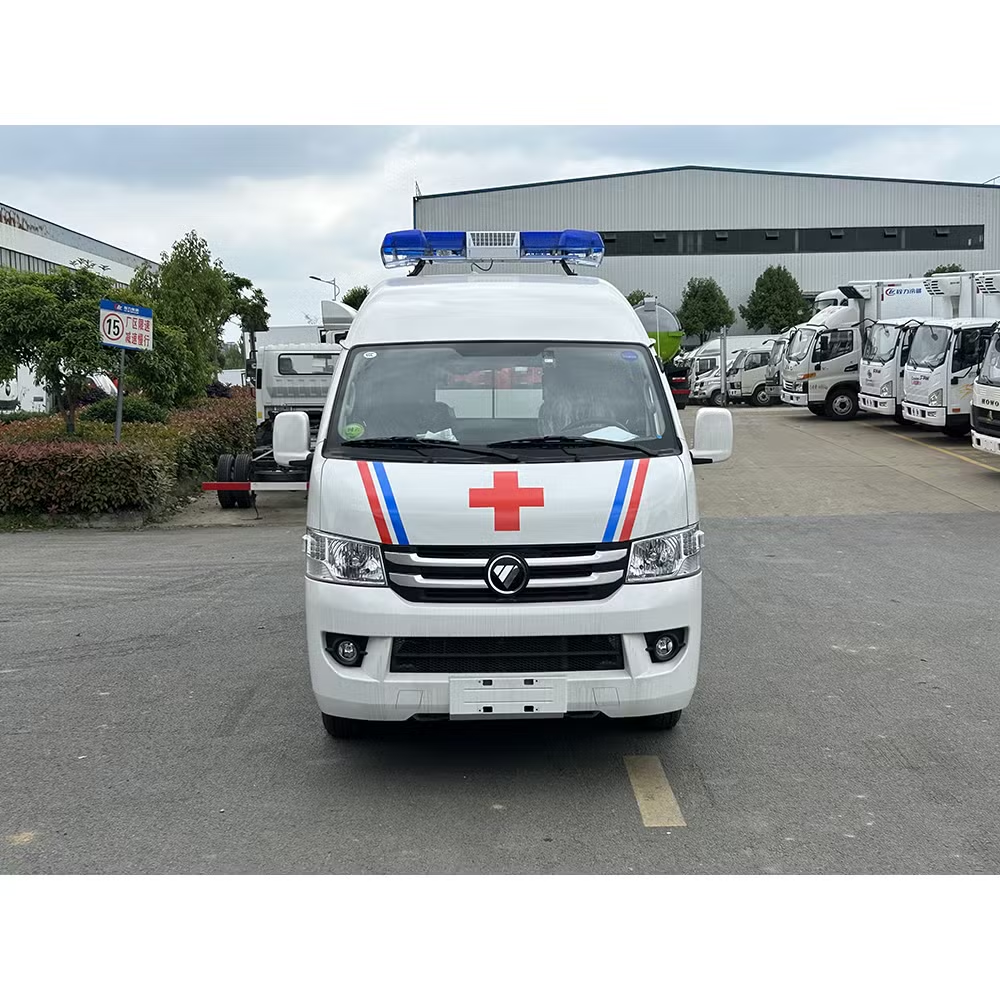
For a hospital or clinic in a town with tarmac roads, a 4x2 van ambulance is the simple choice. It costs less, sits lower and is easy to load. For rural clinics, mines and NGOs that work on dirt roads, choose a 4x4 ambulance, even though it costs more. After that, decide between a transport layout and a monitoring layout, and between petrol and diesel.
Van ambulance or 4x4 ambulance
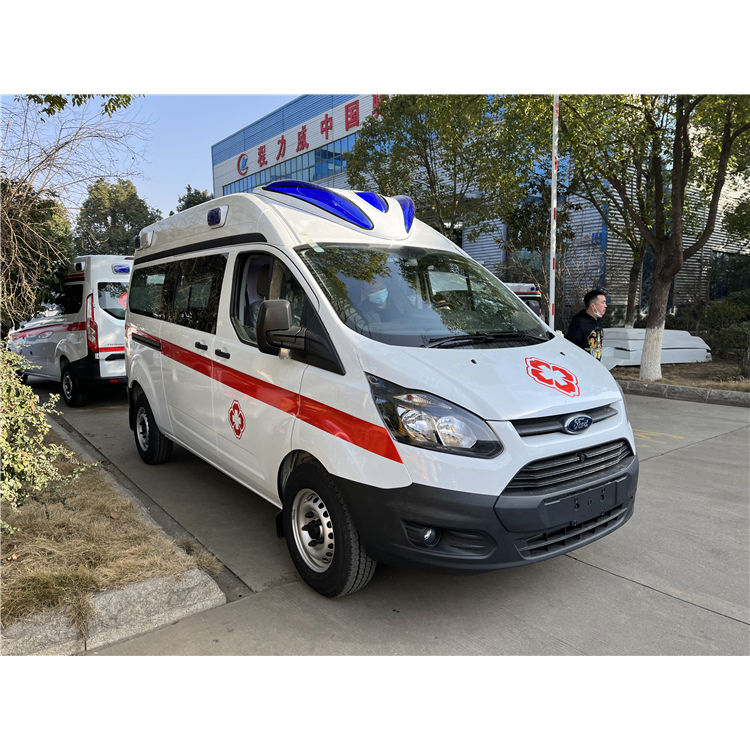
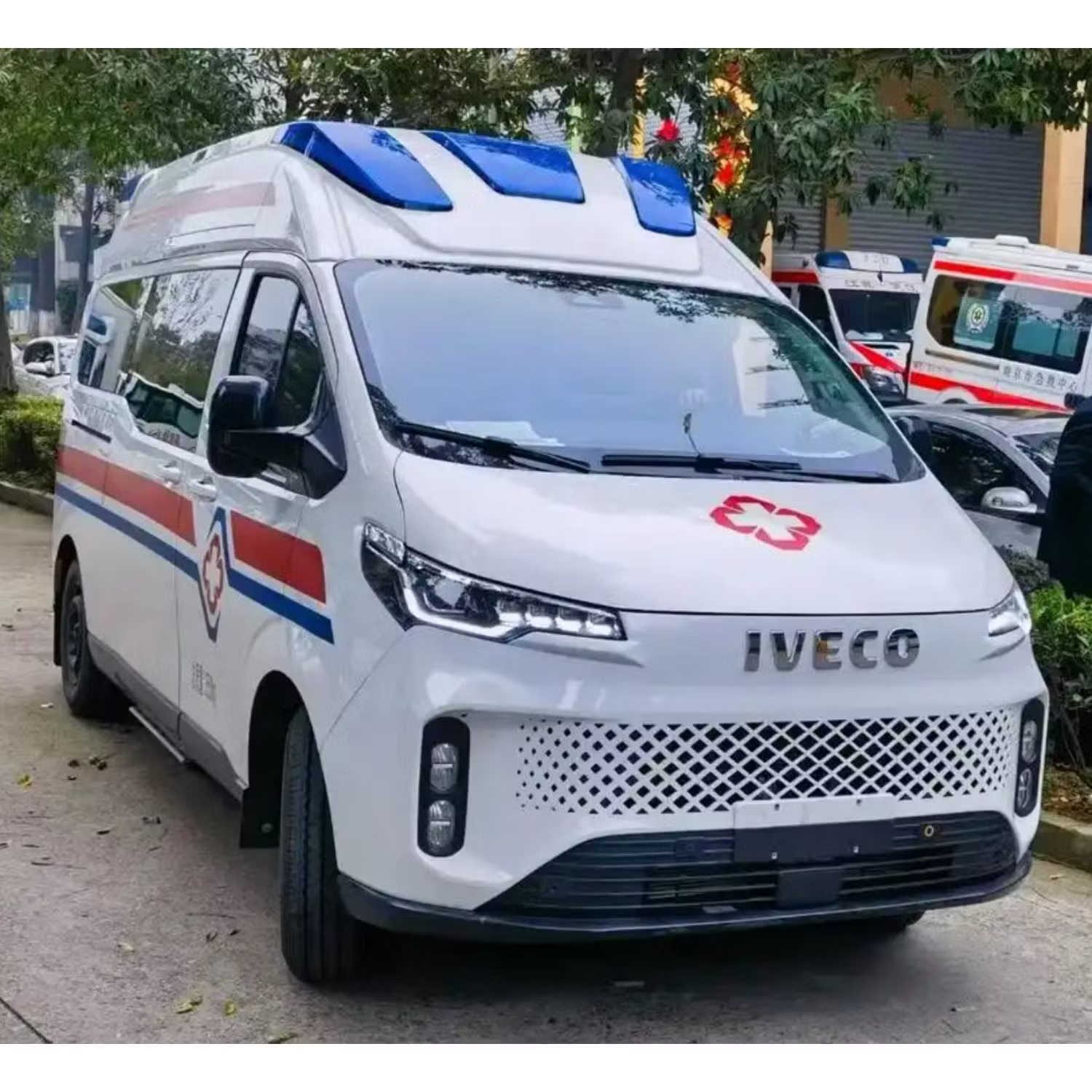
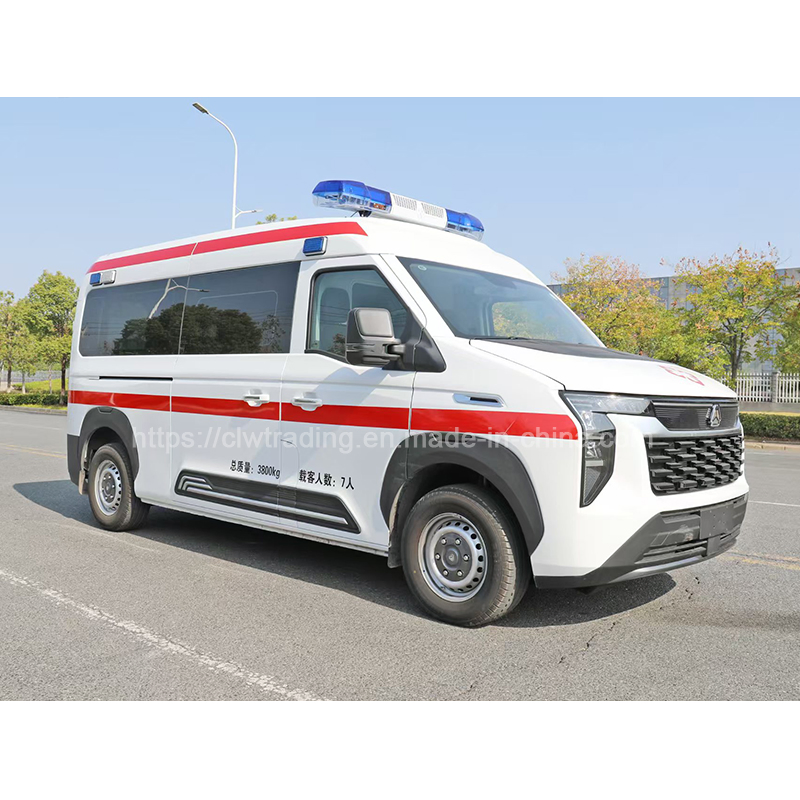
A van ambulance is built inside a standard panel van, such as a Foton View G9, a JMC Ford Transit or a Naveco Iveco. The patient area is part of the van body. The floor is low, so the crew can load the stretcher quickly. The van drives like a large car and fits city streets, hospital gates and parking bays.
A 4x4 ambulance drives all four wheels. It has more ground clearance and stronger suspension for mud, sand and rocky tracks. There are two common types. One is a 4x4 van, such as the Iveco Daily 4x4. The other is a pickup chassis with a separate medical box on the back, such as the Isuzu 4x4 pickup ambulance. A 4x4 costs more to buy and uses more fuel. It makes sense where roads wash out in the rains, or where a van would get stuck.
Quick comparison
| Point | 4x2 van ambulance | 4x4 ambulance |
|---|---|---|
| Roads it suits | Tarmac and good gravel | Mud, sand, rocky and flooded tracks |
| Loading height | Low, easy to load | Higher, needs a loading stretcher or a step |
| Fuel use | Lower | Higher |
| Service | Simple, parts shared with common vans | More parts to service, such as the transfer case |
| Typical users | City hospitals, private clinics, event cover | Rural clinics, mines, NGOs, disaster teams |
| Example price on this site | Foton G7: US$15,900-16,899 | Isuzu 4x4 pickup: US$26,000-35,000 |
Transport or monitoring layout
The layout decides what the crew can do on the way to hospital. A transport (or transfer) ambulance moves a patient who is stable. It usually has a stretcher, oxygen, a drip stand, cabinets and seats for the crew. A monitoring ambulance adds space and power for medical devices. These can include a patient monitor, a suction unit and a defibrillator (a device that shocks the heart back into rhythm). It needs an inverter (a unit that turns battery power into mains power) and more cabinets.
A negative pressure ambulance pulls air into the patient cabin and sends it out through a filter. This keeps germs away from the driver and the street. It suits transfers of patients with infectious diseases. The Sinotruk HOWO 4x2 van on this site is built this way.
Write down the equipment you need before you ask for a price. The equipment list can change the price a lot.
Petrol or diesel engine
Petrol vans, such as the Foton G7 and the HOWO 4x2, cost less to buy and run quietly. Petrol is easy to find in towns. Diesel engines use less fuel on long rural trips and pull better on hills. Most 4x4 ambulances use diesel. Check the emission level against your local diesel. A Euro 6 engine, such as the one in the Iveco Daily 4x4, needs low-sulphur diesel. Where fuel quality is poor, ask whether a lower emission level is offered.
What hospitals and NGOs should check
- Stretcher: manual or loading stretcher, and how it locks to the floor.
- Oxygen: the number and size of cylinders, and where you can refill them locally.
- Air conditioning: a separate rear unit keeps the patient cool in hot weather.
- Seats: how many crew and family members can ride with the patient.
- Power: the inverter size and the number of sockets for medical devices.
- Lights and siren: ask your clearing agent or transport office about local rules for emergency vehicles.
- Drive side: right-hand drive (RHD) for Kenya, Tanzania, Uganda, Zambia, Zimbabwe, Botswana and South Africa. Left-hand drive (LHD) for Nigeria and Ghana. See drive side by country.
- Service: choose a base van with parts and mechanics in your country.
Recommended trucks
All prices are the listed reference price (FOB China, ex-factory list), and the written quotation fixes the final price.
- Foton G7 Petrol Ambulance, 2.4 Litre 118 kW with Stretcher and Oxygen: a simple van for town hospitals and clinics, US$15,900-16,899.
- Foton View G9 4x2 Diesel Ambulance, 2.8 Litre 110 hp Euro 5: transport or monitoring layout for longer trips, US$28,000-35,000.
- JMC Ford Transit V362 4x2 Ambulance, 122 hp Diesel, Euro 6: for city hospitals with access to low-sulphur diesel, US$29,000-30,000.
- Naveco Iveco Juxing 4x2 Diesel Ambulance, Long Wheelbase, 93 kW: seats for 7 and rear air conditioning, US$28,500-29,600.
- Sinotruk HOWO 4x2 Negative Pressure Ambulance, 2.4 Litre Petrol: for infectious disease transfers, US$37,380-38,380.
- Isuzu 4x4 Ambulance on Pickup Chassis, 105 kW Diesel with Box Cabin: for rural clinics, mines and NGOs on rough roads, US$26,000-35,000.
- Iveco Daily 4x4 Ambulance, 180 hp Diesel with Electric Loading Stretcher: a 4x4 van with an automatic gearbox for remote hospitals, US$66,500-82,500.
See all models on the ambulances page. Councils that also run fire cover can compare the fire trucks and read the fire truck buying guide.
How to order
- Tell us where the ambulance will work and the roads it will use.
- Choose van or 4x4, and a transport or monitoring layout.
- Send your equipment list and the drive side you need.
- Check the written quotation line by line. The truck quotation checklist can help.
- Ask your clearing agent about import papers and registration for an emergency vehicle.
The full process is on our how to buy page, or contact us with your list.