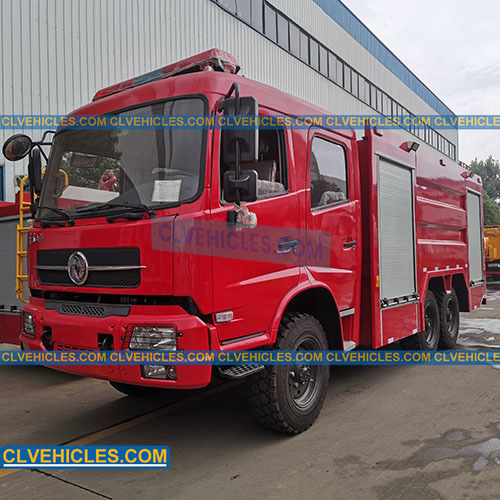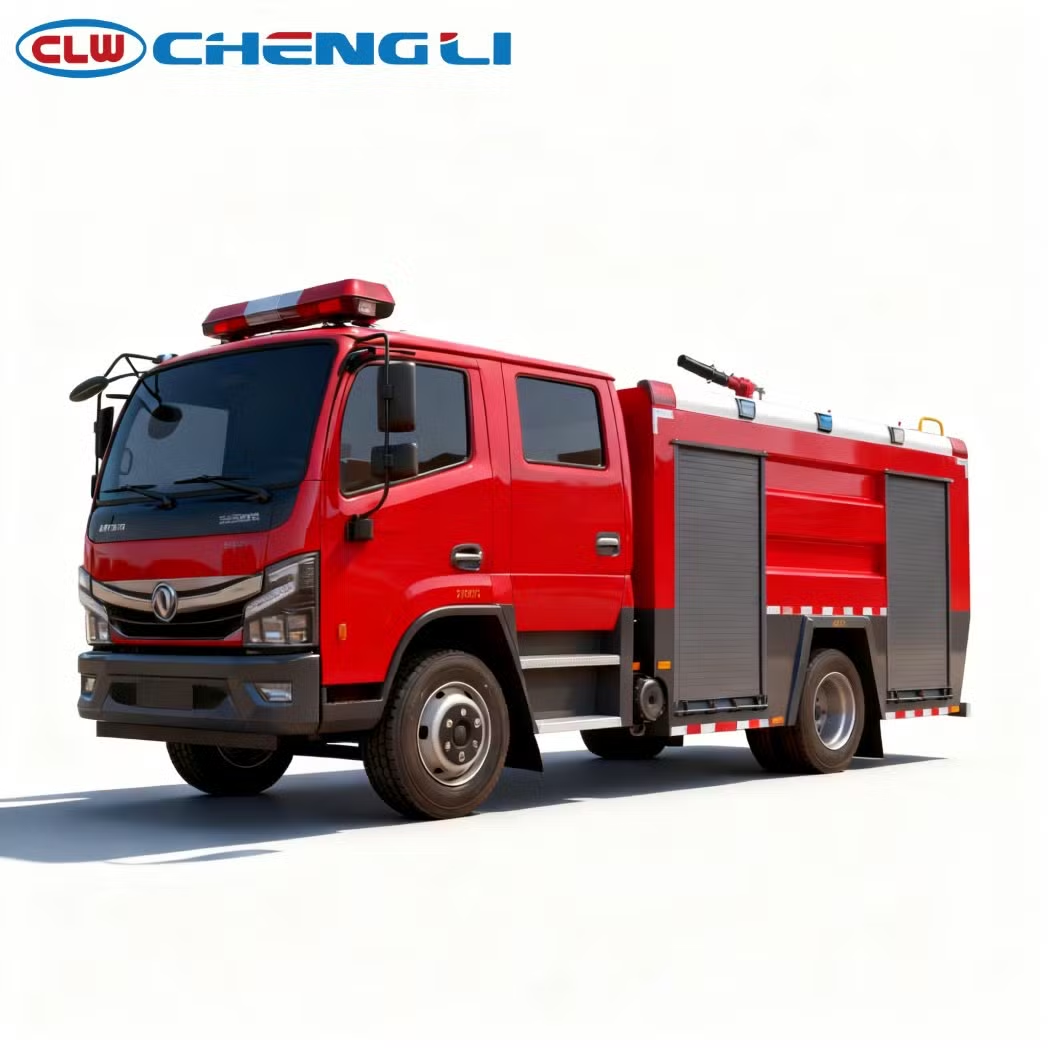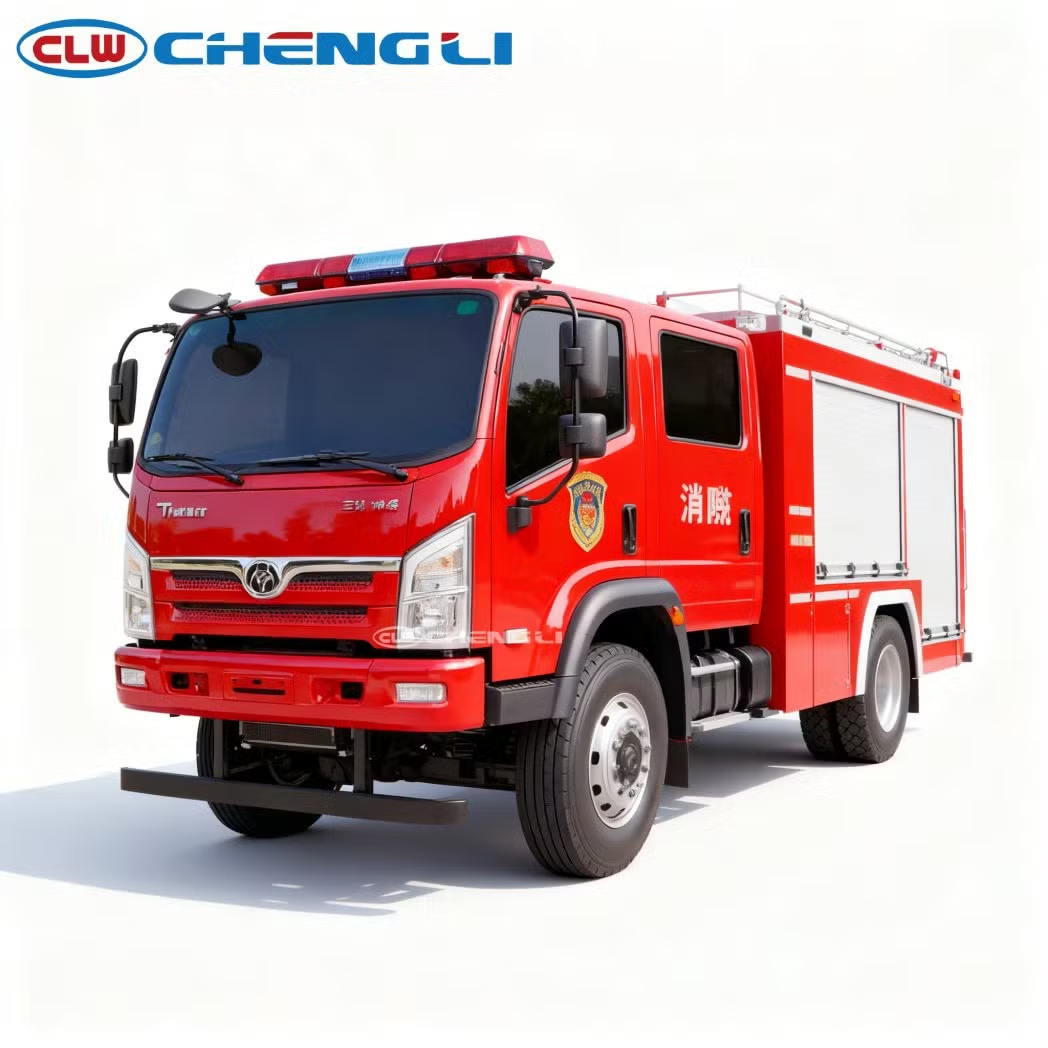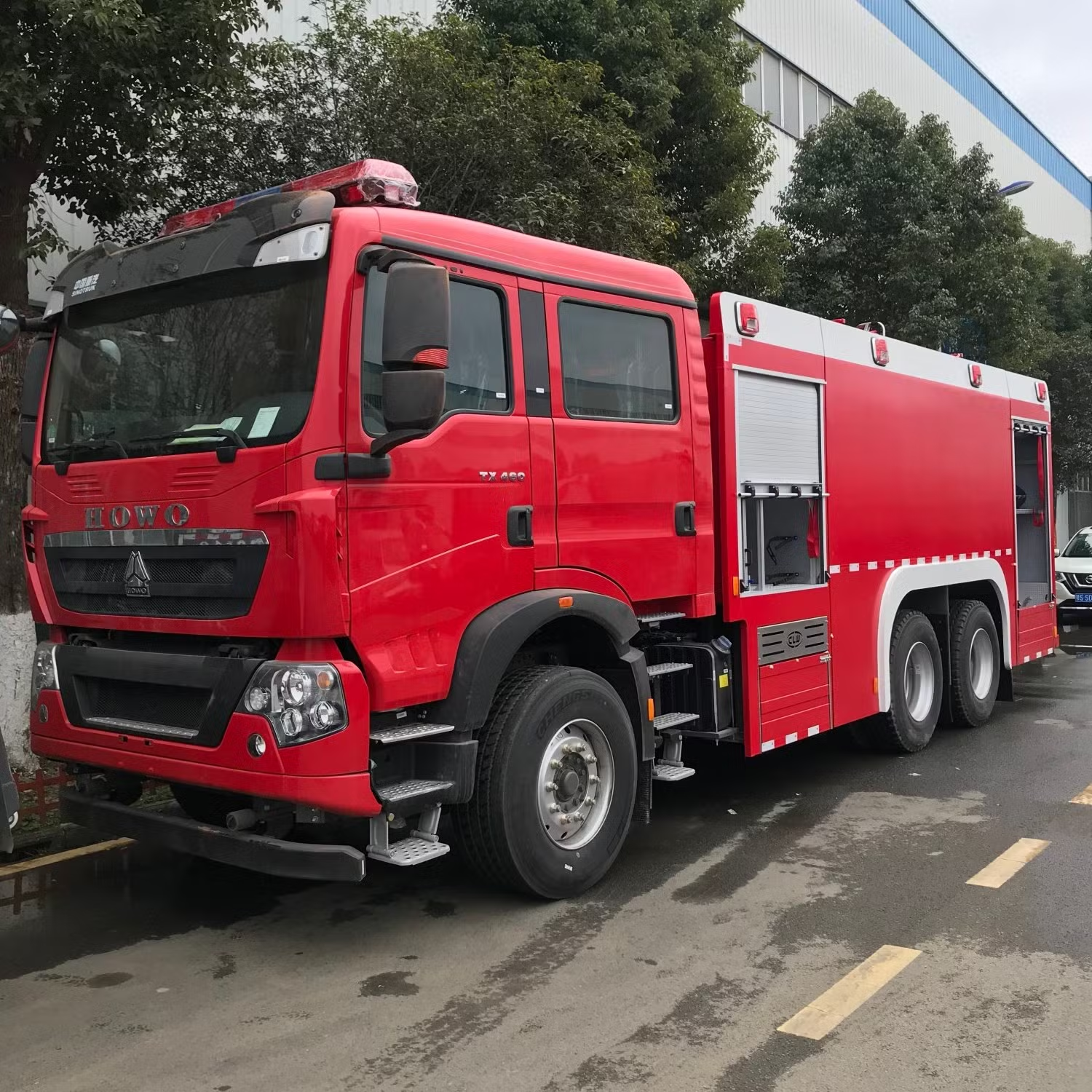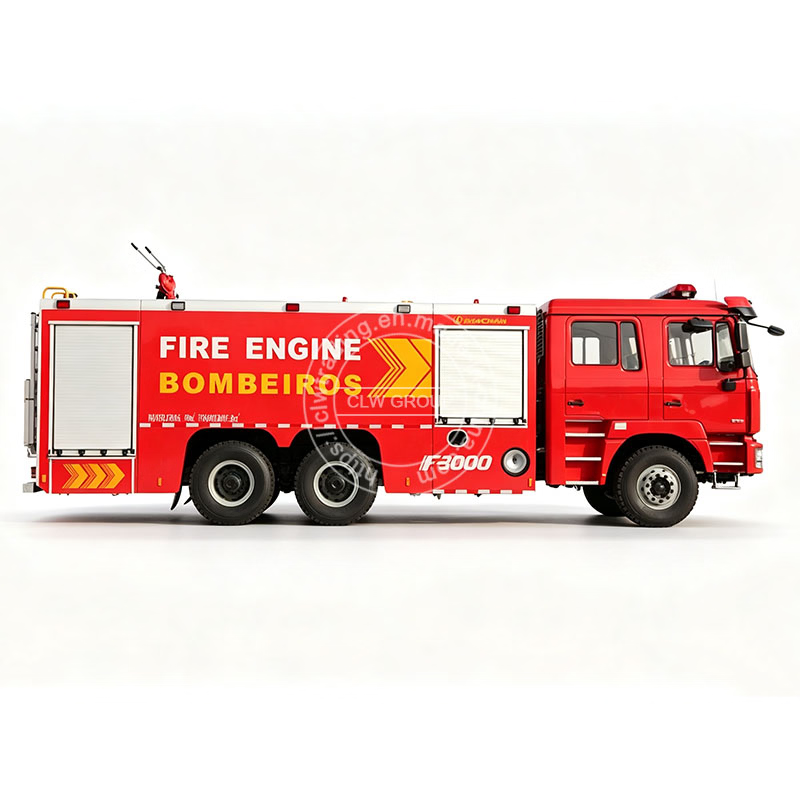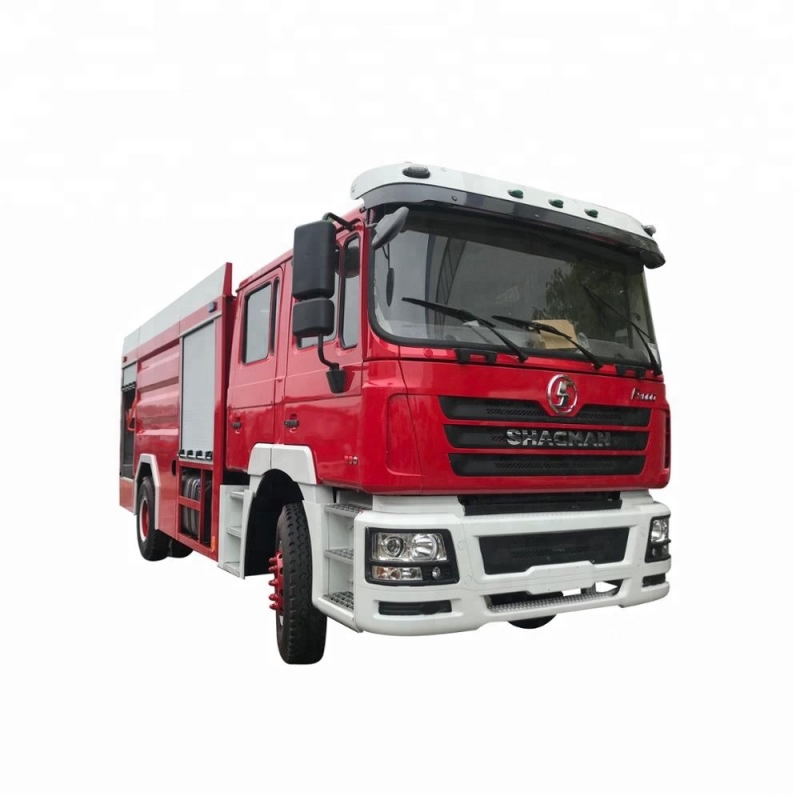
The right fire truck depends on the fires you expect to fight. A water tender (a fire truck that mainly carries water) suits towns, estates and buildings. A foam tender suits fuel depots and oil sites, because foam covers burning fuel while water alone can spread it. A 4x4 fire truck suits bush, farms and mines where roads are rough.
Water tender, foam tender or both
Many buyers choose a combined water and foam truck. It carries a main water tank and a smaller foam tank. The pump mixes foam into the water when the crew needs it. One truck can then handle house fires, vehicle fires and small fuel fires.
A pure water tender carries more water and less equipment. It feeds other fire trucks at large fires, or brings water to places with few hydrants (street water points for fire hoses). A dedicated foam tender has a large foam tank and a high-flow monitor (a big fixed nozzle on the roof). This suits fuel depots, refineries and tank farms.
Tank size and chassis
| Class | Water and foam | Chassis | Suits |
|---|---|---|---|
| Compact | About 2,000 to 3,500 litres | Light 4x2 | Estates, factories, campuses and narrow streets |
| Medium | About 4,000 to 8,000 litres | 4x2 | Town fire stations, ports and industrial areas |
| Heavy | About 9,000 to 12,000 litres | 6x4 | City stations, fuel depots and large sites |
| Water tender | 18,000 litres and more | 6x4 or 8x4 | Water supply to other trucks |
| Off-road | About 3,000 to 6,000 litres | 4x4 | Bush, forest, farms, mines and rural roads |
A bigger tank means fewer trips to refill. But a heavy truck is slower in traffic and harder to drive on small roads. A town may be better served by two medium trucks than by one very large truck.
Fire pump and monitor
The fire pump is the heart of the truck. Its flow is given in litres per second (L/s) at a set pressure. Heavy trucks on this site carry pumps of 60 or 80 L/s, and light trucks have smaller pumps.
Ask for the pump flow, pressure and brand. Also ask how the pump is driven, which is usually by a PTO (power take-off, a drive shaft from the gearbox). Check the monitor range, the number of hose outlets and the hose reel length. If you will fight fuel fires, confirm the foam ratio, which is how much foam concentrate mixes with the water, such as 3 or 6 percent.
Crew cab and equipment
A fire truck usually has a double cab (crew cab) with seats for four to six firefighters. Check the seat count against the size of your crew on each shift. Lockers on the body hold hoses, branches (hand nozzles), ladders, breathing sets and rescue tools. Ask for a written list of the equipment that comes with the truck, and what you must buy locally.
4x2, 4x4 or 6x4
- 4x2: lighter and simpler. It suits city and town stations with paved roads.
- 4x4: drive on all wheels for bush fires, mines, farms and roads that turn to mud in the rains.
- 6x4: two driven rear axles carry big tanks. It suits city stations and fuel depots with good access roads.
Also check the drive side. Countries that drive on the left, such as Kenya, Tanzania and South Africa, need right-hand drive (RHD). Countries that drive on the right, such as Nigeria and Ghana, need left-hand drive (LHD). Our drive side by country page lists the rest of Africa.
Recommended trucks
Prices are the listed reference price (FOB China, ex-factory list). The final price is fixed in the written quotation and depends on the pump, foam system and equipment.
- JMC 4x2 Compact Fire Truck, 2,000 Litre Tank: a first response truck for estates and factories, US$20,000-22,000.
- Dongfeng Freetruck 4x2 Fire Truck, 3,200 L Water and 1,600 L Foam: a light water and foam truck for towns, US$25,000-35,000.
- Tri-Ring 4x4 Forest Fire Truck, 4,400 L Water and 1,900 L Foam: an off-road truck for bush, farms and plantations, US$25,000-35,000.
- Shacman F3000 4x2 Fire Truck, 6,000 L Water and 2,000 L Foam: a medium truck for town stations, US$35,000-55,000.
- Dongfeng 6x4 Fire Truck, 12,000 Litre Water and Foam Tank: a large tank for city stations, US$50,000-60,000.
- Sinotruk HOWO 6x4 Foam Fire Truck, 9,000 L Water and 3,000 L Foam: a foam tender for fuel depots, US$89,500-93,600.
- Shacman F3000 6x4 Water Tender, 18,000 Litres: water supply where hydrants are few, US$90,800-91,800.
Compare every model on the fire trucks page. A water bowser with a fire pump and cannon can also act as a backup water supply. One example is the Dongfeng 6x4 water bowser with fire pump and cannon.
What to confirm before you pay
- Water and foam tank sizes, and the tank material.
- Pump flow, pressure and brand, and the monitor range.
- Seats in the crew cab, and the full equipment list.
- Chassis, engine model and drive side.
- Paint colour, lights, siren and any local marking rules. Check national rules with your fire authority, as this guide does not cover them.
- Training on the pump and foam system, and spare parts for the first service.
The how to buy page explains each step, from enquiry to shipping. The truck quotation checklist helps you check the written offer line by line. For price bands by class, see the fire truck price guide. Buyers in Nigeria can also read fire trucks for Lagos and Abuja.