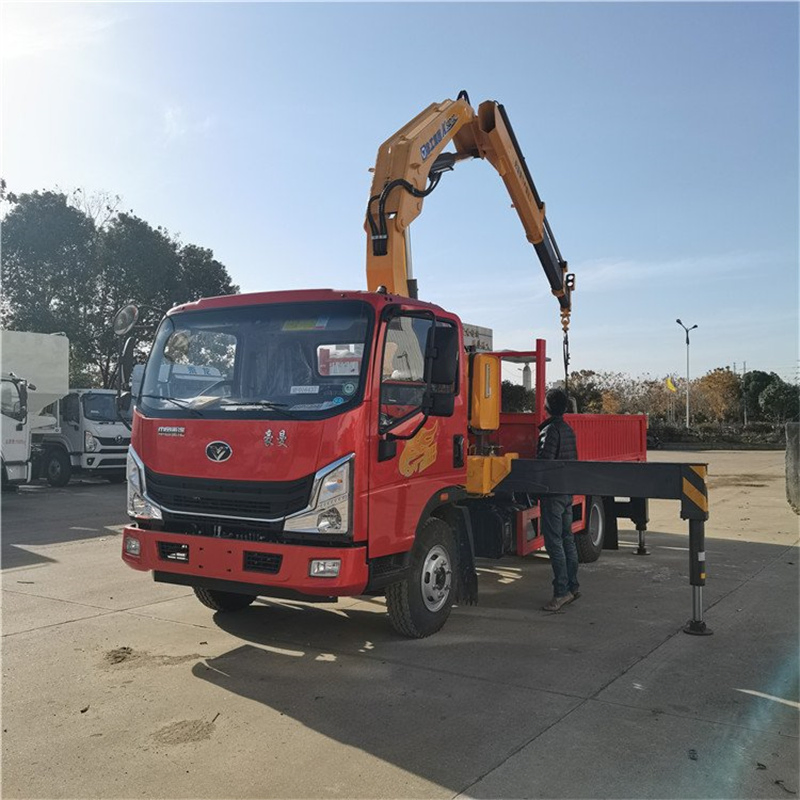
Crane trucks need outriggers because a load on the boom tries to tip the truck over sideways. The tyres and springs are too soft and too close together to resist that. Outriggers are hydraulic legs that reach out from the frame and lift the truck onto firm feet. They widen the base, take weight off the axles and hold the truck level.
The tipping line explained
Picture a line on the ground through the feet on the side nearest the load. The truck tips over that line when the load pulls harder than the truck weight holds it down. Two things decide the result. One is the load times its distance out. The other is the truck weight times its distance back from the line.
On wheels alone, the tipping line sits at the outer tyres. That is close to the centre of the truck, so the truck weight has little leverage. Outriggers move the line far out to the side. The truck weight then has a long lever, and the crane can hold much more.
The Sinotruk HOWO 4x2 Crane Truck with 5 Ton Folding Arm Crane shows the effect. Its front track is 1,770 mm. Its outrigger spread runs from 2,290 to 5,607 mm. Fully out, the legs stand more than three times wider than the wheels.
Three more jobs outriggers do
- Stop the bounce. Tyres and springs flex. A truck on its wheels leans as the load swings, and the lean moves the load farther out.
- Protect the chassis. The legs carry the crane forces straight into the ground instead of through the axles and springs.
- Level the truck. Each leg adjusts on its own, so the truck can stand level on a slope or road camber. The load chart assumes a level crane.
Outrigger layouts on CLW crane trucks
| Truck page | Outrigger detail shown |
|---|---|
| Sinotruk HOWO 4x2, 5 t folding arm | Spread 2,290-5,607 mm, plus a telescopic rear leg |
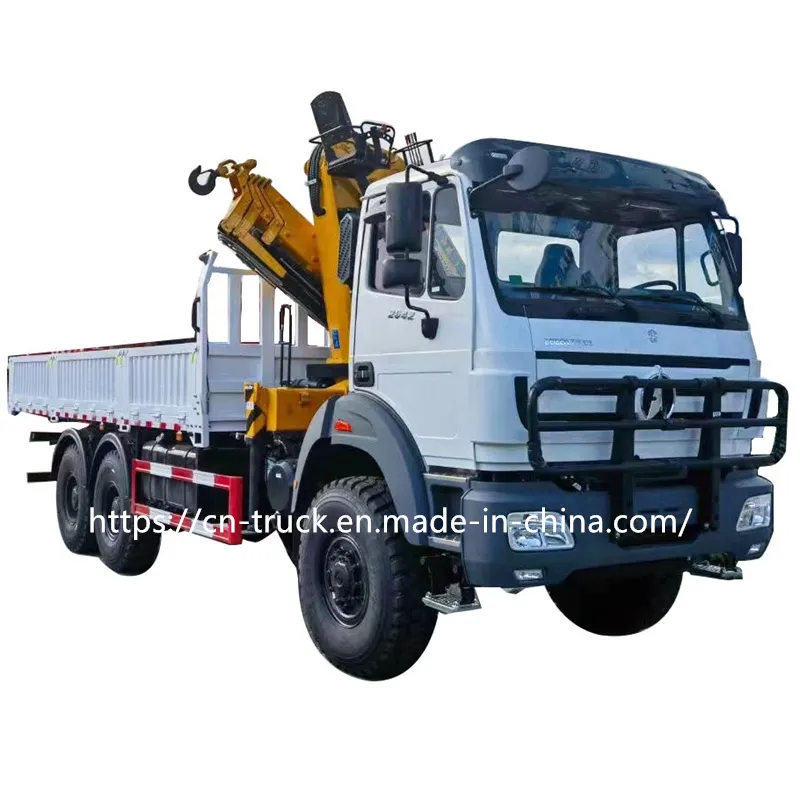
| Beiben two-axle, 10 t knuckle boom | Two legs at the front, two at the rear as an option |
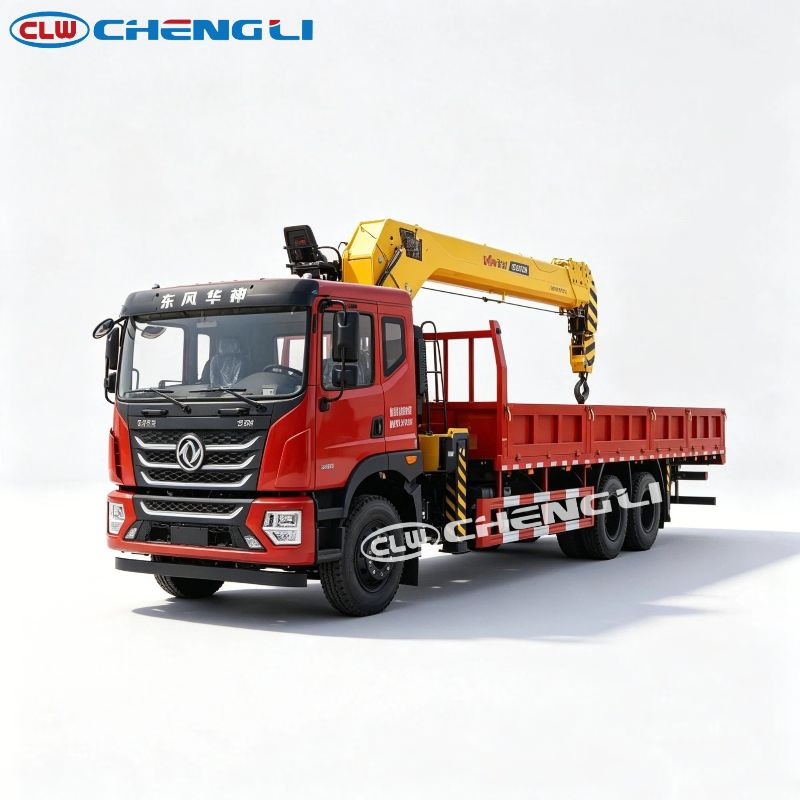
| Dongfeng 6x4, HYVA 12 t boom | HYVA front outriggers (composite type) and HYVA rear outriggers |
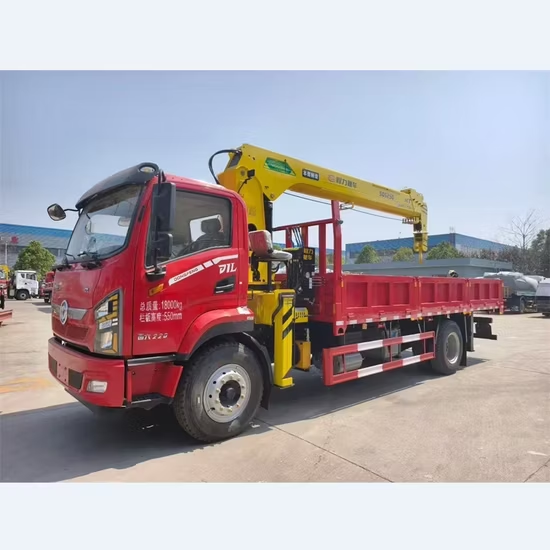
| Dongfeng 4x2, 6.3 t telescopic boom | Telescopic rear legs with single control |
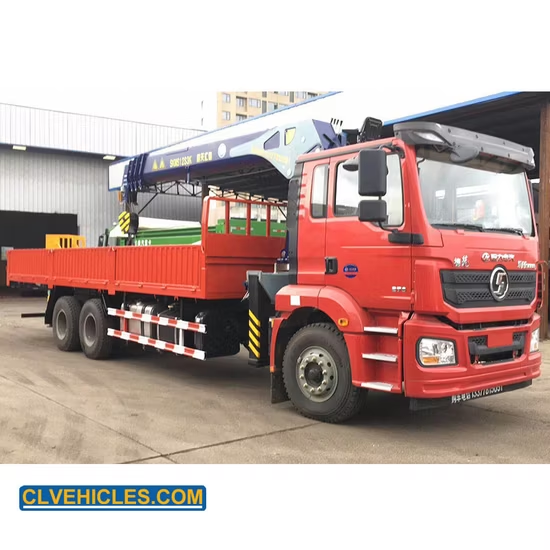
| Shacman F3000 6x4, 14 t telescopic boom | Outrigger span 1,500-2,800 mm |
Rear legs add support when the crane works over the back of the truck. Larger cranes and longer booms need more legs and a wider spread. If a truck page does not state the layout, ask for it in the quotation.
Why the ground and the pads matter
An outrigger foot puts a large force on a small area. Here is a simple example. Suppose one leg carries 10 tonnes during a lift. On a foot 0.3 m by 0.3 m, that is about 111 tonnes per square metre. On a 1 m by 1 m pad, it falls to 10 tonnes per square metre. The pad does not reduce the force. It spreads it over more ground.
Many work sites are on murram roads, loose fill or clay that turns soft in the rainy season. Culverts, drains and fresh trenches can hide weak ground at the roadside. Always set a pad under each foot, and keep the legs away from trench edges.
Setting up, and mistakes to avoid
- Park on the firmest, most level ground you can reach, close to the load.
- Put a solid pad under every foot.
- Extend each beam to the position the load chart needs. Many charts rate full lifts only with the beams fully out.
- Lower the jacks until the tyres carry little or no weight, and check the truck is level.
- After the lift, stow the boom first. Retract the legs last.
Common mistakes are lifting with the beams half out, resting a foot on a kerb or loose stones, and not rechecking the legs on a long job. Follow the crane manual and the rules that apply where the truck works.
Crane trucks to compare
- Sinotruk HOWO 4x2 Crane Truck with 5 Ton Folding Arm Crane: wide 5.6 m spread on a light chassis.
- Beiben Two-Axle Knuckle Boom Crane Truck, 10 t Folding Crane: rear legs offered for work over the back.
- Dongfeng 6x4 Crane Truck with HYVA 12 Ton Boom Crane: front and rear HYVA outriggers for long reach.
- Dongfeng 4x2 Crane Truck, 6.3 Tonne Telescopic Boom: simple single-control rear legs.
- Shacman F3000 6x4 Boom Truck with 14 t Telescopic Crane: a heavier crane on three axles.
- Shacman 6x4 Truck Mounted Crane, 12 t Telescopic Boom: outrigger layout confirmed in the quotation.
See the full range of crane trucks and bare truck chassis. To see how outriggers change the safe load, read how to read a crane truck lifting capacity. For choosing a crane size, use the crane lorry buying guide. Then send your site details through the contact page.