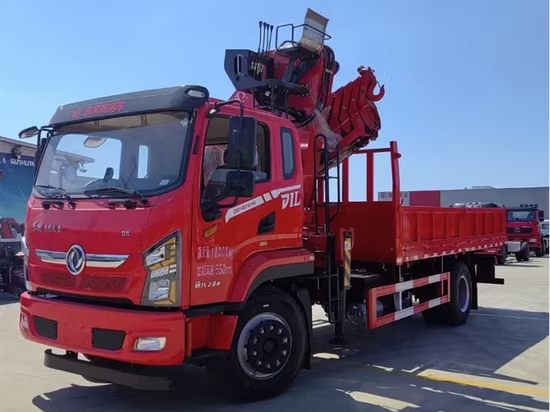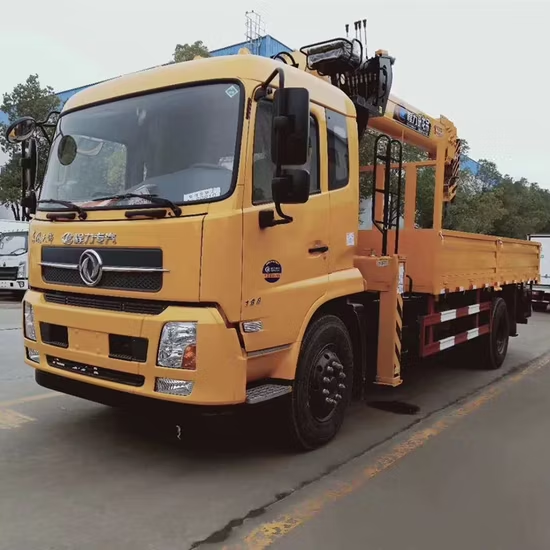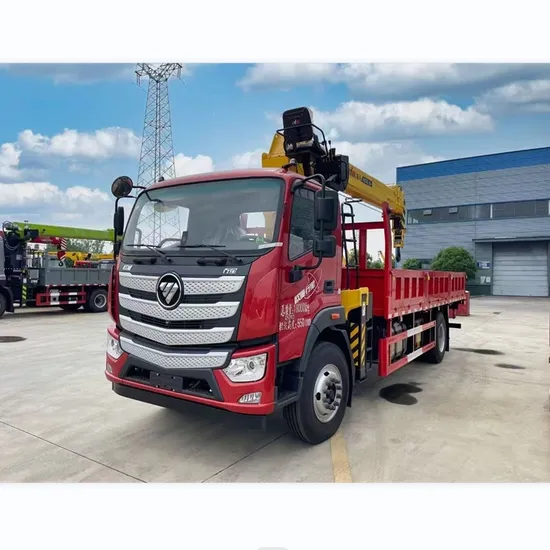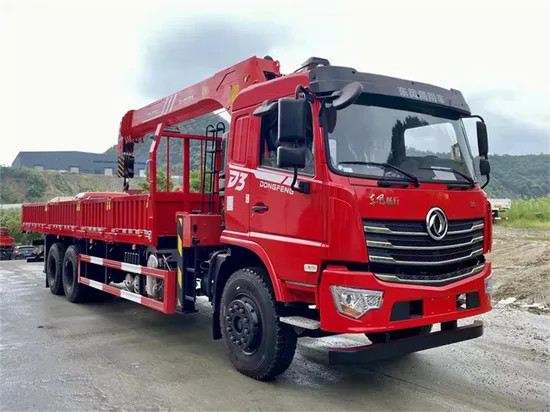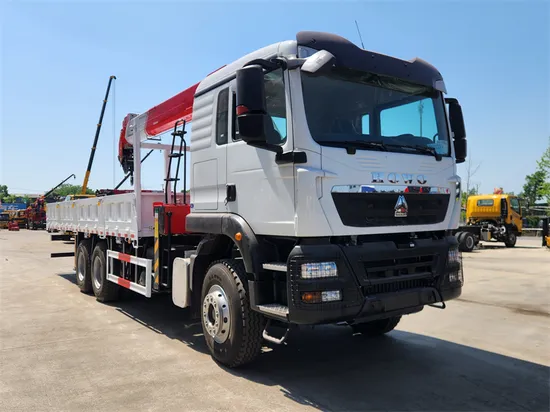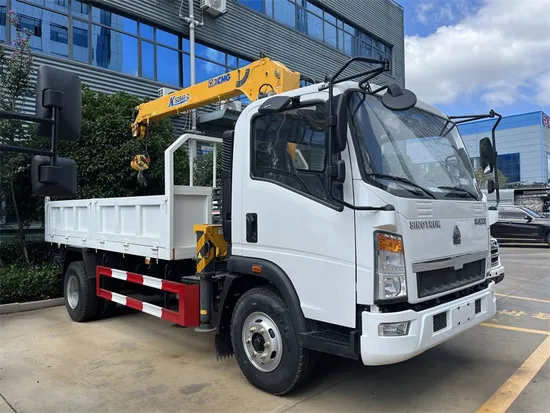
A crane lorry is a truck with a cargo deck and a hydraulic crane mounted behind the cab. It loads and unloads itself, so one truck and one operator can deliver steel, blocks, pipes, containers, transformers or machines without hiring a separate crane. In Kenya, Zambia and South Africa it may also be called a truck-mounted crane, boom truck or "hiab" (after a well-known crane maker).
This guide explains how to read a crane rating, how to choose the boom type and chassis, and what each size costs from CLW.
1. The tonne rating is the lift close to the truck
A "12 tonne" crane lifts 12 tonnes only with the boom short and close to the truck, usually at about 2 to 3 metres from the centre of the crane. As the boom reaches further out, the safe load falls quickly. At 10 metres the same crane may lift only 2 to 3 tonnes.
So before you choose a size, write down:
- the heaviest single item you lift;
- how far it is from the side of the truck when you lift it (the working radius);
- how high you must place it, for example on a first-floor slab or a stand.
Then ask for the crane's load chart, which shows the safe load at each radius and boom length, and check your heaviest lift against it.
2. Telescopic (straight) boom or knuckle boom?
- Telescopic or straight boom: the boom slides out in three to five sections. It is simple, strong and reaches high, and it costs less for the same rating. It suits building materials, poles and general yard work.
- Knuckle (folding) boom: the boom bends in the middle and folds small behind the cab, which leaves a longer deck. It places loads precisely, can reach over walls and into buildings, and is common for blocks, bricks and city deliveries.
The Maputo and Beira guide compares the two for port and yard work.
3. Size classes and matching trucks
- Up to 3.2 tonnes, light 4x2: shops, builders' merchants and utility crews. HOWO 4x2 light crane truck (US$19,500) and Dongfeng Captain with 3.2 tonne knuckle boom (US$25,500).
- 5 to 8 tonnes, medium 4x2: the most popular size for building materials and farm work. Dongfeng 4x2, 6.3 tonne straight boom (US$35,000), Dongfeng D1L, 8 tonne knuckle boom (US$38,000) and Foton Aumark with 6.3, 8 or 10 tonne crane (US$40,000).
- 10 to 14 tonnes, 6x4: steel, precast concrete, containers and contractors' plant. Dongfeng 6x4, 12 tonne boom, 8 m deck (US$55,000) and HOWO TX 6x4, 10 to 14 tonne boom (US$65,500).
- 14 to 16 tonnes, 8x4: heavy lifts with a long deck. Dongfeng 8x4 with 14 or 16 tonne boom (US$55,000) and HOWO 8x4 with 16 tonne knuckle boom (US$65,000).
- 4x4 and 6x6 for rough sites: mines, farms and power line work off the road. Dongfeng 4x4 double cab with 5 tonne boom (US$20,000-28,000).
4. Deck, chassis and payload
The crane takes weight and deck space from the truck. A 12 tonne crane can weigh 5 tonnes or more, so a 6x4 with a large crane carries less cargo than a plain 6x4 cargo truck. Check the deck length and the rated payload in the quotation, not only the crane size. If you mainly move goods and lift only now and then, a smaller crane leaves more payload.
5. Outriggers and safety
- Outriggers (stabiliser legs): always lift with the outriggers out and on firm ground; carry steel pads for soft soil.
- Load moment limiter: warns or stops the crane when a lift is beyond the load chart. Ask whether it is fitted.
- Controls: ground controls on both sides of the truck, or a remote control, let the operator see the load.
- Training and inspection: many countries require a trained operator and a yearly crane inspection certificate.
Prices and next steps
Prices above are reference prices (FOB China). The final price depends on the crane make and size, boom type, chassis, deck and drive side, and is fixed in a written quotation. See the crane truck price guide, browse all crane trucks, and send your heaviest lift, its working radius and your country through the contact page.