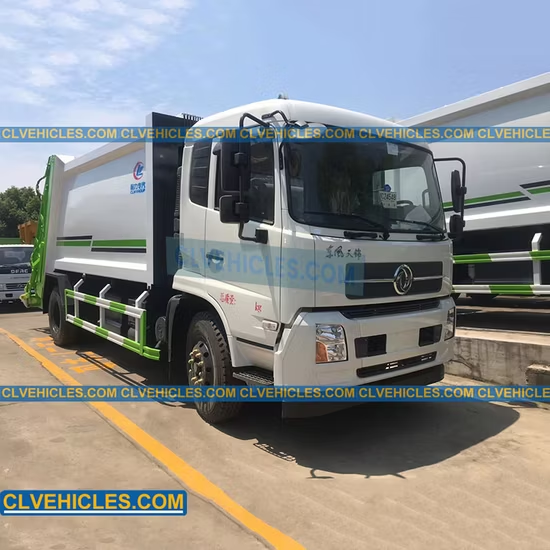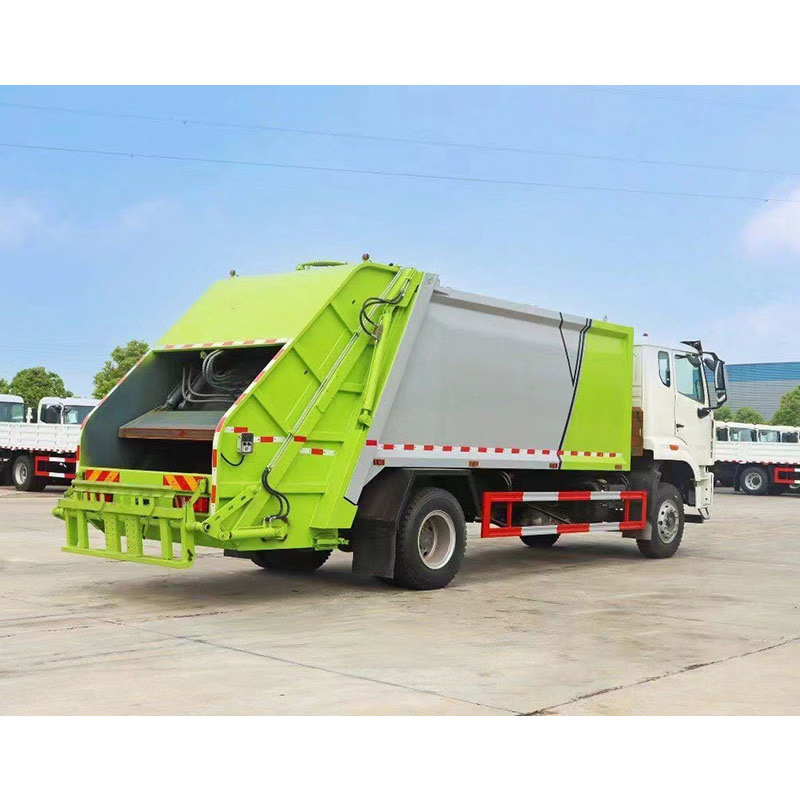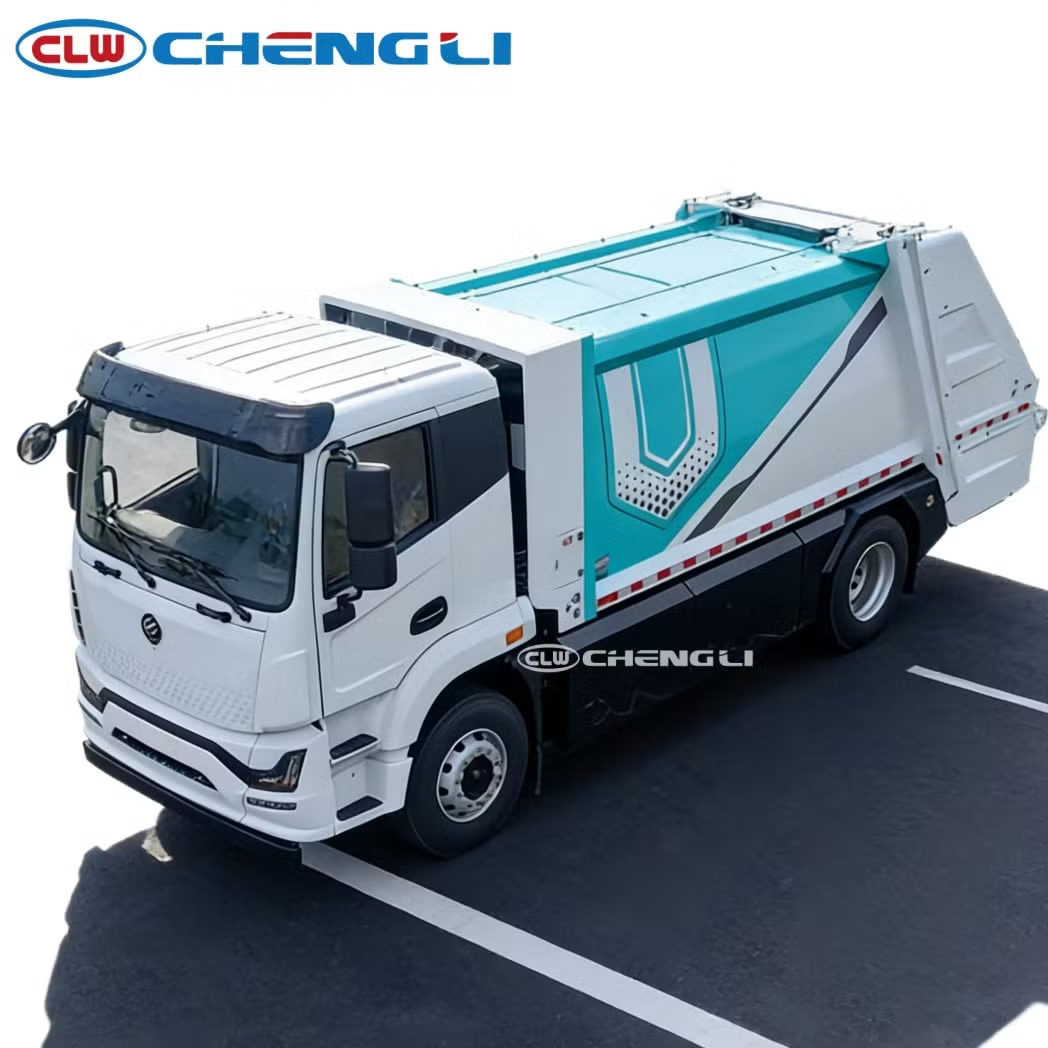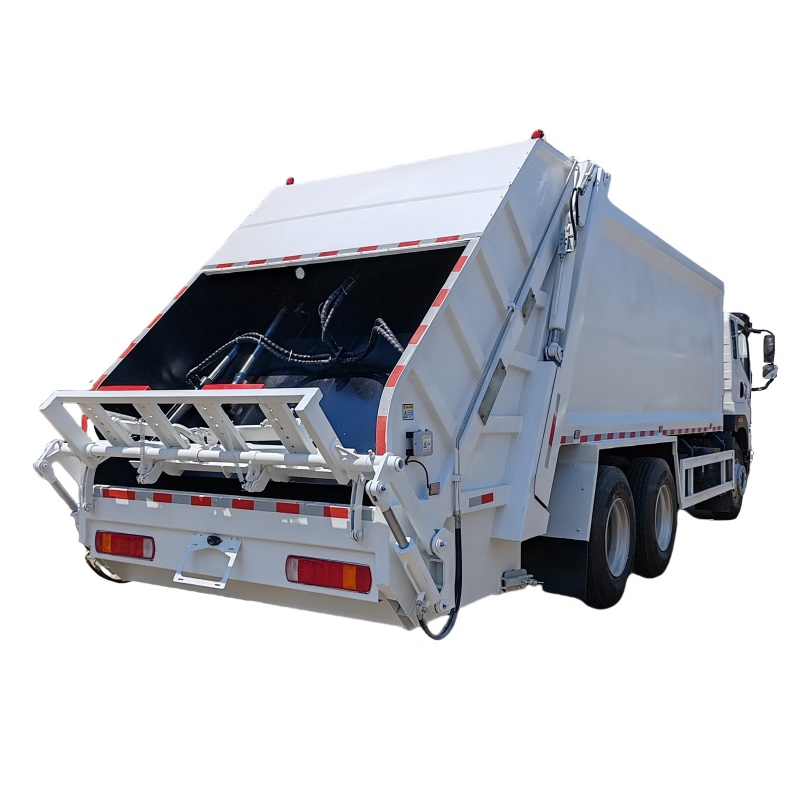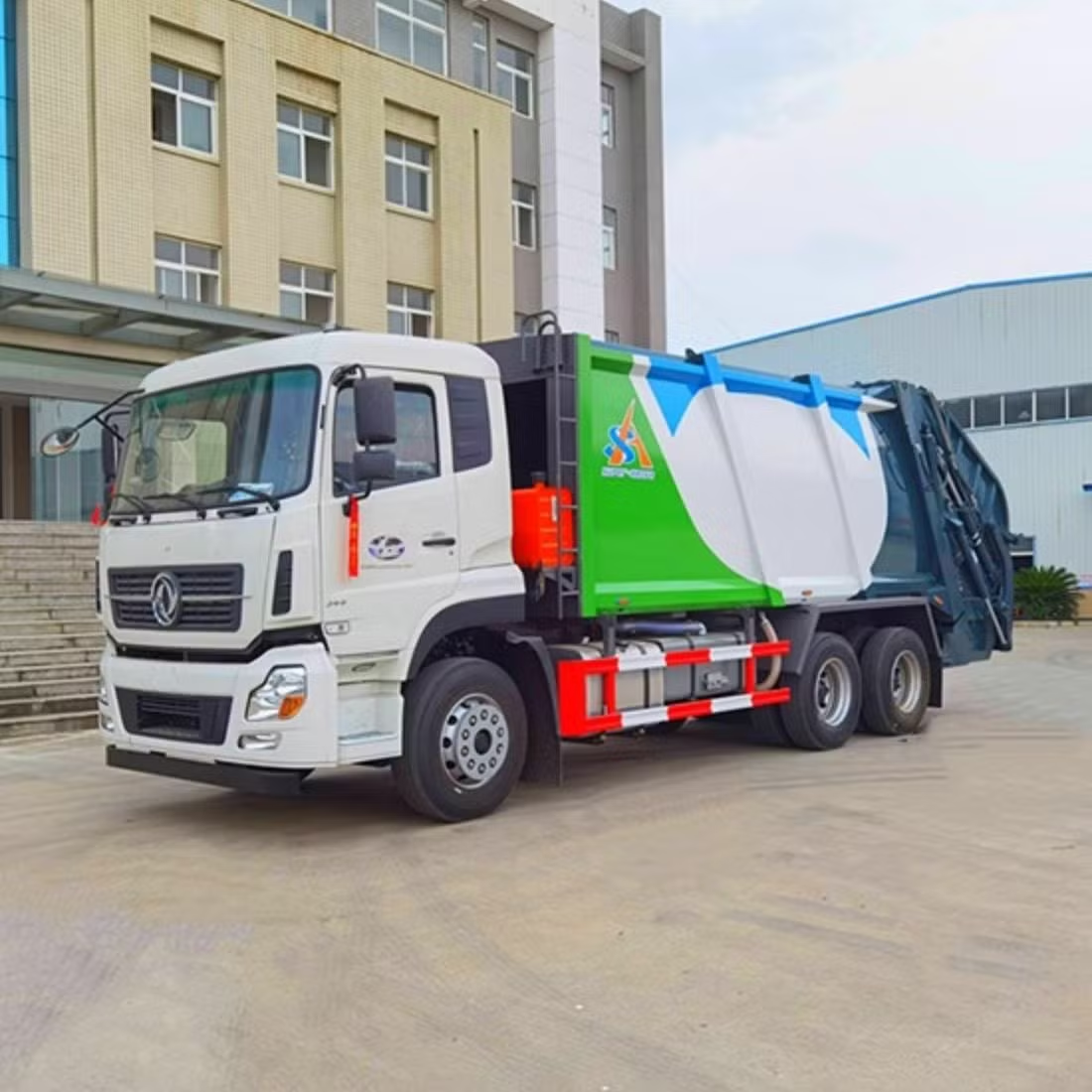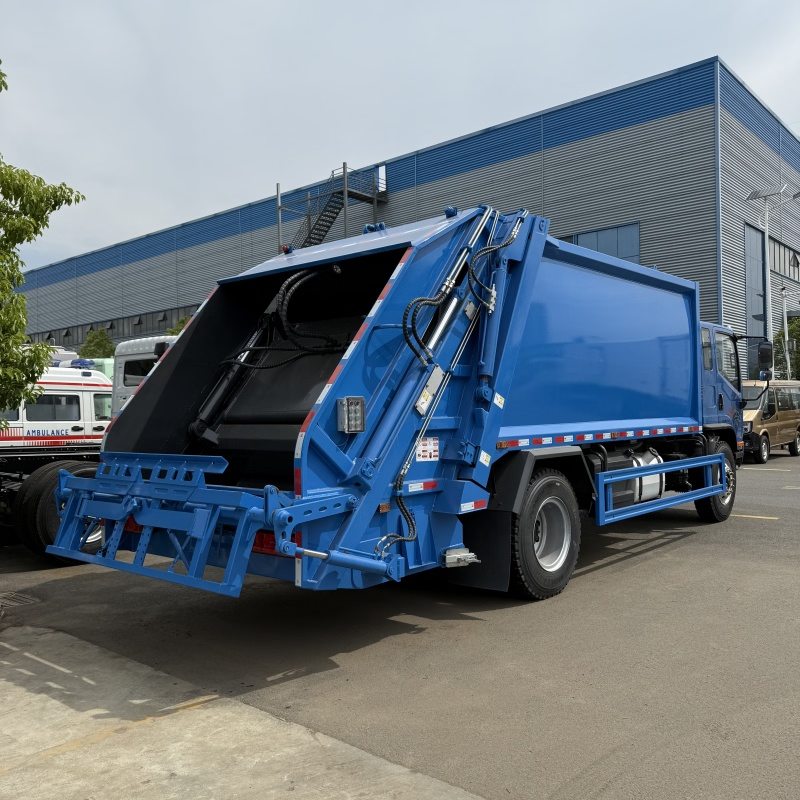
A garbage truck has two limits: body volume in cubic metres and payload in kilograms. CLW compactors run from about 3 m3 to 35 m3 of body. The weight left for waste runs from about 2 tonnes to about 13 tonnes, set by the chassis. Whichever limit the truck reaches first decides how much it really carries.
Buyers often compare compactors by body size alone. That can lead to a truck that is full by weight while the body still has space. This page shows how to read both figures on a CLW specification sheet.
Two numbers on every specification sheet
Body volume is the space inside the compactor body. It tells you how much packed waste fits. Payload is the weight the chassis may legally carry on top of its own weight. Most truck pages give it in one of two ways:
- As a rated payload, such as about 13 tonnes on the Shacman 8x4 with a 29-30 m3 body.
- As GVW (gross vehicle weight) and kerb weight. GVW is the truck plus its full load. Kerb weight is the empty truck. GVW minus kerb weight is the weight left for waste.
Weight left for waste on CLW compactors
The table uses figures from the linked truck pages. The last column is GVW minus kerb weight.
| Truck | Body volume | GVW | Kerb weight | Left for waste |
|---|---|---|---|---|
| FAW 4x2 | 10-12 m3 | 11,995 kg | 7,780 kg | 4,215 kg |
| CLW 4x2 electric | 13 m3 | 18,000 kg | 11,850 kg | 6,150 kg |
| Dongfeng 4x2 | About 14 m3 | About 18,000 kg | About 9,900 kg | About 8,100 kg |
| Sinotruk HOWO 4x2 | 16 m3 | 18,000 kg | 11,110 kg | 6,890 kg |
| FAW 6x4 | 16-22 m3 | 25,000 kg | 14,500 kg | 10,500 kg |
| Dongfeng Tianlong 6x4 | 18-22 m3 | 25,000 kg | 13,900 kg | 11,100 kg |
| Sinotruk HOWO 8x4 | 35 m3 | 31,000 kg | 18,500 kg | 12,500 kg |
Look at the three 4x2 trucks with an 18 tonne GVW. The electric unit carries a heavy battery, so it has less weight left for waste than the diesel Dongfeng. Extra body steel and equipment work the same way.
Why weight often runs out first
Divide the weight left for waste by the body volume. On the HOWO 4x2 with a 16 m3 body, that is about 430 kg for each cubic metre. On the HOWO 8x4 it is about 357 kg per cubic metre. If your packed waste is heavier than that, the truck reaches its payload before the body is full.
The HOWO 4x2 page warns about this directly. Wet market waste is heavy, and the truck can reach its rated load before the body is full. Plan routes by weight as well as by volume.
What changes the real load
- Waste type: wet food and market waste weighs far more per cubic metre than dry packaging.
- Packing: running the packer longer at each stop presses more weight into the body.
- Liquid: a full sewage tank adds weight to every trip.
- Equipment: a bin lifter, thicker steel or a battery raises kerb weight and cuts the weight left for waste.
- Road rules: axle limits where the truck works can be lower than the chassis rating. Ask your clearing agent or local transport office.
How to size a truck for your route
Start with the weight of waste each route produces in a day, not the volume. Then pick a chassis whose weight left for waste covers one full trip. After that, choose a body size that holds that weight when packed. Long trips to a far landfill favour 6x4 and 8x4 trucks. Short town routes with many stops suit a 4x2 that turns easily. For bulky building rubble, an open tipper truck may suit better than a compactor.
Garbage trucks to compare
Each price below is the listed reference price (FOB China, ex-factory list). The written quotation fixes the final price.
- FAW 4x2 Refuse Compactor, 10-12 m3 Body with Rear Bin Lifter: town routes with communal bins, US$14,500-16,500.
- Dongfeng 4x2 Garbage Compactor Truck, 14 m3 Rear Loader for Towns: medium towns and suburbs, US$30,000-40,000.
- Sinotruk HOWO 4x2 Refuse Compactor, 16 m3 Body, 18 t GVW, 210 hp: busy town centres, US$47,800-48,800.
- CLW 4x2 Electric Refuse Compactor, 13 m3 Body, 194 kWh Battery: quiet city work, US$60,000-77,000.
- FAW 6x4 Refuse Compactor, 16-22 m3 Body, 320 hp Diesel: capital cities with a far landfill, US$41,500-43,500.
- Dongfeng Tianlong 6x4 Refuse Compactor, 18-22 m3 Sealed Body: long council routes, US$35,500-60,700.
- Shacman 8x4 Refuse Compactor Truck, 29-30 m3 Body, 13 Tonne Payload: transfer work from depot to landfill, US$69,800-72,600.
Browse all refuse trucks, including hook lifts for skips. The refuse compactor buying guide covers bin lifters and body choice. Ask for the rated payload in writing on your quotation, then contact CLW with your daily tonnage and route length.