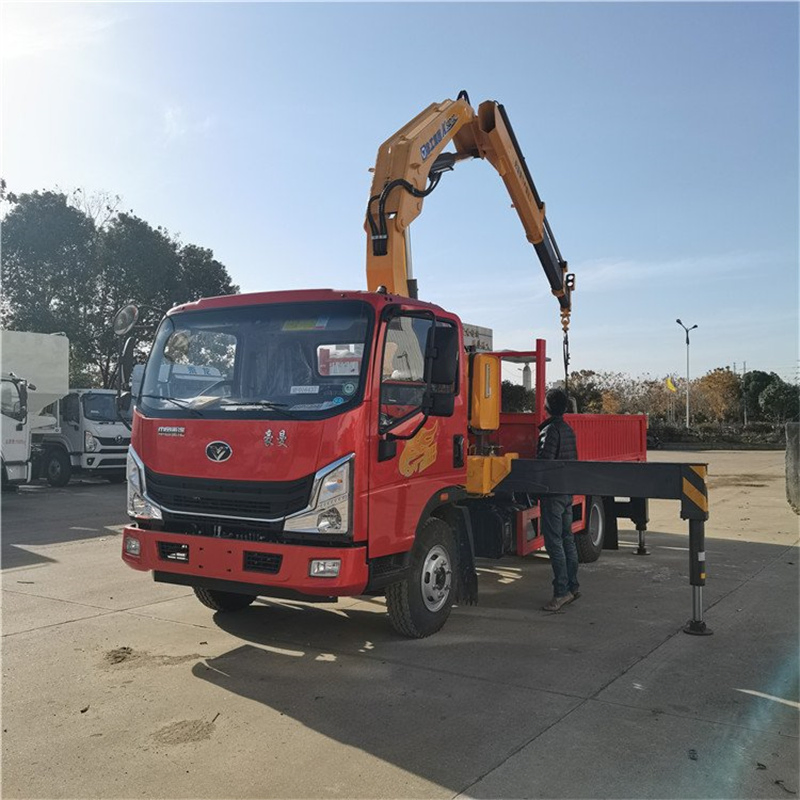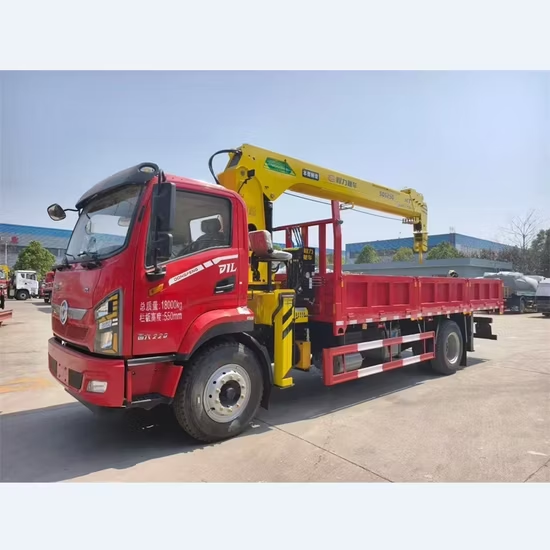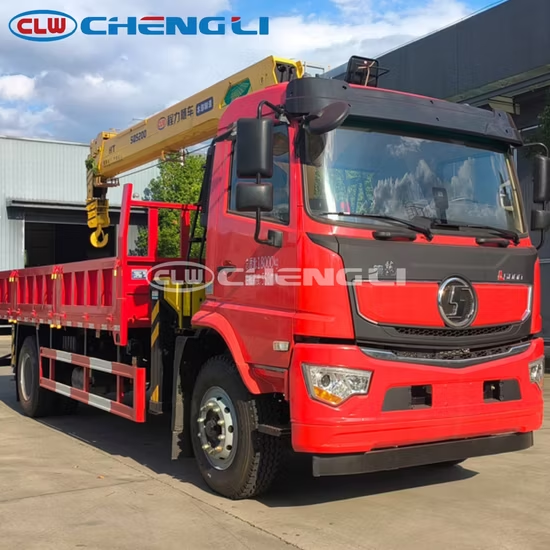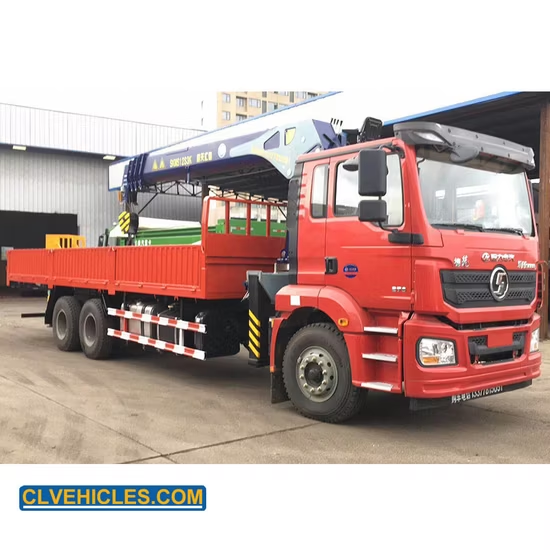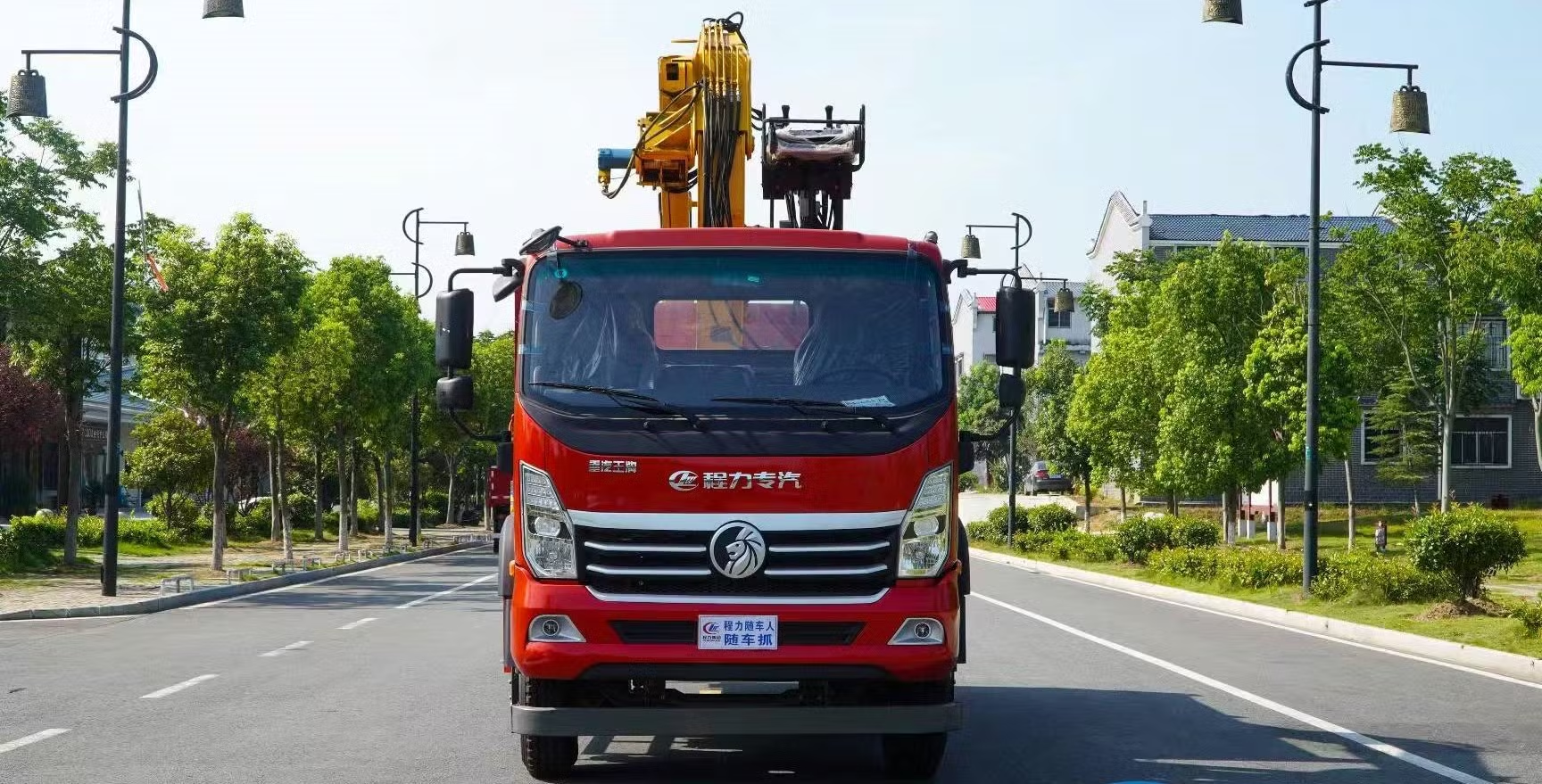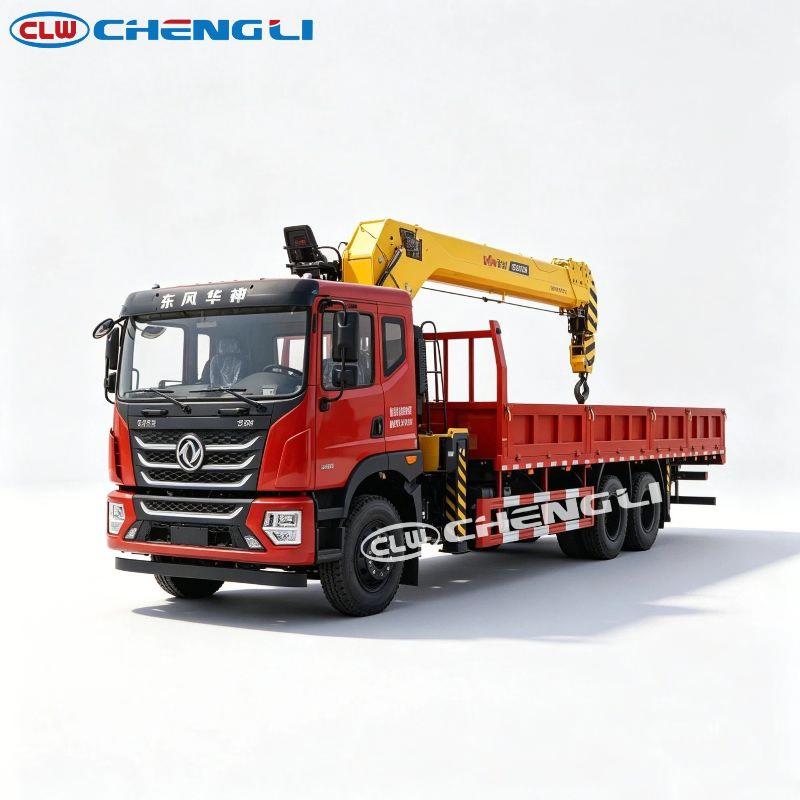
A truck-mounted crane works on oil pressure made by the truck engine. A power take-off (PTO) drives a hydraulic pump. The pump sends oil through a control valve to cylinders and motors. These raise the boom, extend its sections, turn the crane around and wind the hook rope. The operator controls each movement with a lever or a remote.
The power path, from engine to hook
Every crane lorry follows the same chain. Power starts in the diesel engine and ends at the hook. Each link in the chain has one job.
- PTO. A gear unit on the gearbox. When the driver engages it, the engine turns the pump while the truck stands still.
- Pump and oil tank. The pump draws oil from the tank and pushes it out under pressure. A filter keeps the oil clean.
- Control valve. A block of spools, one for each movement. Moving a lever opens a path for oil to one cylinder or motor.
- Cylinders and motors. Cylinders push in a straight line to raise or extend the boom. Motors turn to swing the crane and drive the winch.
- Return line. Used oil flows back to the tank, often through a cooler.
On the Dongfeng 6x4 Crane Truck with HYVA 12 Ton Boom Crane, the PTO also has a remote throttle. The operator can raise engine speed from the crane side, which gives more oil flow when it is needed.
Pressure gives force, flow gives speed
Two hydraulic figures tell you a lot about a crane. Pressure, in MPa, sets how hard a cylinder can push. Flow, in litres per minute, sets how fast it moves. A crane with high pressure but low flow can lift heavy loads, but it moves slowly.
| Truck page | Pressure | Pump flow | Oil tank |
|---|---|---|---|
| Sinotruk HOWO 4x2, 5 t folding arm crane | 28 MPa | 25 L/min | 100 L |
| Dongfeng 4x2, 6.3 t telescopic boom | 20 MPa | 40 L/min | 90 L |
| Sinotruk 4x2 grab crane, 5 t | 28 MPa | 45 L/min | not stated |
Use these figures to compare cranes of a similar size. Ask for them in the quotation if a truck page does not show them.
What each movement does
- Luffing. A large cylinder under the boom raises or lowers its angle. The Shacman 8x4 boom truck lists a maximum boom angle of 75 degrees.
- Telescoping. Boom sections slide out of each other to add reach. The HYVA crane above uses a two-stage cylinder inside the boom for this.
- Slewing. A hydraulic motor and gear ring turn the crane on its base. Many cranes turn 360 degrees without a stop. The HOWO 5 t folding crane lists a 420 degree slewing angle.
- Hoisting. A hydraulic motor turns the winch drum, which winds the wire rope over the boom tip to the hook block.
- Folding. On a knuckle boom, extra cylinders bend the arm at its joints. This lets the crane fold behind the cab for travel.
Valves that keep the load safe
Truck cranes normally carry holding valves on the boom cylinders. These lock the oil inside the cylinder when no lever is moved. If a hose leaks, the boom should stay where it is instead of dropping. A relief valve limits the top pressure in the system, which protects the pump and hoses.
A proportional valve gives finer control. The more the lever moves, the faster the cylinder moves, so the operator can place a load gently. The HYVA crane above lists a full proportional, load-sensing valve. If fine placing matters for your work, ask which valve type the quoted crane uses.
Why the truck must be set up first
The hydraulics can lift more than the truck can hold steady on its tyres. So before any lift, the operator extends the outriggers and levels the truck. Only then is the crane rated load valid. The load also gets lighter as the hook moves out from the truck. Each crane has a load chart that shows this. Learn more in the crane lorry buying guide, and compare boom styles in telescopic vs knuckle boom crane truck.
Always follow the crane manual and the rules that apply where the truck will work. This page explains how the system works. It does not replace operator training.
Crane trucks that show these parts
- Dongfeng 6x4 Crane Truck with HYVA 12 Ton Boom Crane, 22 m Lift Height: proportional valve, remote throttle and long 18.1 m working radius.
- Sinotruk HOWO 4x2 Crane Truck with 5 Ton Folding Arm Crane: a light folding crane with full hydraulic figures shown.
- Dongfeng 4x2 Crane Truck, 6.3 Tonne Telescopic Boom, 170 hp: a four-section straight boom for town deliveries.
- Shacman 8x4 Boom Truck, 12 t Telescopic Crane, 21.3 m Lift Height: long reach with a large 8.5 m cargo box.
- Shacman F3000 6x4 Boom Truck with 14 t Telescopic Crane: a heavier crane on a three-axle chassis.
- Sinotruk 4x2 Grab Crane Truck, 5 Tonne Crane: a grab on the hook for timber, scrap and loose material.
See every model in crane trucks, or start from a bare chassis in truck chassis. When you know the lift you need, read how to buy from CLW or send your job details through the contact page.