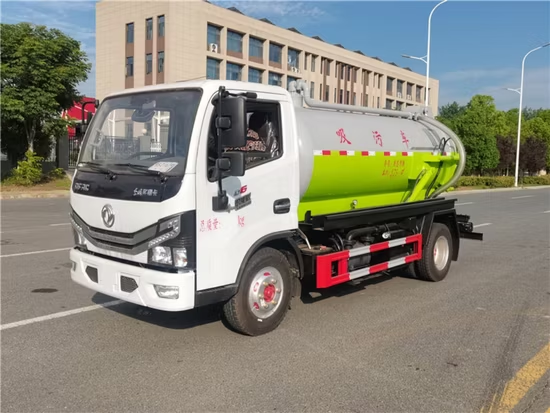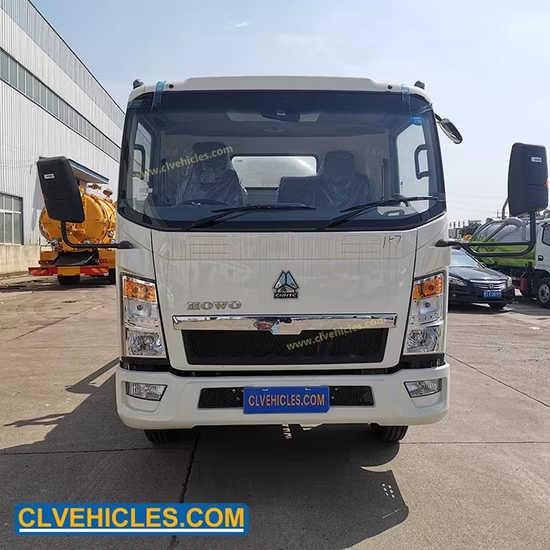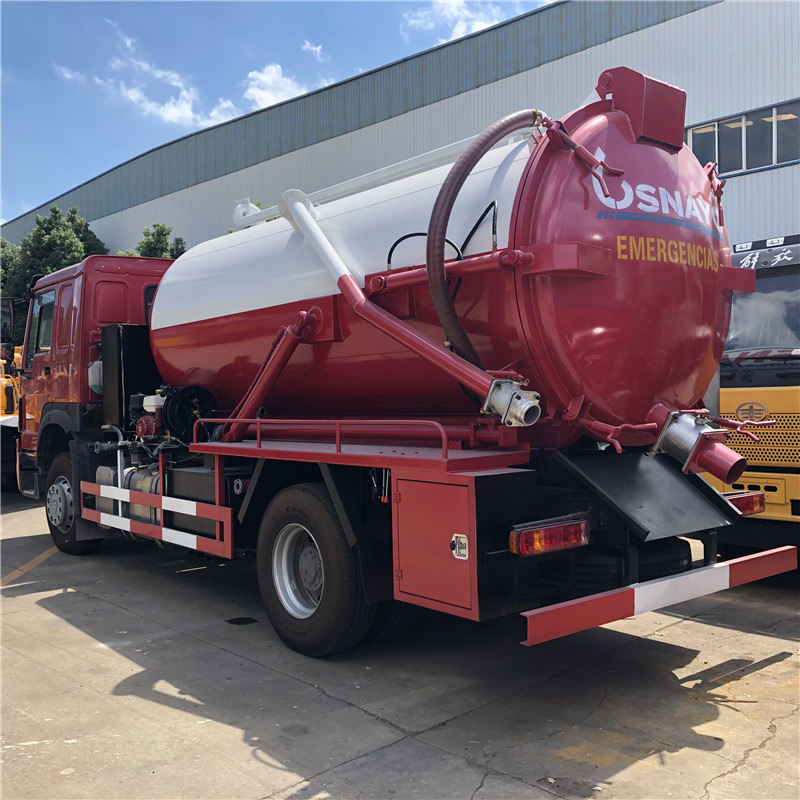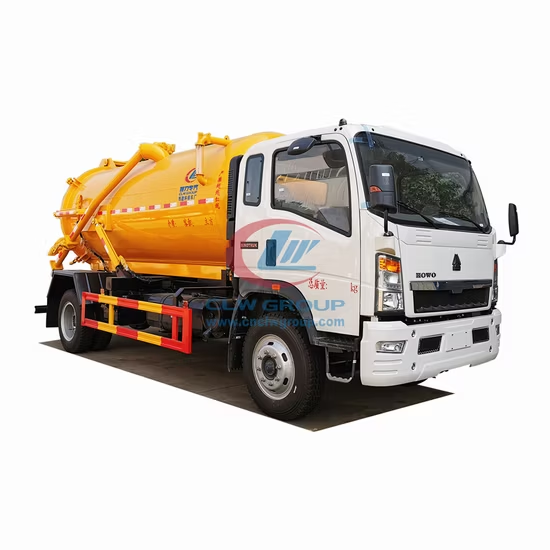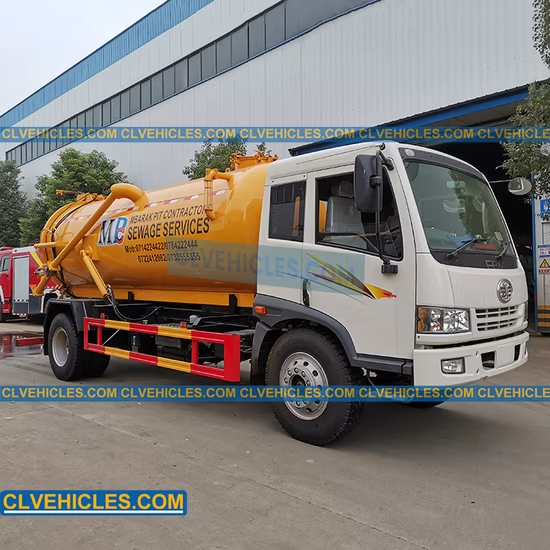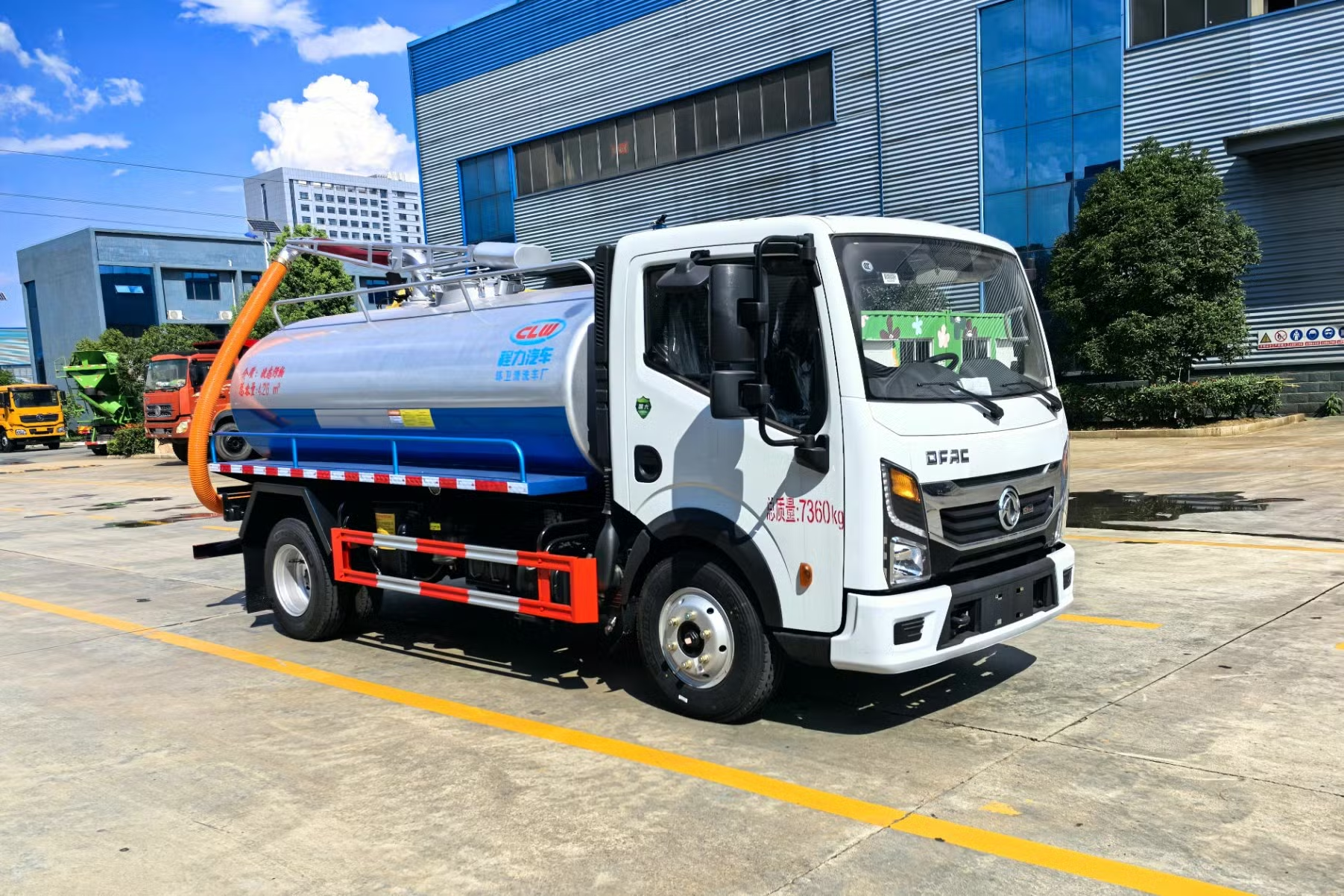
A septic pump truck, called an exhauster or honey sucker in East Africa, empties a septic tank by suction. Its engine-driven vacuum pump pulls air out of a sealed tank on the truck. Outside air pressure then pushes the sludge and water up the hose into that tank. At the disposal site the crew blows the load out with air pressure or tips the tank.
What the crew does on site
- Park as close to the septic tank cover as the plot allows, and set the parking brake.
- Open the cover and look for rags, plastic and stones near the surface. Remove what you can, because they block the hose.
- Connect the suction hose to the truck and lower the free end into the septic tank.
- Engage the power take-off (PTO) and start the vacuum pump.
- Open the inlet valve. Move the hose end through the crust and the settled sludge, so solids lift with the liquid.
- Watch the sight glass or level alarm, and stop before the truck tank is full.
- Close the valve, lift out the hose, rinse it with a little clean water and close the septic tank cover.
- Drive to an approved disposal point, such as a county or city treatment works.
Septic tanks give off harmful gases. Crews should never enter a tank, and should follow the safety and waste disposal rules where they work.
Septic tank, pit latrine or soak pit
The same truck serves all three, but each job asks something different of it.
| Source | What comes out | What helps |
|---|---|---|
| Septic tank | Liquid on top, settled sludge below | Any vacuum truck with a long enough hose |
| Pit latrine | Thick sludge mixed with rubbish | A strong pump, a short hose and a tipping tank |
| Soak pit | Mostly dirty water | A larger tank to save trips |
What slows a job down
- Hose reach. Each extra metre of hose costs some suction. Narrow lanes in places like Nairobi estates or Kampala suburbs may stop a big truck from getting close.
- Depth and altitude. Truck pages quote suction depths of about 7 to 8 metres. Thinner air at high towns reduces this a little.
- Dry sludge. Hard sludge does not flow. Adding some water first can help it move.
- Running the pump dry or overfilling. Both wear the pump. The overflow guard protects it, but the operator should still stop early.
How the truck unloads
CLW trucks offer three ways to empty the tank. The Dongfeng 4x2 septic truck below pushes the load out with air pressure, or tips the tank. Several 10,000 litre trucks lift the tank with a hydraulic ram and open a hydraulic rear door, which suits thick sludge. The HOWO 4x4 truck has a gravity outlet as well as a hydraulic tank lift. Rinse the tank and hose at the treatment works before the next job.
Choosing a tank size for your area
- 4,000 to 6,000 litres. Homes, small hotels and narrow lanes. A light 4x2 chassis turns in tight streets.
- 10,000 to 12,000 litres. Town contractors who empty several tanks per trip, with a treatment works within reach.
- 16,000 to 20,000 litres. Councils, institutions and long trips to the disposal point.
- 4x4 drive. Rural roads, mine camps and wet seasons on murram.
For prices by size, see the sewage tanker price guide. For local work in Kenya, read exhauster trucks for Kenya. To understand the pump itself, see how a vacuum truck works.
Septic pump trucks on this site
Prices below are the listed reference price (FOB China, ex-factory list), and the written quotation fixes the final price.
- Isuzu 4x2 Vacuum Tanker, 4,000 Litre Sewage Exhauster Truck: XD-60 pump and a short body for tight plots, from US$8,000.
- Dongfeng 4x2 Septic Tank Suction Truck, 5,000 Litre Sewage Tanker, 120 hp: air pressure or tipping discharge, from US$6,500.
- Sinotruk HOWO 4x2 Small Exhauster Truck, 5,000 Litre Tank, 116 hp: a light exhauster for homes and small hotels, from US$20,000.
- Sinotruk HOWO 4x4 Vacuum Tanker, 6,000 Litre Sewage Suction Truck: rural roads, with gravity outlet and tank lift, from US$25,000.
- Sinotruk HOWO 4x2 Vacuum Sewage Truck 10000 Litre, Yuchai 160hp: 7 metre suction and hydraulic rear door, from US$25,000.
- FAW 4x2 Sewage Exhauster Truck, 10,000 Litre Vacuum Tank, 220 hp: Jurop, Moro or Weilong pump options, from US$30,000.
- Dongfeng 6x4 Exhauster Truck, 12,000 to 18,000 Litre Vacuum Tank: council work with a 10-speed gearbox, price on request.
- Dongfeng 6x4 Honey Sucker Truck, 20,000 Litre Tank, 260 hp: septic tanks, soak pits and toilet blocks, from US$40,000.
Browse all models in vacuum tankers. Councils that run sanitation fleets can also compare refuse trucks for the same depot. When you know the tank size, follow how to buy to get a written quotation.