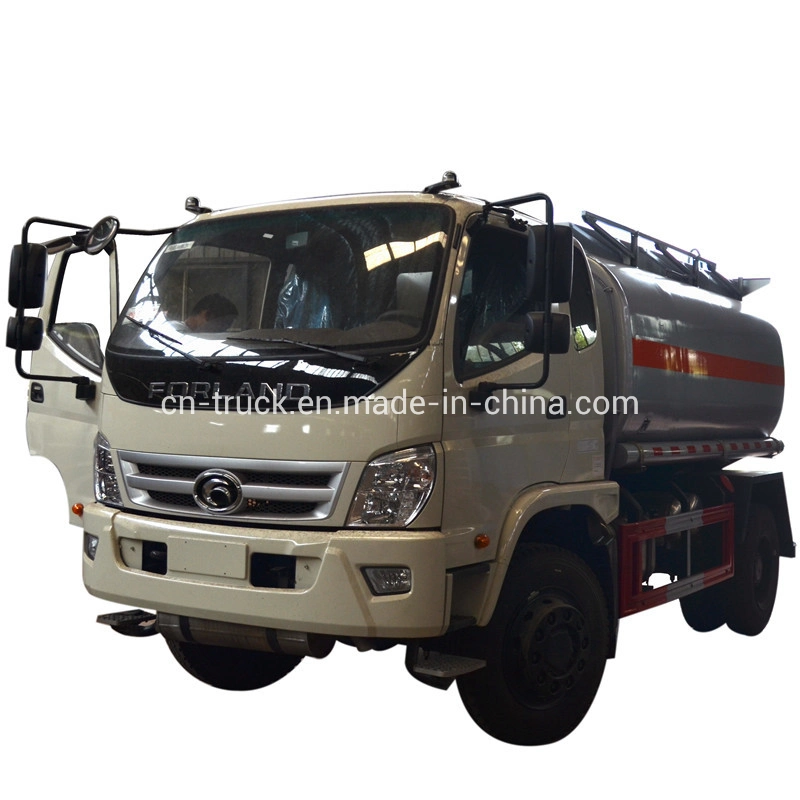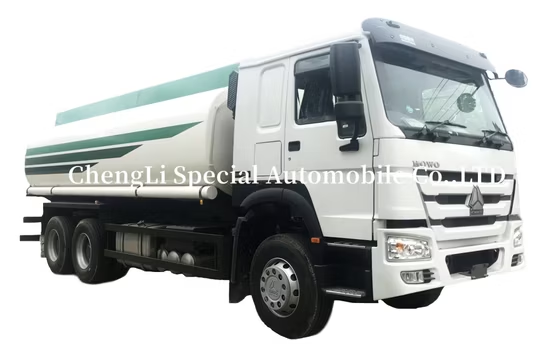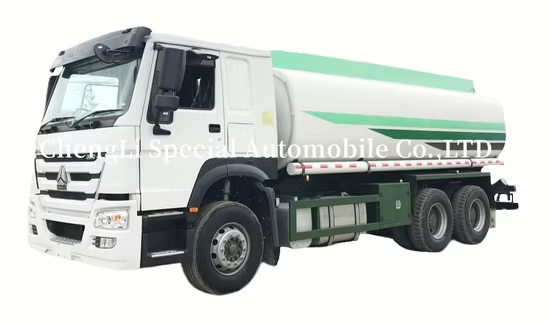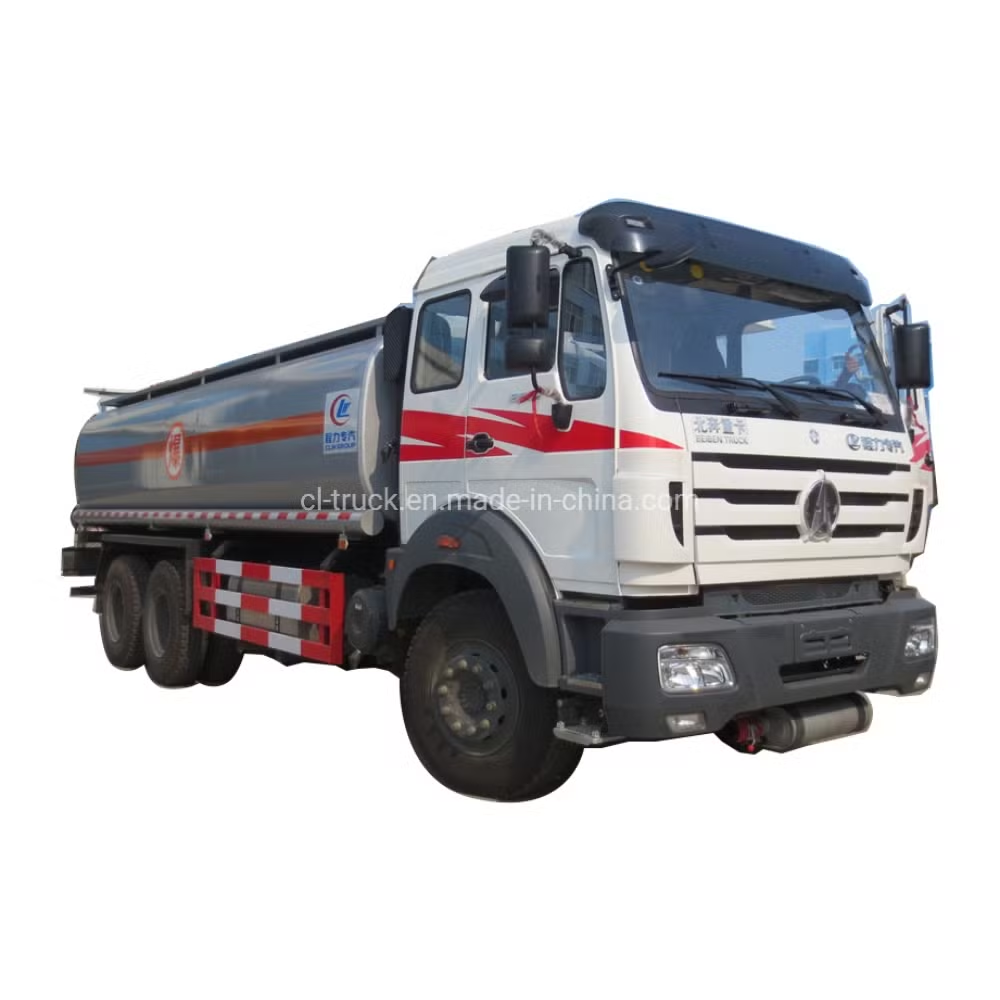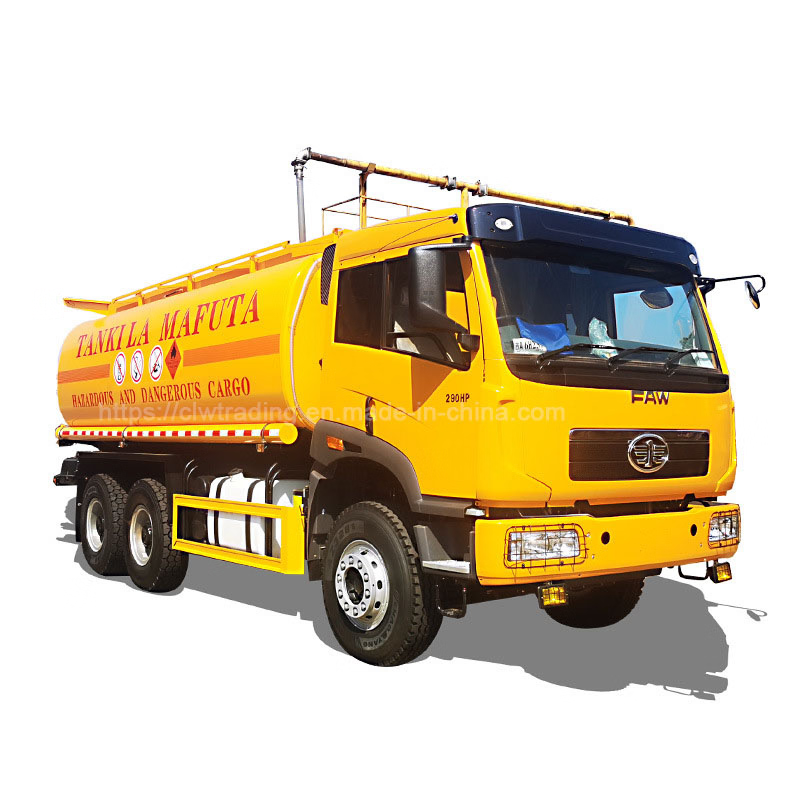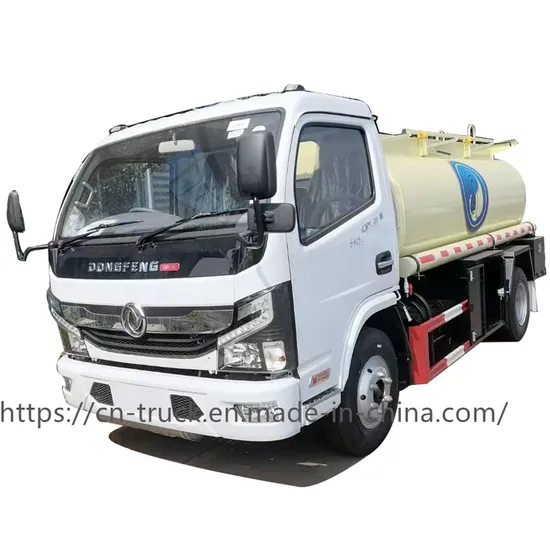
A fuel tanker unloads in one of two ways. Most trucks use a pump, driven by the engine through a power take-off (PTO), to push fuel along a hose, often through a flow meter. Others drain by gravity through a bottom valve into a tank that sits lower than the outlet. A truck with a dispenser can also fuel machines directly.
Three ways to unload
| Method | How the fuel moves | Where it suits |
|---|---|---|
| Pump and hose | The PTO pump pushes fuel from a compartment through the hose to the receiving tank | Raised tanks, distant tanks and fast drops |
| Dispenser and nozzle | The pump sends fuel through a flow meter to a nozzle on a hose reel | Mines, road camps, farms and generator sites |
| Gravity | The driver opens a bottom valve and fuel runs down into the tank | Filling stations with underground tanks |
Many trucks can do more than one. The Beiben 6x4 tanker below has a 60 m3/h pump, a flow meter and two hose reels. The 48,000 litre semi-trailer below uses four DN100 outlets with self flow, which means gravity.
The parts that do the work
- PTO and pump. The PTO takes power from the gearbox and turns the fuel pump. On many trucks the same pump can also load the tank, which is called pump in and pump out.
- Bottom valves. Each compartment has its own valve. Some trucks add an emergency shut-off valve that closes the tank fast if a hose breaks.
- Flow meter. It counts the litres that pass. Fleet managers use the reading to record what each machine or station received.
- Hose reel and nozzle. A 15 m hose reel is common on CLW bowsers. It reaches machines without moving the truck.
- Earthing wire. It connects the truck to ground before fuel moves, so static electricity cannot build up.
A delivery step by step
- Park on firm, level ground, stop the engine and set the parking brake.
- Connect the earthing wire, then the hose.
- Check that the compartment label matches the receiving tank. Diesel must go into the diesel tank.
- Check the space left in the receiving tank, so it cannot overflow.
- Open the compartment valve and the tank inlet.
- For a pumped drop, start the engine, engage the PTO and set the engine speed. For gravity, simply let the fuel run.
- Watch the meter and the receiving tank level the whole time.
- Stop the pump, close both valves, drain the hose and write down the meter reading.
Follow the fire safety and fuel handling rules where you work. Keep a fire extinguisher close to the outlet.
How long does unloading take
Pump flow sets the speed. A pump rated at 60 m3/h moves up to 1,000 litres a minute in theory. In practice the hose, the meter and the tank inlet slow it down. A 20,000 litre load needs at least 20 minutes of pumping at full rated flow. Real flow is usually lower, and you also need time to connect and check. Gravity is slower and depends on the height difference and the outlet size. If you deliver to many small tanks, a dispenser with a meter saves time on paperwork.
Problems that stop a drop
- A valve between the compartment and the pump left closed.
- Air in the line after changing compartments, which makes the pump lose prime.
- A blocked filter or a kinked hose.
- The wrong compartment opened for the product ordered.
- Engine speed set too low, so the pump runs slowly.
The diesel bowser guide covers pump, meter and hose choices on small trucks. The fuel tanker buying checklist lists the safety fittings to confirm. To size the tank itself, read how many litres a fuel tanker holds.
Fuel trucks with pumps, meters and dispensers
Prices below are the listed reference price (FOB China, ex-factory list), and the written quotation fixes the final price.
- Dongfeng 4x2 Small Fuel Bowser 3,000-5,000 Litre with Dispenser, 120 hp: PTO-driven pump, two outlets and a filling gun, from US$14,000.
- Foton 4x4 Light Fuel Bowser with Dispenser and Flow Meter, 141 hp: off-road refuelling with a quick shut-off valve, price on request.
- HOWO 6x4 Fuel Refueller Truck 20 m3 with Flow Meter and 15 m Hose Reel: metered fuel for generators and site machines, US$41,500.
- HOWO 6x4 Fuel Tanker 20,000 Litre, Four Compartments with Fuel Dispenser: four grades and a dispenser, US$41,500.
- Beiben 6x4 Fuel Tanker, 20,000 Litre Tank, Weichai 340 hp: 60 m3/h pump and two hose reels, from US$38,000.
- FAW 6x4 Fuel Tanker, 20,000 Litre Tank, Bottom Loading, 220 kW: bottom loading, emergency shut-off and a 60 m3/h pump, from US$61,800.
- 48,000 Litre Fuel Tanker Semi-Trailer, 3 Axles, 4 Compartments: gravity outlets with air-operated bottom valves, US$20,510.
See all trucks in fuel tankers and the trailers in semi-trailers. Tell us how you unload and we will match the pump and meter. Contact the CLW team for a quotation.