Most fire truck pumps are centrifugal pumps driven by the truck engine through a power take-off (PTO). Water flows in from the onboard tank, a hydrant or open water. A fast-spinning impeller throws it outwards, which raises its pressure. Valves then send the water to hose outlets and the roof monitor at a set flow and pressure.
The parts of the pump system
- PTO: takes power from the engine or gearbox and turns the pump shaft.
- Pump and impeller: the spinning wheel that moves the water and builds pressure.
- Priming pump: removes air so the main pump can draw water up a suction hose.
- Suction inlets: connect the pump to the tank or to an outside source.
- Discharge valves and outlets: feed hose lines and the monitor.
- Fire monitor: the roof water cannon, such as the PS30, PS50 or PL80W types on CLW trucks.
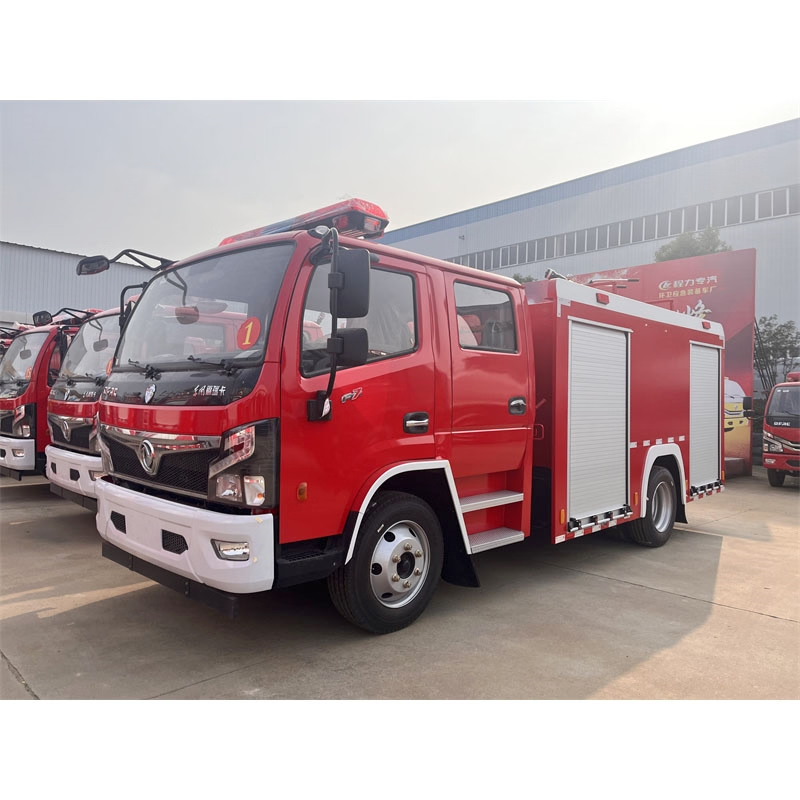
- Controls: gauges, throttle and valve levers. The Dongfeng 4x2 fire truck uses an electro-hydraulic control system.
What happens inside the pump
Water enters at the centre of the impeller, called the eye. The curved vanes spin it outwards at high speed. The pump casing then slows the water down, and its speed turns into pressure. Pressurised water leaves through the discharge side. Higher engine speed gives more flow and pressure, up to the pump rating.
On most trucks the PTO works only when the truck stands still. Some trucks use a sandwich PTO between the engine and gearbox. The Dongfeng 6x4 fire truck has one, so it can pump while driving. That helps on bush and grass fires.
Priming: why the pump needs help to draw water
A centrifugal pump cannot lift water while it is full of air. The priming pump removes the air from the pump and suction hose. Air pressure outside then pushes water up into the pump. In theory the lift limit is about 10 m. In practice it is about 7 m, and flow drops as the lift grows.
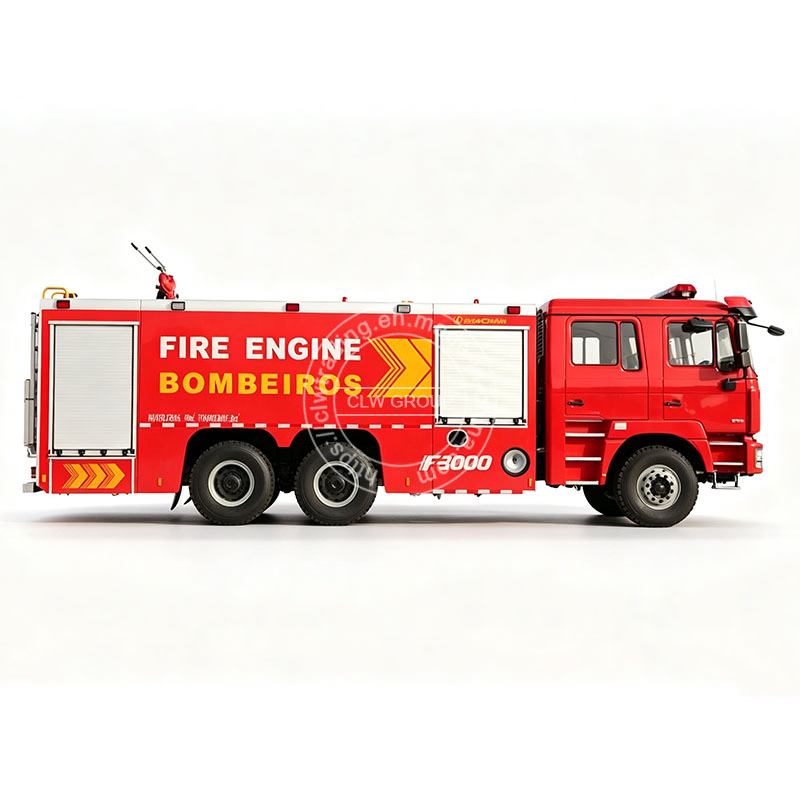
That is why fire truck pages show a suction depth and a suction time. The Shacman F3000 6x4 water tender has a suction depth of 7 m or more and a suction time of 45 s or less. The Dongfeng 6x4 fire truck gives 3 m at rated flow and 7 m at reduced flow. Park as close to the water as you safely can.
Reading pump codes and flow figures
Chinese fire pumps carry codes such as CB10/40. CB marks a vehicle fire pump, and 10 stands for a rated pressure of 1.0 MPa. The number after the slash is the rated flow in litres per second. So a CB10/40 pump delivers 40 L/s at 1.0 MPa.
| Truck | Pump | Flow | Tanks |
|---|---|---|---|
| Dongfeng 4x2 Fire Truck | CB10/30 | 30 L/s | 3,000 L water, 1,000 L foam |
| Tri-Ring 4x4 Forest Fire Truck | CB10/40 | 40 L/s | 4,400 L water, 1,900 L foam |
| Isuzu FTR 4x2 Fire Truck | CB10/40 | 40 L/s | 4,000 L water, 2,000 L foam |
| Sinotruk HOWO 4x4 Fire Truck | CB10/60 | 60 L/s | 3,000 L water, 1,000 L foam, 500 L dry powder |
| Shacman F3000 6x4 Water Tender | CB10/60 | 60 L/s | 18,000 L water |
| Sinotruk HOWO 8x4 Water Tender | Not coded | 80 L/s | Over 20,000 L water |
| Isuzu Giga 8x4 Fire Truck | CB10/100 | 100 L/s | 12,000 L water, 3,000 L foam, 2,000 L dry powder |
Pump flow and tank size go together
Flow sets how fast the tank empties. The Isuzu Giga pumps 100 L/s, so its 12,000 litre water tank lasts about two minutes at full flow. The Dongfeng 4x2 pumps 30 L/s, so its 3,000 litres last about 100 seconds. A large pump pays off when a hydrant, river or water tender can feed it.
The monitor usually takes less than the full pump flow. The Shacman water tender has a 60 L/s pump and a 50 L/s PS50 monitor. That leaves flow for hose lines at the same time.
Care and common mistakes
- Never run the pump dry. The seals heat up and fail quickly.
- Check suction hoses and gaskets. A small air leak stops priming.
- Flush the pump with clean water after foam or dirty water.
- Compare flow at the same pressure. A flow figure without pressure tells you little.
- Ask for pump training and spare seals with the truck.
Fire trucks on this site by pump size
- Dongfeng 4x2 Fire Truck, 3,000 L Water and 1,000 L Foam: a 30 L/s town truck for narrow streets.
- Tri-Ring 4x4 Forest Fire Truck, 4,400 L Water and 1,900 L Foam: a 40 L/s off-road truck for bush and farms.
- Isuzu FTR 4x2 Fire Truck, 4,000 L Water and 2,000 L Foam: a 40 L/s medium truck for town stations.
- Sinotruk HOWO 4x4 Off-Road Fire Truck, Water, Foam and Dry Powder: a 60 L/s pump on an all-wheel-drive chassis.
- Dongfeng 6x4 Fire Truck, 12,000 Litre Water and Foam Tank: a sandwich PTO for pumping on the move.
- Shacman F3000 6x4 Water Tender Fire Truck, 18,000 Litre Tank: a 60 L/s tender for areas with few hydrants.
- Sinotruk HOWO 8x4 Water Tender Fire Truck, 80 L/s Pump: a large water supply truck.
- Isuzu Giga 8x4 Fire Truck, Water, Foam and Dry Powder: a 100 L/s truck for depots, ports and airports.
Compare all fire trucks. Some water bowsers also carry a fire pump and cannon for backup supply. To choose a truck class, read the fire truck buying guide and the fire truck price guide. Send your water source, tank and flow needs on the contact page.