Yes, if the tank is split into separate compartments. Each compartment has its own manhole, bottom valve and outlet, so petrol rides in one and diesel in another without touching. A single-compartment tank should carry one product per load. When fuels do mix, the cause is usually shared pipes, hoses or a wrong valve at the drop, not the partition walls.
How compartments keep fuels apart
Inside a multi-compartment tanker, solid welded walls divide the shell into sections. Each section is filled through its own manhole on top. Each one empties through its own bottom valve and outlet pipe. Nothing connects one section to the next, so fuel cannot leak across.
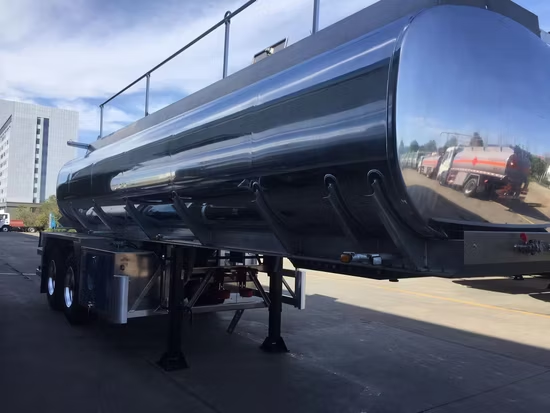
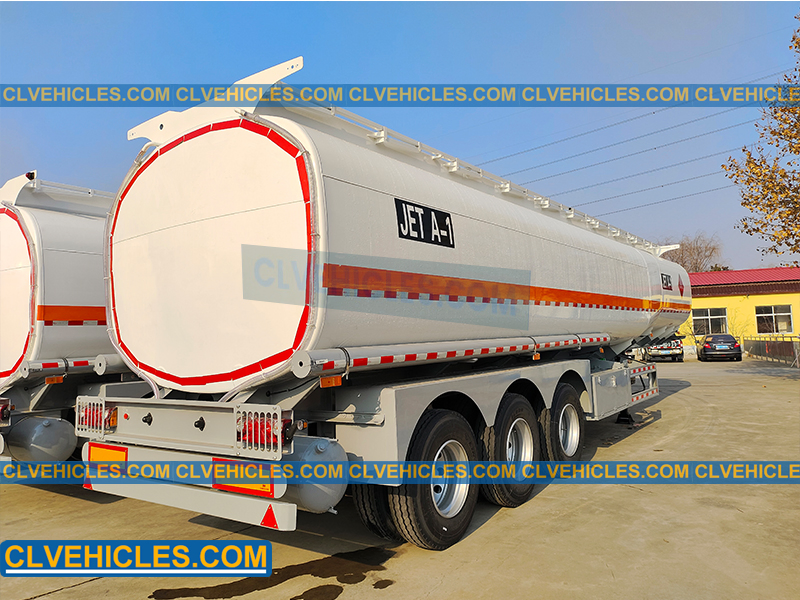
The fittings on CLW trailers show how this works. The 48,000 litre semi-trailer below has four manholes and four DN100 outlets, each with an air-operated bottom safety valve. The six-compartment aluminium trailer has a breather valve, an overfill sensor, vapour recovery and a bottom valve on every compartment.
How many compartments do you need
You need at least one compartment for each product on the same trip. Extra compartments let you split one product between several stations.
| Compartments | Typical use | Example on this site |
|---|---|---|
| 2 to 4 | Petrol and diesel, sometimes kerosene | CLW 2 axle trailer, 20,000 litres in 2, 3 or 4 sections |
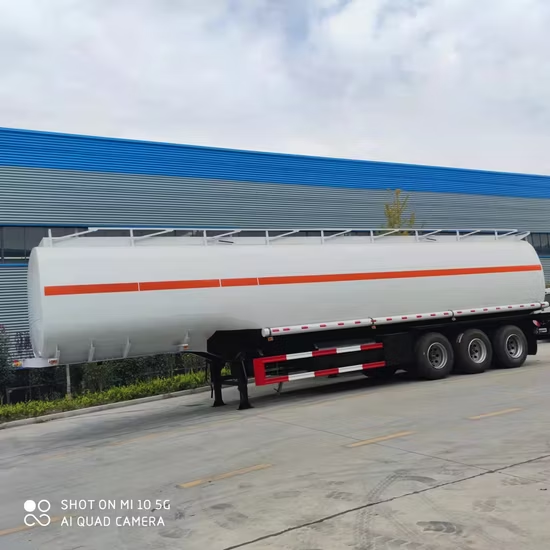
| 3 equal | Simple loads planned in fixed units | CLW 3 axle oil tanker, 3 x 14,000 litres |
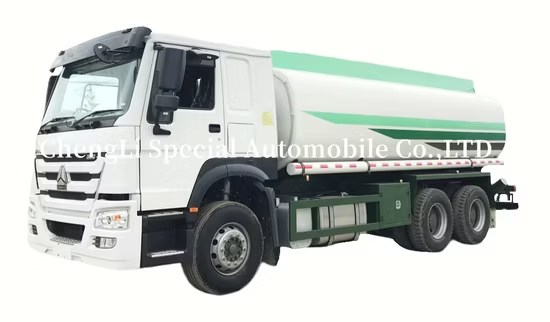
| 4 | Two grades split across two stations | HOWO 6x4 tanker, 20,000 litres in four sections |
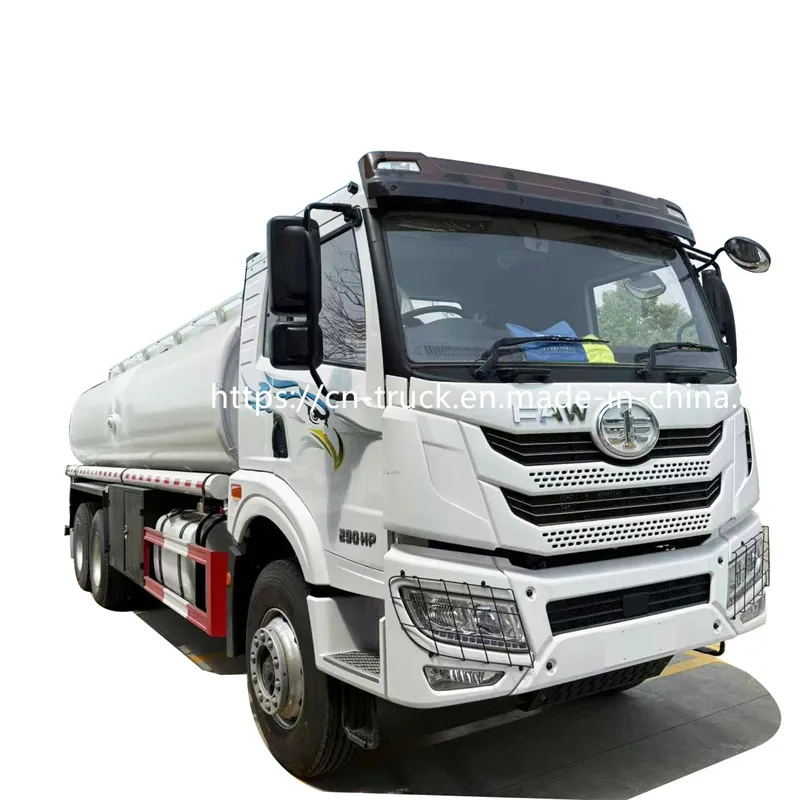
| 6 | Several stations on one run | FAW 6x4 tanker, 24,000 litres in sections of 2,000, 4,000 and 6,000 litres |
| 8 | Many small drops, one section at each stop | CLW 3-axle trailer with 8 compartments |
Compartment sizes are usually fixed when the tank is built. Decide them before you order. The fuel tanker capacity FAQ explains how the total volume is shared out.
Where mixing really happens
- Loading the wrong product into a compartment because the labels are unclear.
- Fuel left in a shared manifold or hose, then pushed out with the next grade.
- Reusing a compartment that held another product without draining and flushing it.
- Opening the wrong outlet, or connecting to the wrong tank at the filling station.
Even a small amount of petrol can spoil a diesel delivery. Diesel in a petrol tank causes engine trouble too. Clear labels and a fixed routine prevent most of these mistakes.
Planning a two-fuel run
- List the grades and order sizes for every stop on the run.
- Match each order to a compartment of the right size.
- Mark every manhole and outlet with the product it holds.
- Load the first drop where it is easy to reach.
- Drain the hose between products, or use a separate hose for each grade.
- Check axle loads. Diesel is heavier than petrol, so a full load of diesel in every section may go over the limit.
- Write down the flushing steps for any day a compartment changes product.
Petrol gives off more vapour than diesel. It needs extra care with earthing, vapour and open flames. Most countries license road tankers that carry petroleum. Ask the local energy regulator and your clearing agent which fittings and markings your tanker needs before you order. The fuel tanker buying checklist covers valves and safety fittings in more detail.
Multi-compartment tankers on this site
Prices below are the listed reference price (FOB China, ex-factory list), and the written quotation fixes the final price.
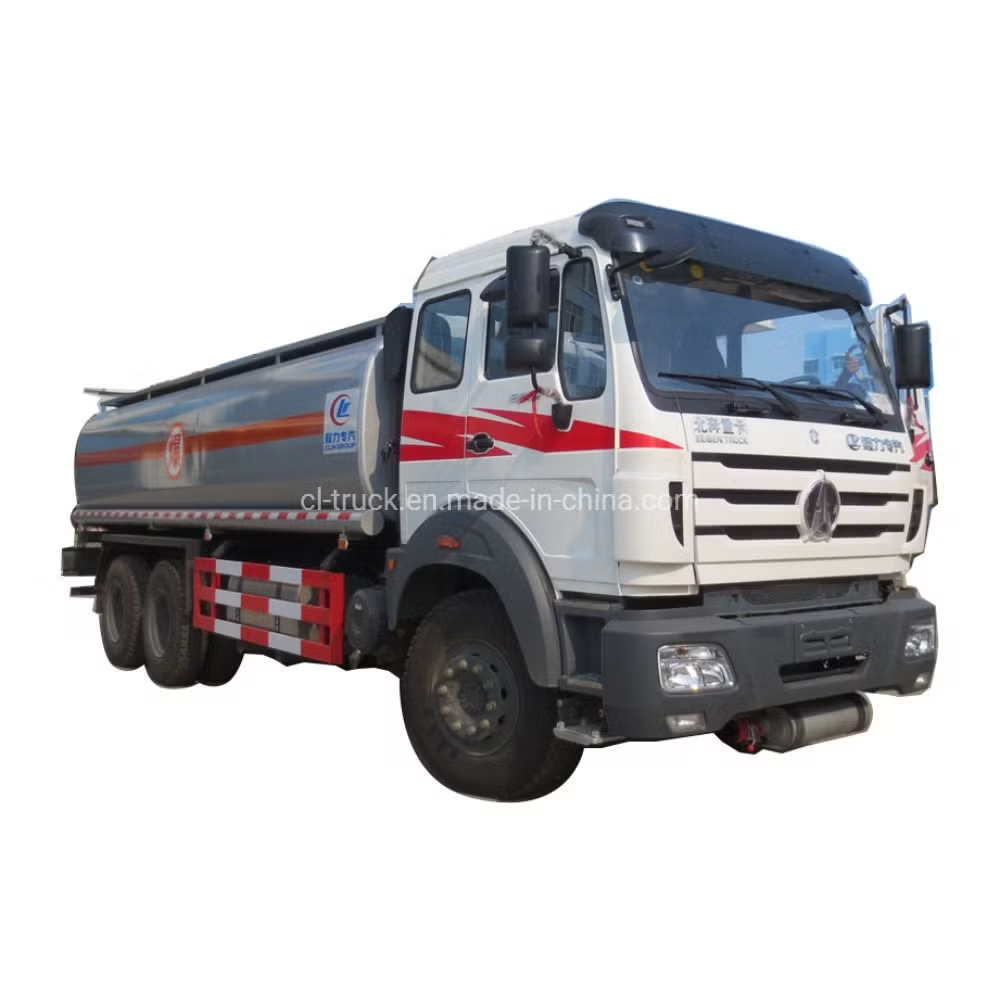
- Beiben 6x4 Fuel Tanker, 20,000 Litre Tank, Weichai 340 hp: 2 to 5 compartments with its own pump, from US$38,000.
- HOWO 6x4 Fuel Tanker 20,000 Litre, Four Compartments with Fuel Dispenser: four sections for different fuels, US$41,500.
- FAW 6x4 Fuel Tanker 24 m3 with Six Compartments: mixed compartment sizes for several stations, US$44,900.
- CLW 2 Axle Fuel Tanker Trailer, 20,000 Litre Steel Tank, 2 to 4 Compartments: a lighter trailer for two or three grades, from US$16,800.
- CLW 3 Axle Oil Tanker Trailer, 42,000 Litres in 3 Compartments: petrol and diesel together in equal units, US$18,500.
- 48,000 Litre Fuel Tanker Semi-Trailer, 3 Axles, 4 Compartments: diesel and petrol to the same station in one trip, US$20,510.
- CLW 3 Axle Aluminium Fuel Tanker Trailer, 6 Compartments, 48,000 Litres: suits marketers who supply several stations per run, from US$23,800.
- CLW 3-Axle Fuel Tanker Trailer, 8 Compartments and 13 t Fuwa Axles: one section emptied at each stop, price on request.
Browse all rigid trucks in fuel tankers and all tanker trailers in semi-trailers. State the products and order sizes you carry, then follow how to buy to get a quotation.