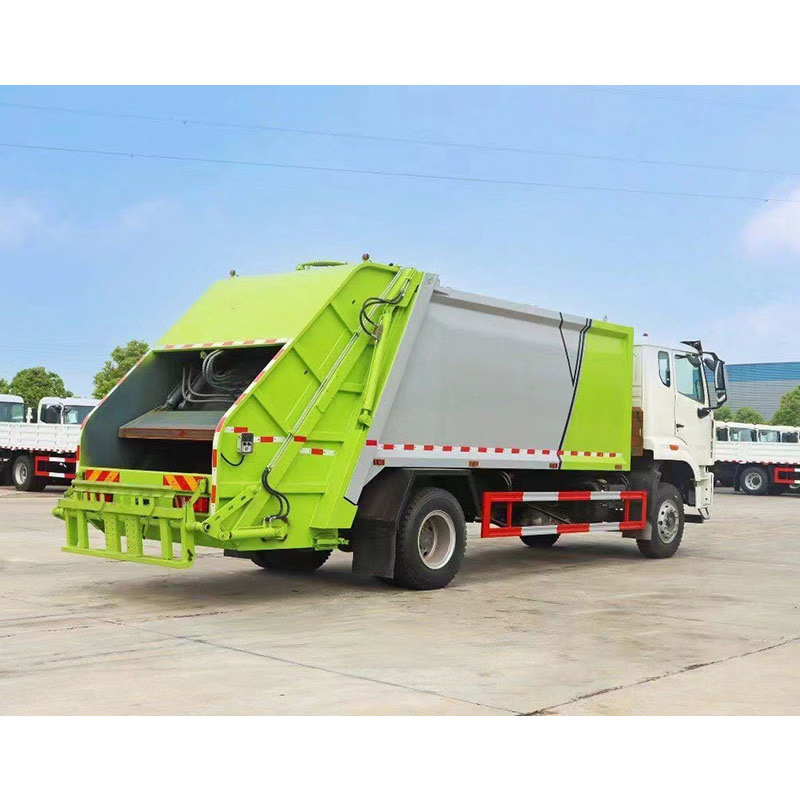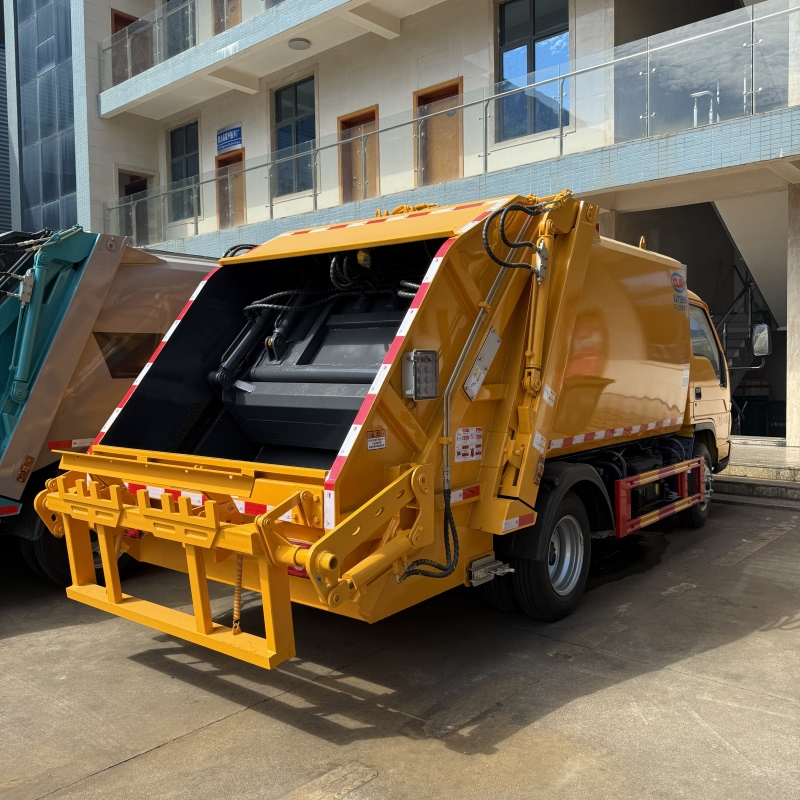
Decide the collection method first, then the truck. Communal bins put the work at a few fixed points, so body size and fast lifting count most. Door-to-door collection spreads the work along every street, so crew access, loading height and stop time count most. Write down which pattern you will run, with numbers, and ask CLW to match a truck to it.
Communal bins: the work happens at fixed points
With communal bins, the truck stops at a few collection points, such as a market, an estate gate or a roadside bin bay. The crew empties many bins, or one large skip, at each stop. The truck then drives some distance to the next point. Loading time and body volume set how long the route takes. On council routes in Nairobi or Dar es Salaam, a point may hold 660 L or 1,100 L wheeled bins, or an open skip.
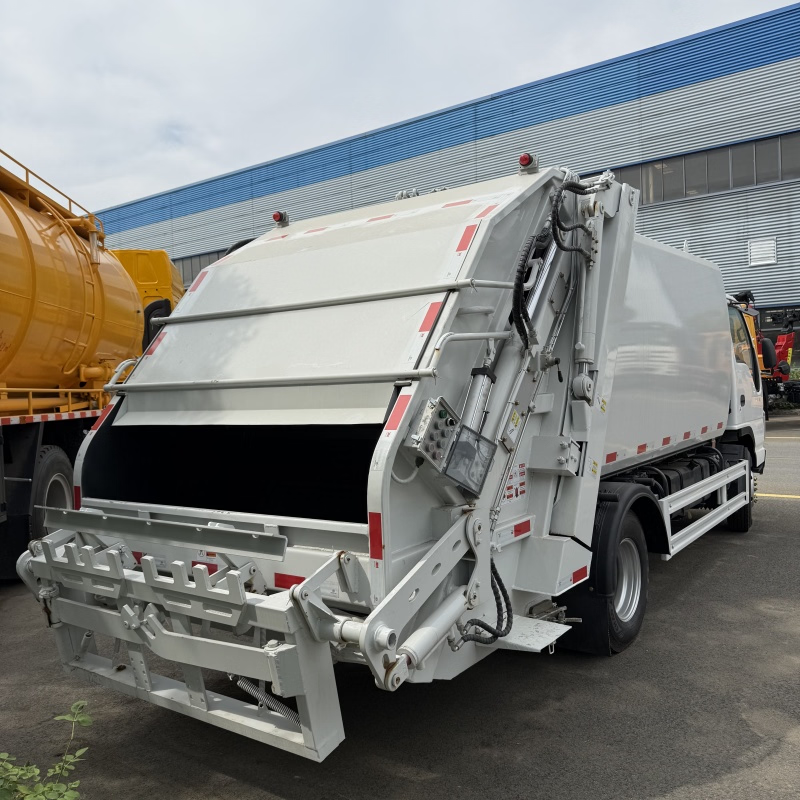
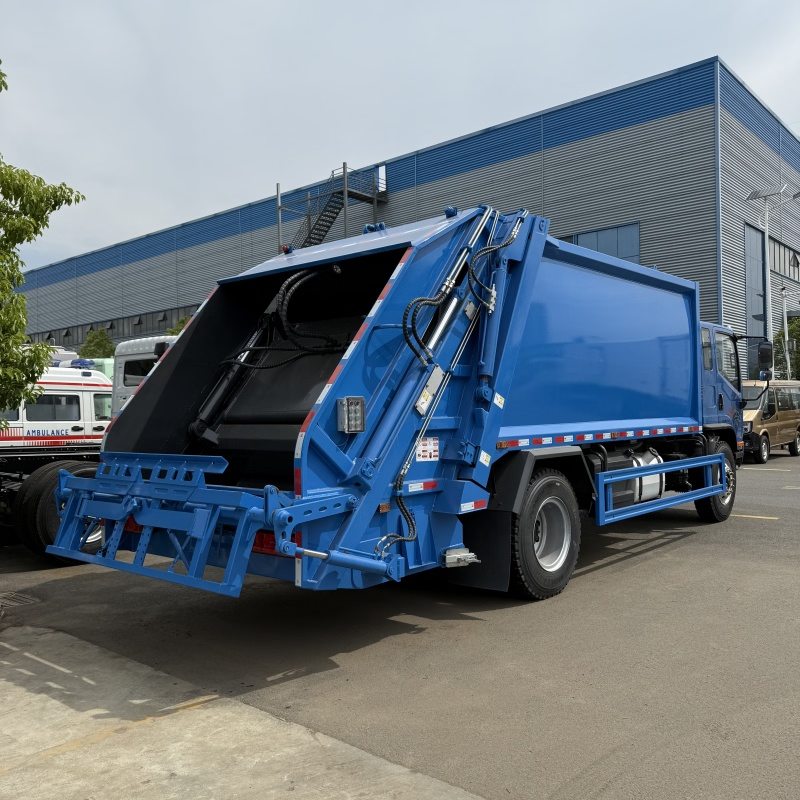
For wheeled bins, a compactor with a rear bin lifter suits this pattern. The FAW 4x2 compactor has a 10-12 m3 body and a rear lifter for 120 L to 1,100 L bins. Where each point has a skip, a skip loader can swap full skips for empty ones. Read refuse truck bin lifters before you fix the bin type.
Door-to-door: the work is spread along the street
With door-to-door collection, the truck stops at almost every gate. The crew walks, carries bags or rolls small bins, and loads by hand. The body fills slowly, so crew size and stop time matter more than body size. Narrow estate roads in Lagos or Accra favour a short truck that turns easily. The Foton mini compactor has a 3 m3 body and is 5,995 mm long. The Isuzu mini compactor has a 5 m3 body. Ask about the hopper loading height and grab handles. Ask how the crew rides between stops, and check what your road rules allow.
Describe the loading work and the crew
- How the waste is held: bags, small bins, wheeled bins, skips or loose heaps.
- Bin sizes and how many of each, if you use wheeled bins.
- Households or collection points served per shift.
- How many workers travel with the truck, and where they sit.
- Whether the crew lifts by hand or the truck lifts the bins.
- Road width, steep streets and turning space on the narrowest part of the route.
- Distance from the last stop to the dumpsite or transfer station.
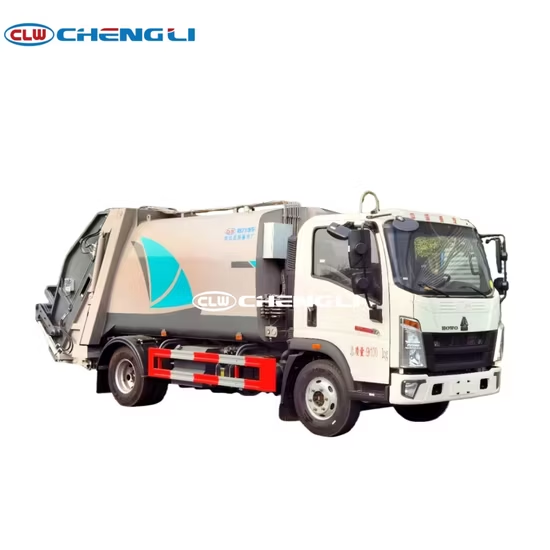
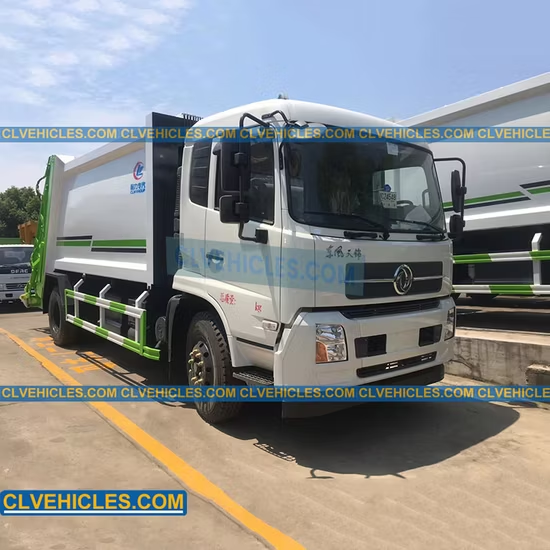
Cab seats matter for door-to-door crews. The Dongfeng 14 m3 rear loader seats three, including the driver. The HOWO 16 m3 compactor has a one and a half row cab. Confirm the seat count of the truck you are quoted.
Compare the two patterns side by side
| Point | Communal bins | Door-to-door |
|---|---|---|
| Stops per route | Few, at fixed points | Many, close together |
| Main time cost | Lifting bins and driving between points | Walking, carrying, stopping and starting |
| Loading method | Bin lifter or skip arms | Hand loading into the hopper |
| What sets truck size | Waste per route and distance to the dumpsite | Street width and crew size |
| Bodies to look at | 10 to 25 m3 compactors, skip loaders | 3 to 10 m3 compactors |
Prepare two briefs if you are unsure
If you do not yet know which system fits, write one brief for communal bins and one for door-to-door. Send both to CLW and ask which truck suits each. Compare the answers, then choose the pattern your crews can run every week. You may also run both: door-to-door in dense estates and bin points on main roads. The refuse compactor sizes comparison and the refuse compactor buying guide help you narrow the body size.
Refuse trucks for each pattern
The price shown is the listed reference price (FOB China, ex-factory list), and the written quotation fixes the final price.
- Foton 4x2 Mini Refuse Compactor, 3 m3 Body: door-to-door rounds on narrow estate roads, from US$15,800.
- Isuzu 4x2 Mini Refuse Compactor, 5 m3 Body: house collection with a bin lifter for small bins, from US$18,500.
- Dongfeng D7 4x2 Garbage Compactor, 10 m3 Body: mixed house and bin point routes, from US$12,000.
- FAW 4x2 Refuse Compactor, 10-12 m3 Body: communal 660 L and 1,100 L bins, from US$14,500.
- Dongfeng 4x2 Garbage Compactor Truck, 14 m3 Rear Loader: town routes with a three-seat cab, from US$30,000.
- Sinotruk HOWO 4x2 Refuse Compactor, 16 m3 Body: longer bin point routes, from US$47,800.
- Sinotruk HOWO 6x4 Refuse Compactor, 20-25 m3 Body: main road bin points far from the dumpsite, from US$43,000.
- Dongfeng 4x2 Skip Loader Garbage Truck, 4 m3: skip collection points at markets, US$20,000.
See all refuse trucks, and road sweepers for street litter between rounds. When your brief is ready, read how to buy.