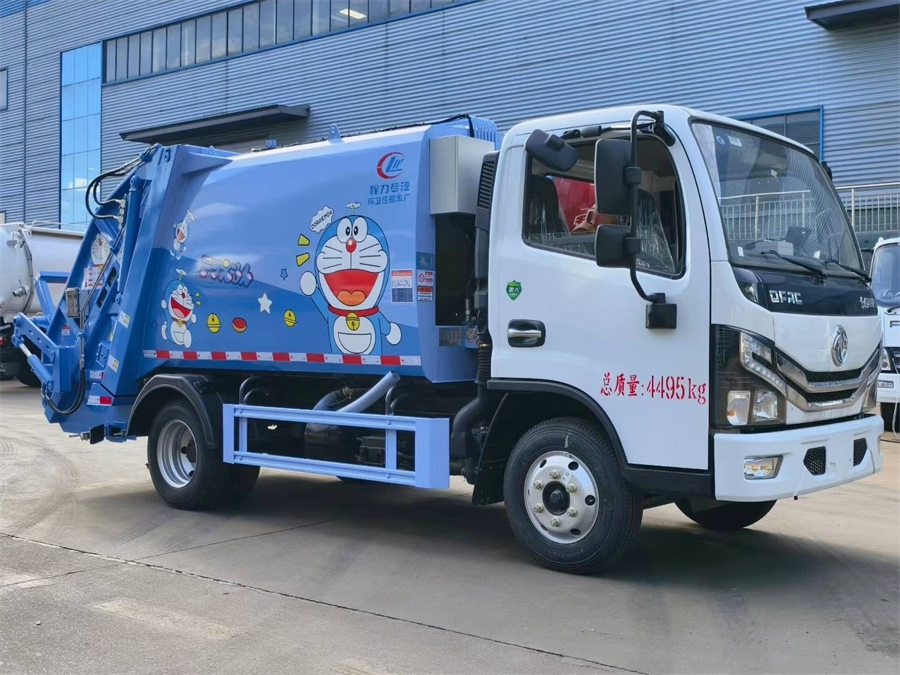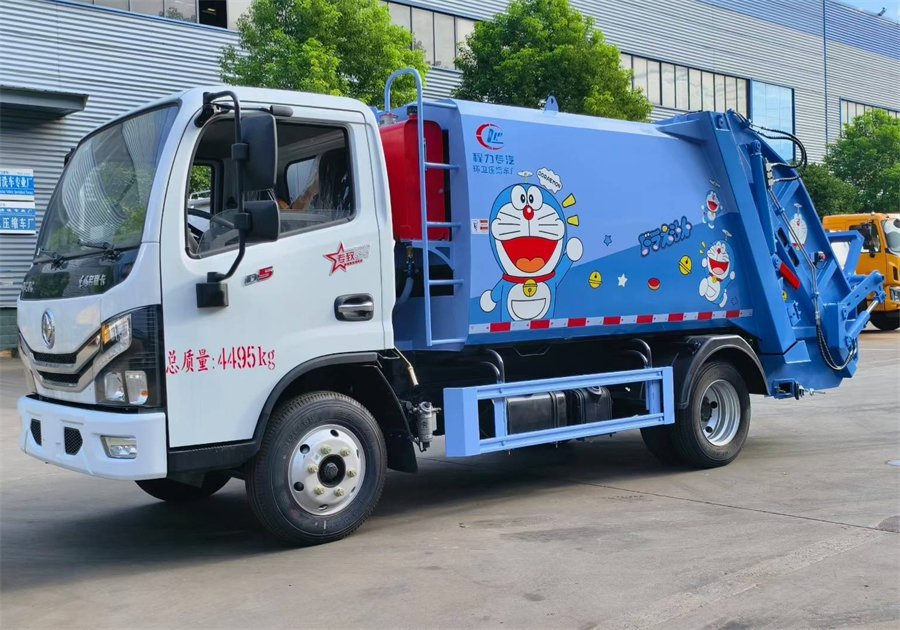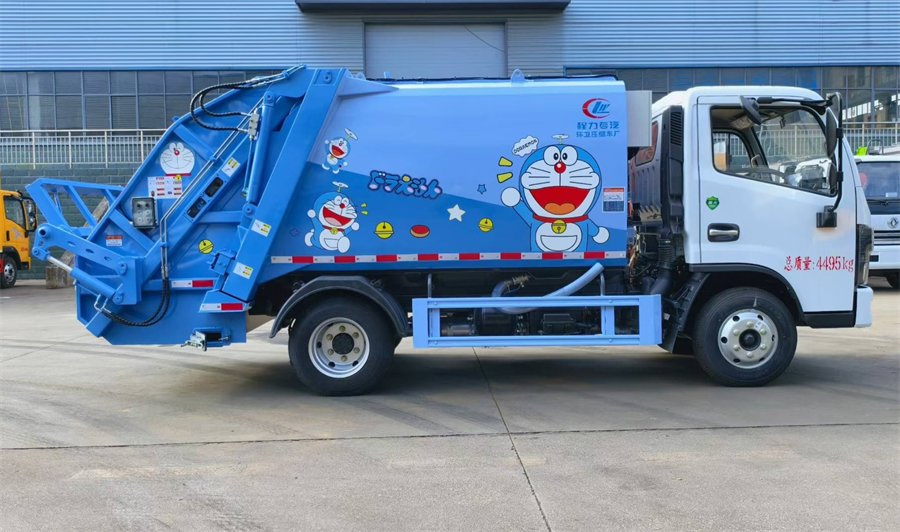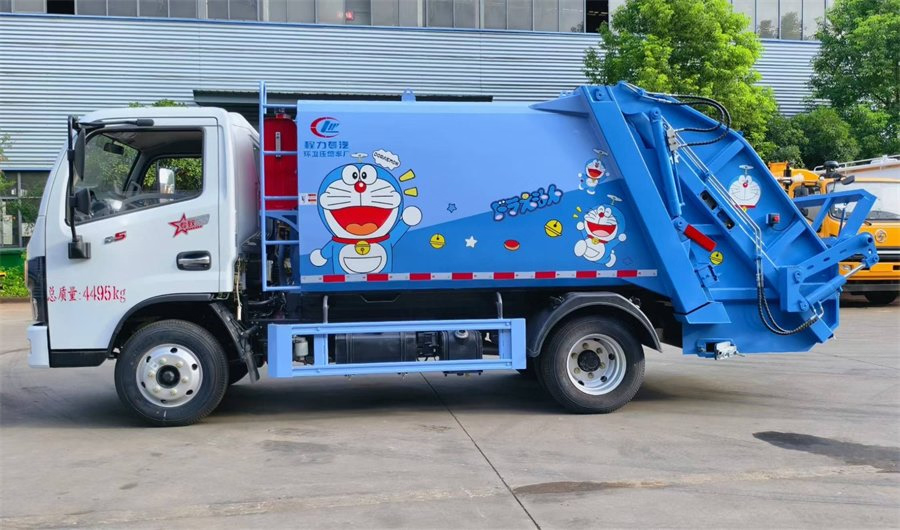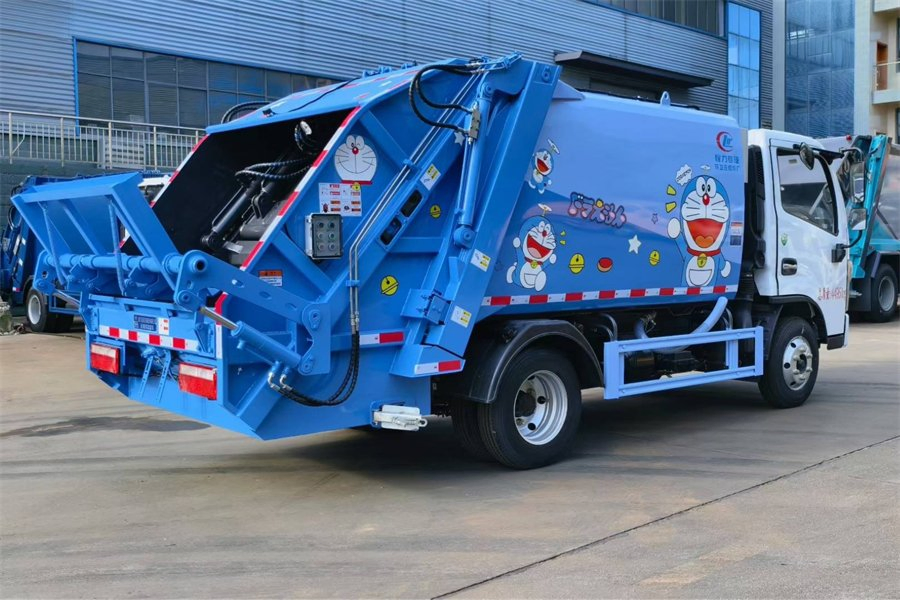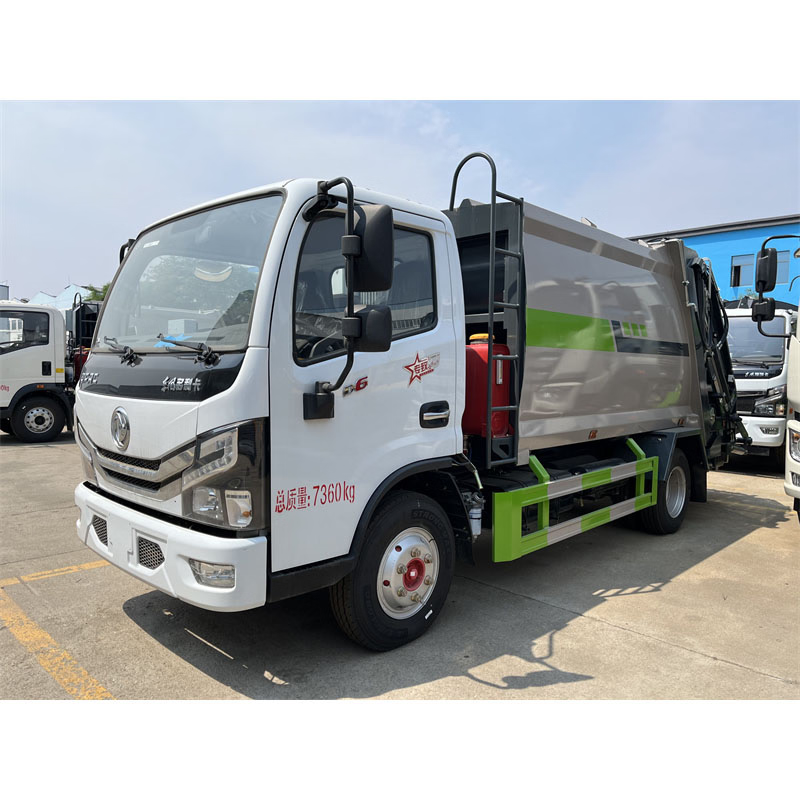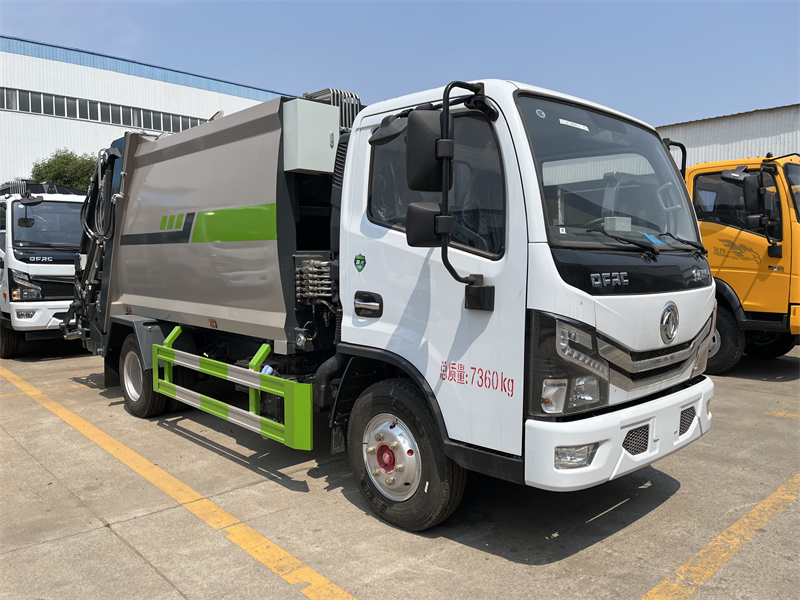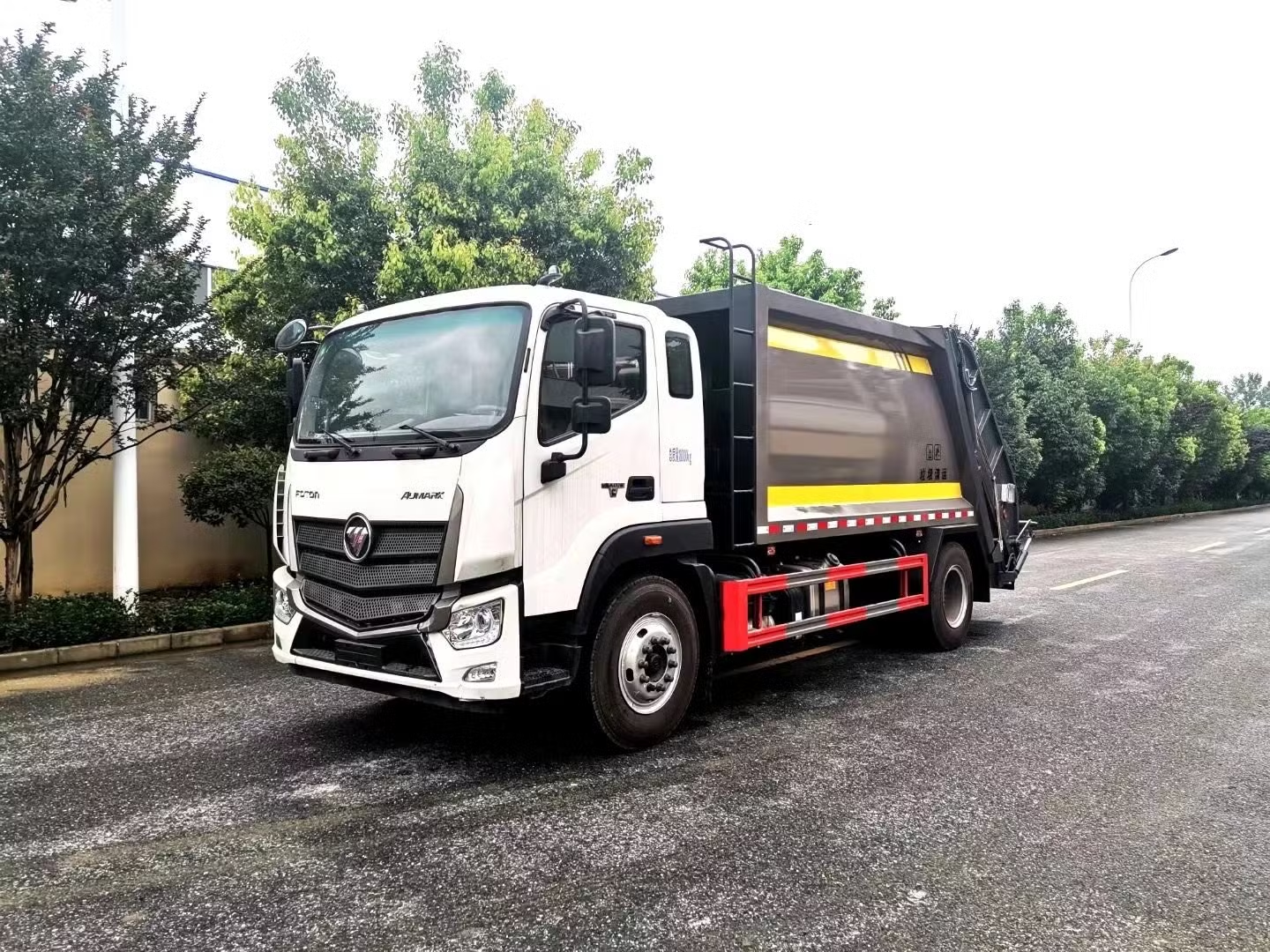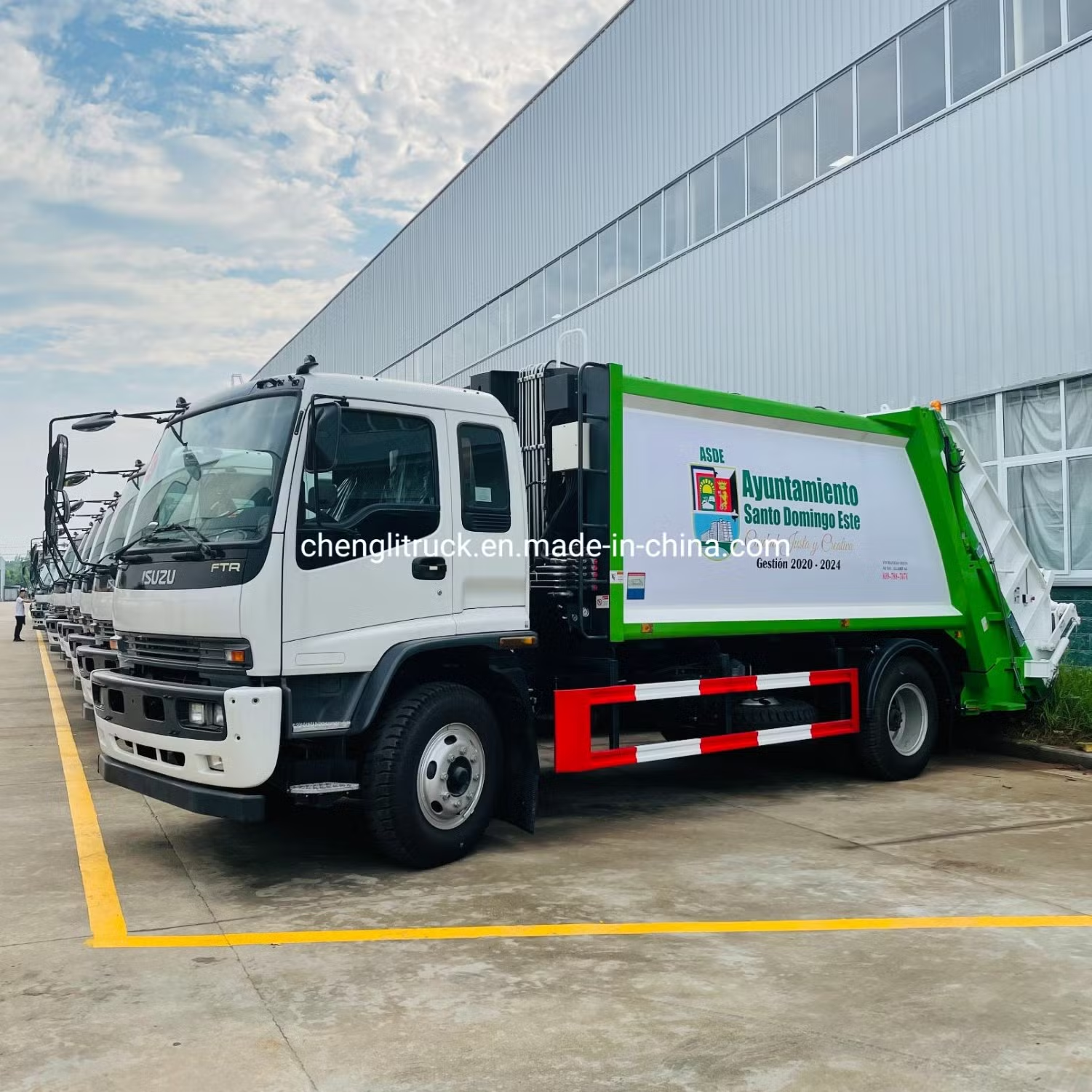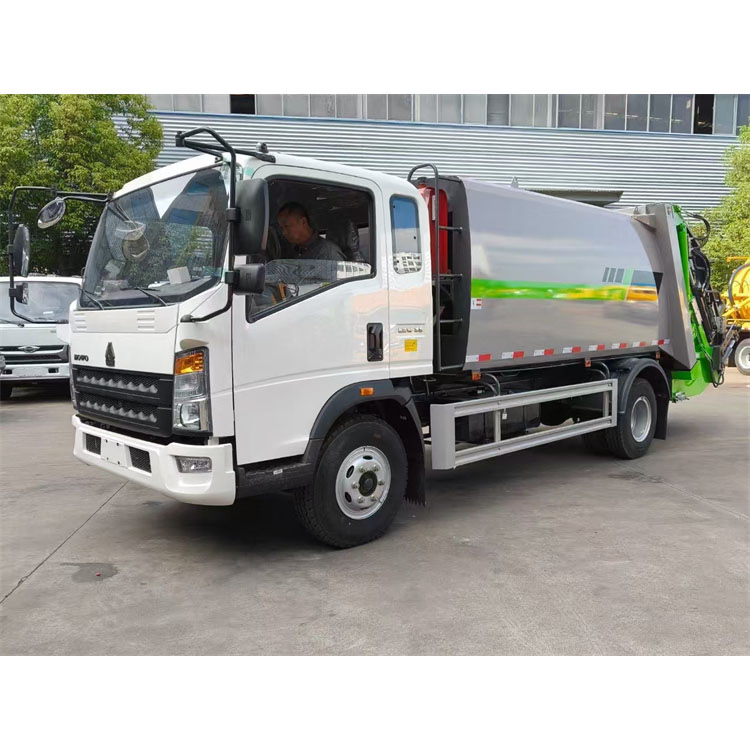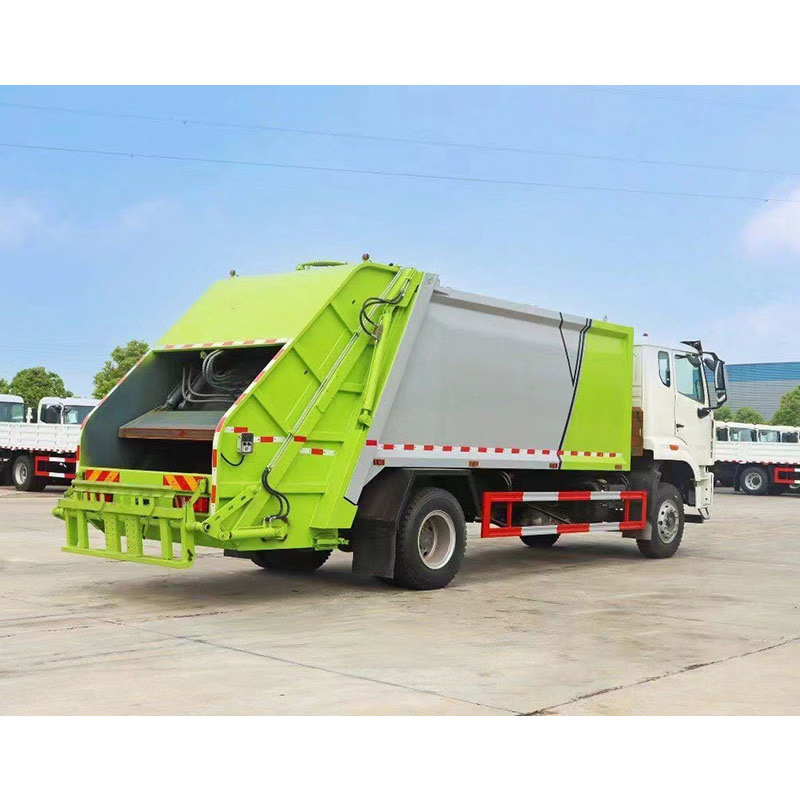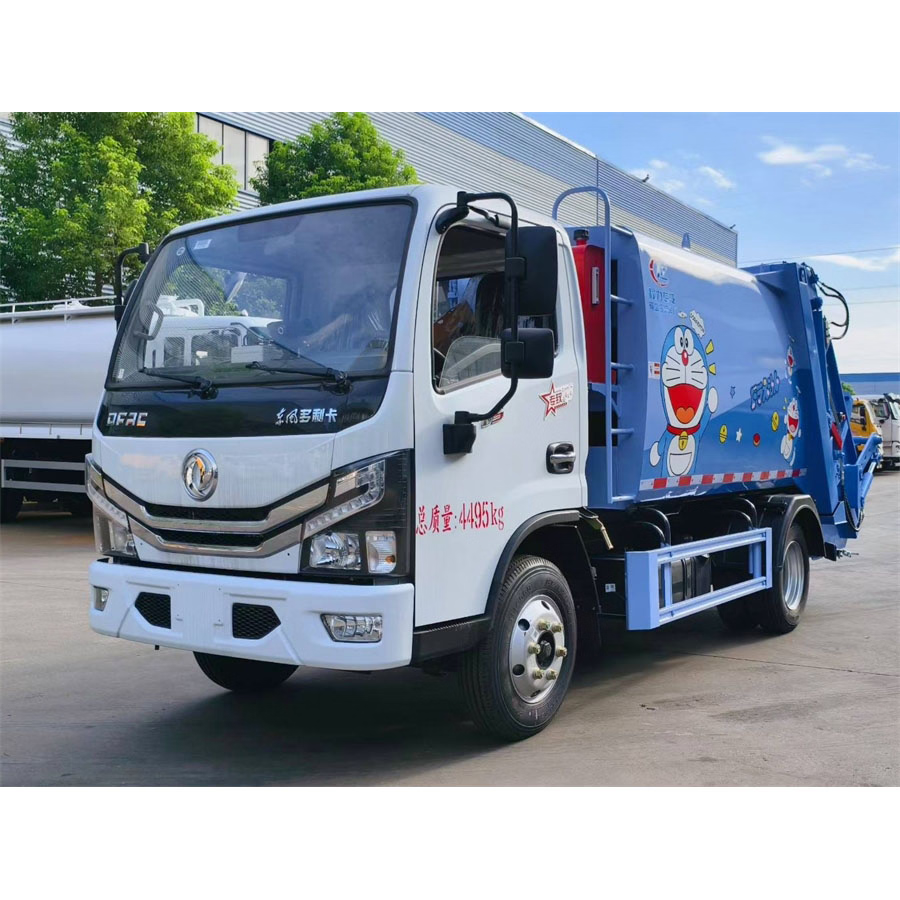
This refuse compactor collects household and market waste and presses it into a sealed 5-6 m3 body. It suits towns, estates, hospitals and markets with narrow streets. The truck is small, so it can reach lanes that big compactors cannot. It is built on a Dongfeng 4x2 chassis (two axles, one driven) with a 120 hp Yuchai diesel engine.
Chassis and engine
- Chassis: Dongfeng EQ1060TJ20D3, 4x2
- Engine: Yuchai YC4FA120-33 diesel, 120 hp (88 kW), 3.0 litres
- Euro 3 emission standard
- Gearbox: manual
- Cab: single row, flat front
- Tyres: 7.00R16, 6 tyres
- GVW (gross vehicle weight: the truck plus its full load): 7,360 kg
- Kerb weight (the empty truck): 5,400 kg
- Size: 6,470 mm long, 2,050 mm wide, 2,570 mm high
- Top speed: 95 km/h
Body and compaction
The body is sealed, which keeps waste and smell inside on the road. Its sides and floor are 4 mm carbon steel. A hydraulic system compacts the waste automatically, so more fits into each load. At the dump site, the same system pushes the load out.
- Body volume: 5-6 m3
- Body steel: 4 mm sides and floor
- Compaction and unloading: hydraulic, automatic
- Bin loading options: rear bin lifter, or tipping gear for small bins
Where it works in Africa
County and city councils use small compactors for door-to-door collection in housing areas. Private waste contractors use them for estates, schools, hotels and shopping centres. A 5-6 m3 body fills quickly, so it suits short routes near a transfer station or dump site. For long trips to a far landfill, a larger compactor usually costs less per tonne.
Right- or left-hand drive
The truck is built as left-hand drive (LHD) as standard. Right-hand drive (RHD) is built on request. Nigeria and Ghana drive on the right and use LHD. Kenya, Tanzania, Uganda, Zambia, Zimbabwe, Botswana and South Africa drive on the left and use RHD.
Confirm in your quotation
- Final chassis and model number
- Body volume and rated payload
- Engine and emission standard
- Bin lifter type and bin size
- Drive side (LHD or RHD)
- Colour