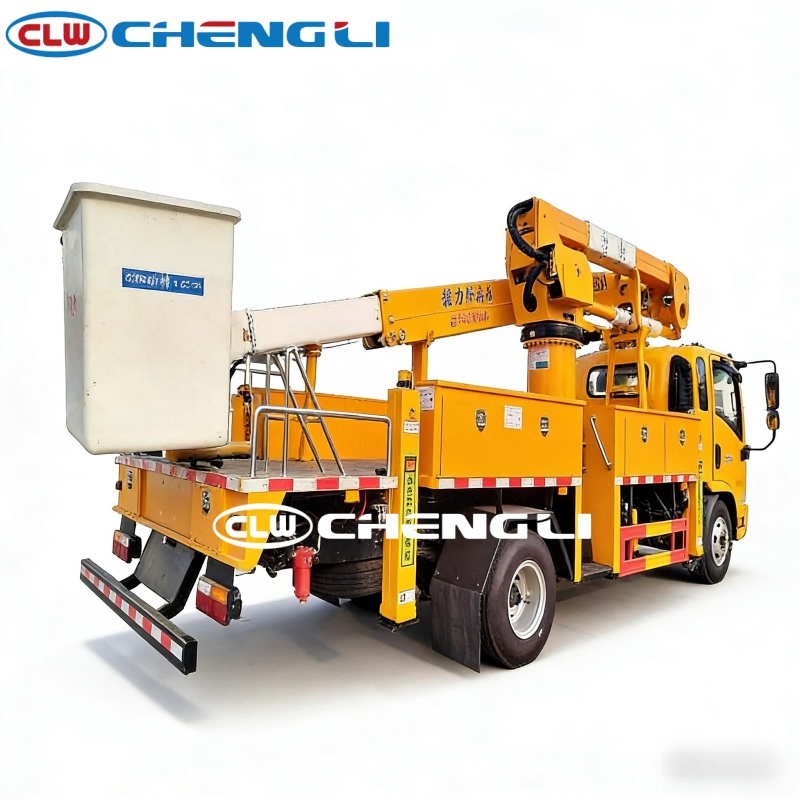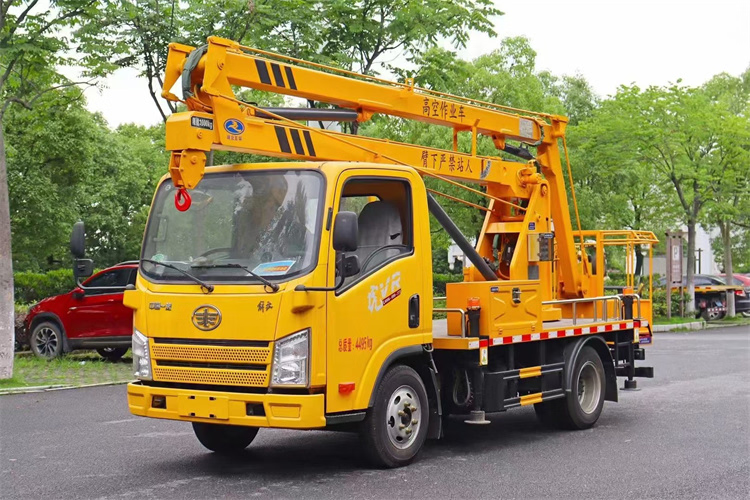
For street lights and low-voltage lines, a 4x2 bucket truck with a 14 to 18 m working height does most jobs. Choose a telescopic boom for straight vertical work. Choose a folding boom when the basket must reach over trees, wires or walls. For work near live power lines, you need an insulated boom, such as a fibreglass boom rated at 45 kV. Telecom towers and tall floodlight masts need a much taller truck, up to 45 m.
Working height, platform height and reach
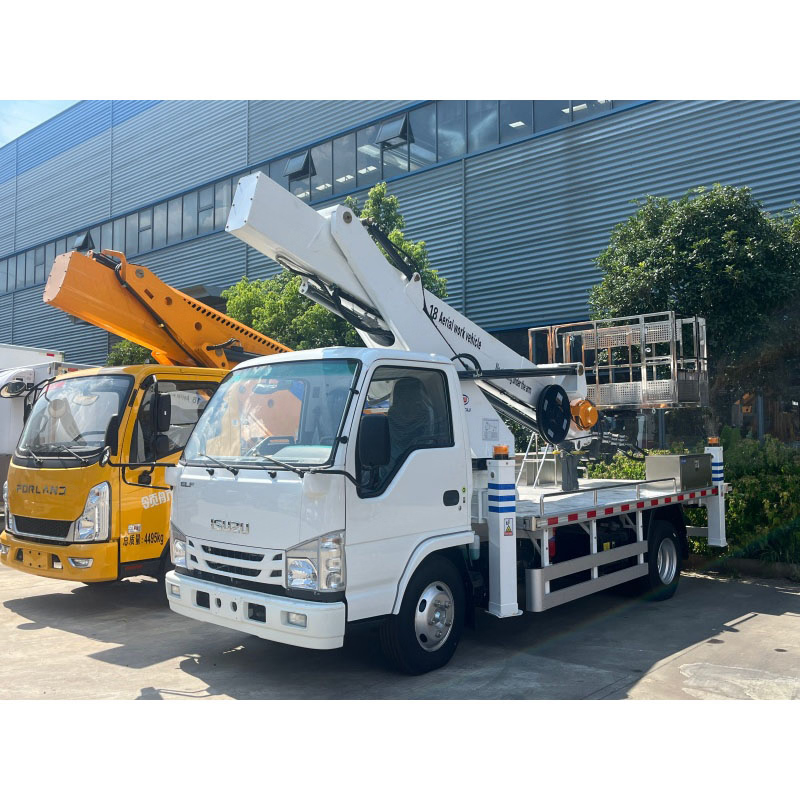
Bucket trucks are sold by working height. This is the height of the basket floor plus about 2 m, which is how high a worker can reach. On the Isuzu 16 m bucket truck, the working height is 16 m and the platform height is 14.3 m.
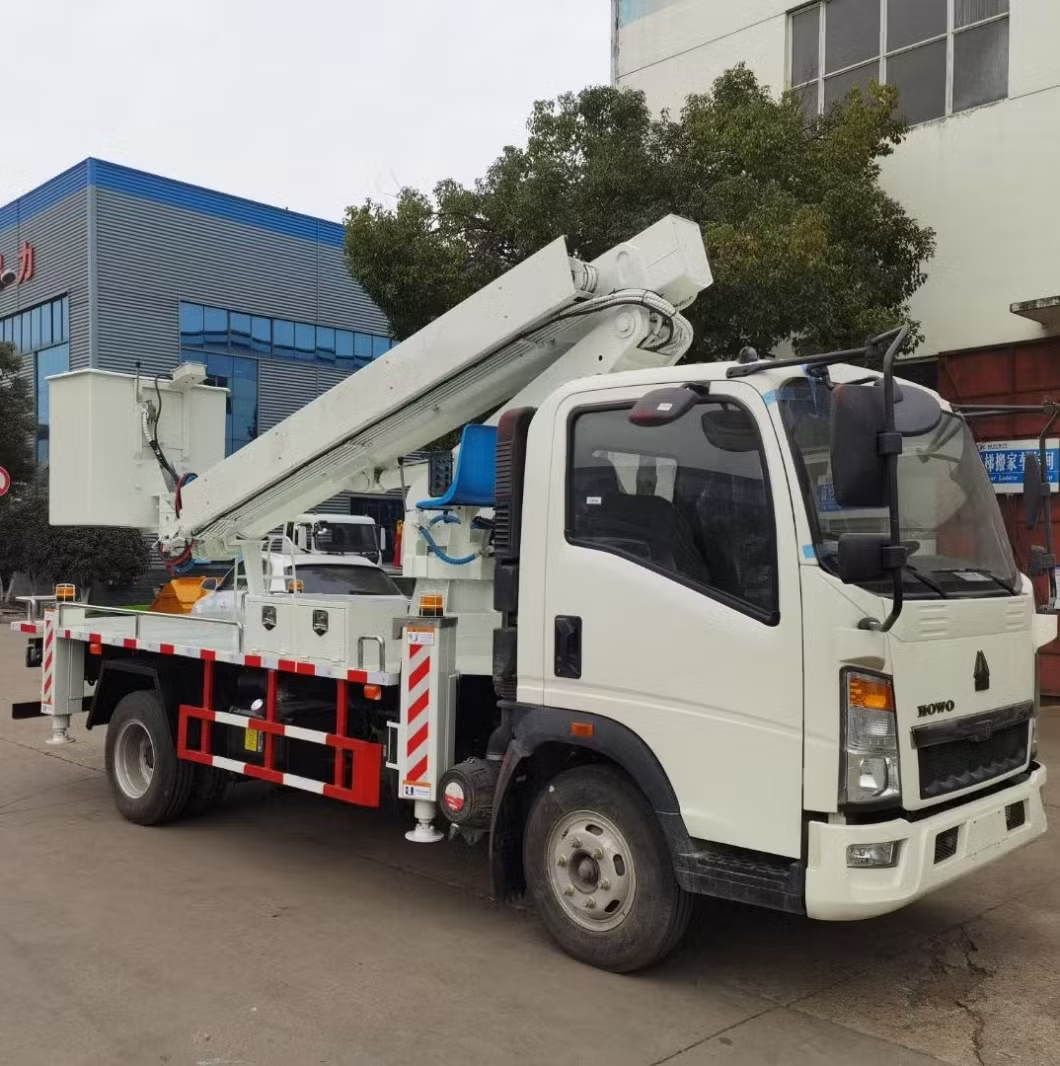
Reach (outreach) matters too. It is how far the basket can move out to the side of the truck. The basket reaches less far when it is at full height. For example, the JMC 16 m folding boom reaches 7 m to the side at 9 m height. At its full 16 m height, the side reach is only 2 m. The HOWO 16 m telescopic boom reaches 9.1 m to the side, and 4.4 m at full height.
To choose a size, measure the highest point your crew works on. Then add 1 to 2 m for safe clearance. If the truck must park away from the pole, for example behind a drain or a fence, check the side reach as well.
| Working height | Typical jobs | Chassis |
|---|---|---|
| 14 m | Town street lights, shop signs, low buildings | Light 4x2 |
| 16 m | Main road street lights, low-voltage lines, CCTV poles | Light 4x2 |
| 18 to 21 m | Distribution poles, live-line work with an insulated boom | Light or medium 4x2 |
| 45 m | Telecom towers, stadium lights, tall floodlight masts | Heavy 4x2, 18,000 kg GVW |
Telescopic or folding boom
A telescopic boom has straight sections that slide out of each other. It sets up fast and gives a clean vertical lift. It suits street lights, where the truck can park close to the pole. On this site you will find telescopic booms with 3, 4, 5 and 7 sections. More sections give more height from a short truck.
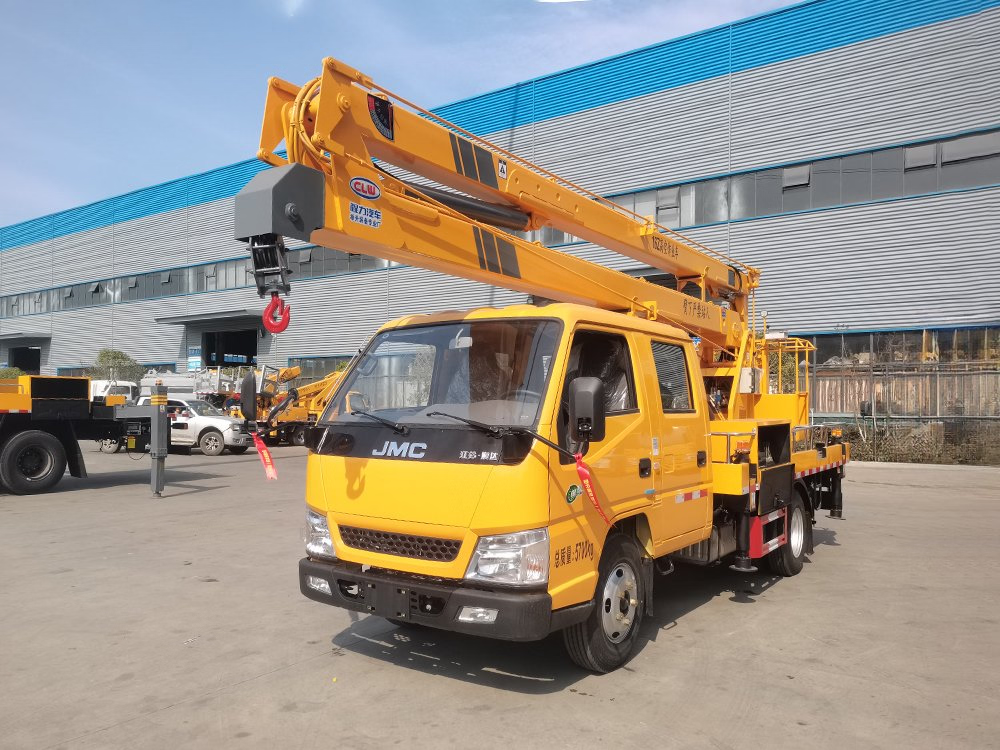
A folding boom, also called an articulated or knuckle boom, bends in the middle. The basket can go up, then over a tree, a wire or a wall, and then down. This suits power line work in towns, where poles stand behind other things. The JMC 16 m truck uses a three-section folding arm.
Insulated booms for live-line work
A steel boom conducts electricity. If it touches a live line, the crew and the people near the truck are at risk. For work near energised lines, power utilities usually ask for an insulated boom and basket.
The Shacman 21 m insulated bucket truck has a full FRP (fibreglass reinforced plastic) folding boom with a 45 kV insulation rating. Its basket is also FRP, so it does not conduct electricity. The Shacman 18 m truck has an insulated FRP section in its articulated boom.
Ask your power utility which insulation rating it needs for its line voltage. Also ask the factory for the insulation test report. Keep the fibreglass clean and dry, because dirt and water reduce the insulation.
Basket, outriggers and controls
- Basket load: most trucks here carry 200 kg in the basket. That is one or two workers with light tools. Check the real weight of your crew and kit.
- Basket size: the HOWO basket is 1,100 x 650 x 1,150 mm. The Isuzu 16 m basket is 1,600 x 710 x 1,200 mm, with more room for two people.
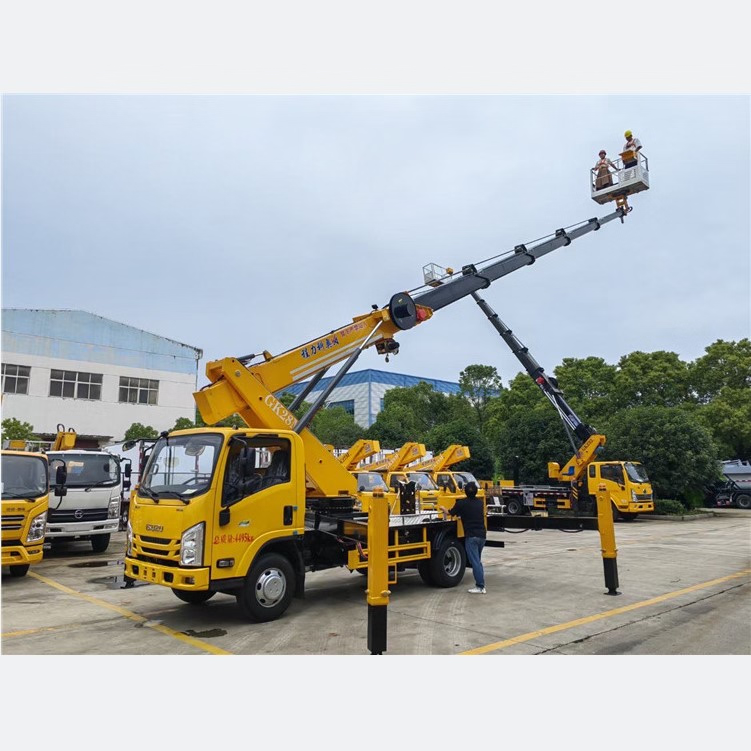
- Outriggers: these legs hold the truck steady. Front V and rear H legs are common. The 45 m truck needs a 6,600 mm wide outrigger span, so it needs a wide, firm site.
- Controls: look for controls in the basket and at the turntable. A wireless remote helps. A manual emergency system lets the crew lower the basket if the engine stops.
- Hook and winch: the JMC double cab truck has a 900 kg hook. It can lift crossarms, lamp heads and small parts.
Chassis and drive side
Most 14 to 18 m bucket trucks sit on a light 4x2 chassis. The Isuzu, HOWO and Isuzu 100P trucks here have a GVW (gross vehicle weight: the truck plus its full load) of 4,495 kg. They are easy to drive and park in town streets. A double cab, like the JMC, carries the whole line crew in one vehicle. The 45 m truck is much bigger, with an 18,000 kg GVW and a 9,665 mm long body.
Kenya, Tanzania, Uganda, Zambia, Zimbabwe, Botswana and South Africa drive on the left and need right-hand drive (RHD). Nigeria and Ghana drive on the right and need left-hand drive (LHD). The drive side by country page lists other markets. Ask your clearing agent which import rules apply to a bucket truck in your country.
Recommended trucks
All prices are the listed reference price (FOB China, ex-factory list), and the written quotation fixes the final price.
- FAW 4x2 Bucket Truck, 14 m Folding-Arm Aerial Work Platform, 200 kg Basket: for town street lights and signs, US$32,000-33,500.
- Sinotruk HOWO 4x2 Bucket Truck, 16 m Telescopic Boom, 200 kg Basket: a simple truck for street light crews, US$16,789-25,852.
- JMC 4x2 Double Cab Bucket Truck, 16 m Folding Boom, 900 kg Hook: carries the crew and lifts small parts, US$27,800-32,800.
- Isuzu 4x2 Bucket Truck, 16 m 5-Section Telescopic Boom, 200 kg Basket: with wireless remote control, US$36,000-38,000.
- Isuzu 100P 4x2 Bucket Truck, 18 m Telescopic Boom: for street lights and telecom poles, US$34,000-35,500.
- Shacman 4x2 Insulated Bucket Truck, 18 m Articulated Boom: for line inspection and repair, US$12,000-19,900.
- Shacman 4x2 Insulated Bucket Truck, 21 m Folding Boom, 45 kV: for live-line work on distribution lines, US$49,500-62,800.
- Qingling Isuzu 4x2 Bucket Truck, 45 m Telescopic Boom: for telecom towers and tall masts, US$40,000-50,000.
See every model on the bucket trucks page. If you need to lift poles or transformers, compare the crane trucks, and read the crane lorry buying guide.
Before you order
- The highest point your crew works on, and how far from the pole the truck can park.
- Boom type: telescopic or folding, and whether it must be insulated.
- Insulation rating and test report, if you do live-line work.
- Basket load and size, and the controls in the basket.
- Single or double cab, and the drive side (LHD or RHD).
- Engine and emission level that suit your local diesel.
Use our truck quotation checklist to compare offers. The steps to order are on the how to buy page, or you can send your job details through the contact page.