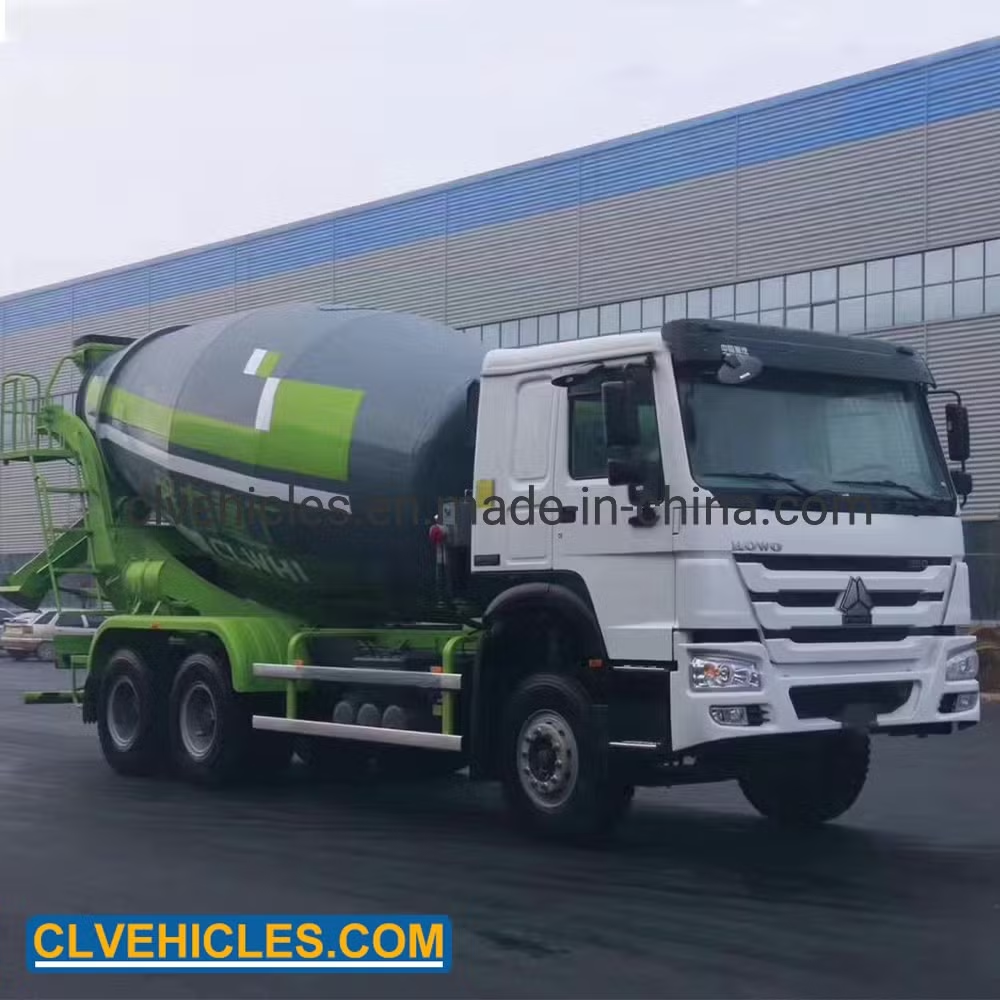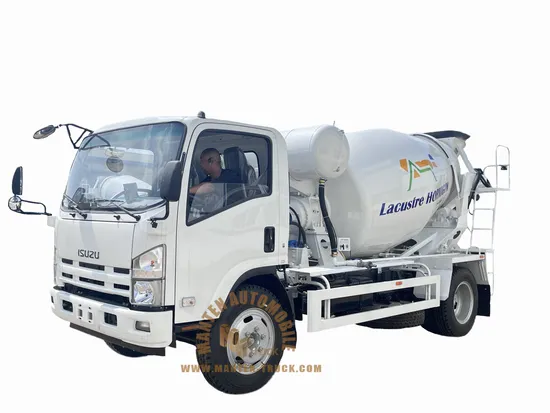
Choose the mixer size from your pour volume, placing speed, haul time, road limits and site access. Small 3 to 6 m3 mixers on 4x2 chassis suit house pours and tight access. Drums of 8 to 12 m3 on 6x4 chassis suit most building sites. Drums of 12 m3 and up on 8x4 chassis suit large, steady pours.
Size bands on CLW mixer trucks
| Drum size | Chassis | Example truck page | Overall length |
|---|---|---|---|
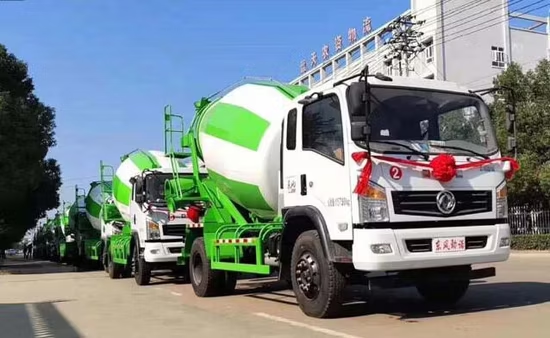
| 3 to 6 m3 | 4x2 | Dongfeng 4x2, 16,000 kg GVW | 7,520 mm |
| 3 to 5 m3 | 4x2 | Isuzu 4x2 small mixer | 6,600 mm |
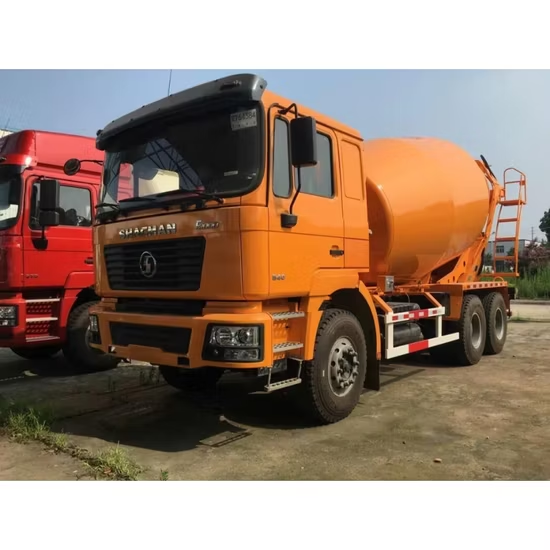
| 10 m3 | 6x4 | Shacman F2000 6x4 | 9,135 mm |
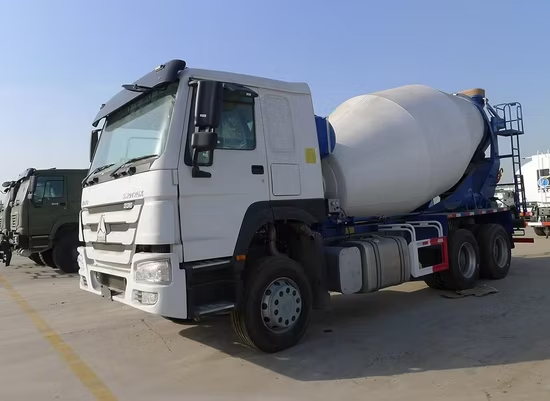
| 12 m3 | 6x4 | HOWO 6x4 readymix | 9,480 mm |
| 18 m3 | 8x4 | Sinotruk HOWO 8x4, 31,000 kg GVW | 10,080 mm |
Length matters on site. A 10 m truck needs much more turning room than a 6.6 m truck. Measure the gate, the turn and any overhead wires before you pick a band.
Step 1: count the loads for a typical pour
Take the volume of a pour you do often. Divide it by the drum load. Round up. Suppose a floor slab needs 48 m3. A 6 m3 mixer makes 8 loads. An 8 m3 mixer makes 6 loads. A 12 m3 mixer makes 4 loads.
Fewer loads mean fewer trips and fewer joins between batches. But a large truck only helps if the site can take it and the crew can place it in time.
Step 2: match drum size to placing speed
A drum should empty while the concrete is still workable. Find out how fast your crew or pump can place concrete. Suppose a crew places 16 m3 per hour. An 8 m3 load then takes about 30 minutes. A 12 m3 load takes about 45 minutes.
Now take the round trip from site to plant and back. If the round trip is 90 minutes and each load takes 30 minutes to place, you need about three trucks to keep the pour going. With 12 m3 trucks you need two. Ask your concrete plant how long its mix stays workable, and keep each load well inside that time.
Step 3: check weight, not just drum volume
Fresh concrete weighs roughly 2.4 tonnes per cubic metre. So 8 m3 of concrete weighs about 19 tonnes. That is close to the 20 t payload shown on several CLW 6x4 and 8x4 mixers.
Drum volume and legal load are separate figures. A large drum may be rated to carry less than it can hold, and road rules may set a lower limit again. Ask the quotation to state the rated concrete load for the drum you choose. Then check it against the axle and gross weight rules on your routes.
Step 4: think about the ground and the hills
A loaded mixer is heavy for its size, and the weight sits high. Steep, wet or rough site roads favour a shorter wheelbase and more driven axles. Engine power matters on long climbs with a full drum. For a worked example on steep city roads, see concrete mixer size for Kigali hills.
Quick guide by job
- House slabs, repairs, narrow streets: 3 to 6 m3 on 4x2.
- Medium buildings and steady town work: 8 to 10 m3 on 6x4.
- Readymix fleets and large slabs with a pump: 12 m3 on 6x4, or 12 to 18 m3 on 8x4.
- Long hauls from a distant plant: a larger drum cuts trips, if the mix stays workable for the whole run.
Mixer trucks by size
- Isuzu 4x2 Small Concrete Mixer Truck, 3 to 5 m3 Drum: the shortest truck here, for tight town sites.
- Dongfeng 4x2 Concrete Mixer Truck, 3 to 6 m3 Drum: choose 3, 4, 5 or 6 m3 to match your pours.
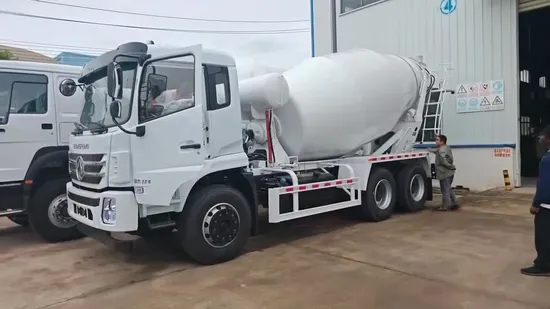
- Dongfeng 6x4 Concrete Mixer Truck, 8 m3 Drum: a middle size with a 20 t payload.
- Shacman F2000 6x4 Concrete Mixer Truck, 10 m3 Drum: a 340 hp engine for hilly routes.
- HOWO 6x4 Readymix Truck, 12 m3 Manganese Steel Drum: large drum on a three-axle chassis.
- Sinotruk HOWO 8x4 Concrete Mixer Truck, 18 m3 Drum: for long, steady readymix runs.
See all concrete mixers, and tipper trucks for supplying the plant. To learn how the drum and drive work, read how a concrete mixer truck works. Then send your pour size and site limits through the contact page.