Panel thickness tells you how much foam sits in the box walls, and so how fast outside heat can leak in. It does not tell you the box temperature, the foam quality, how well the joints and doors seal, or how strong the cooling unit is. On CLW reefers the same 80 mm polyurethane wall is used for both chilled and frozen work.
What the thickness figure means
A refrigerated box wall is a sandwich panel. It has an inner skin, an outer skin and a foam core. The thickness on a spec sheet usually means the foam core. Ask whether the figure is the core alone or the whole panel with its skins.
For a flat panel, heat flow through the foam falls as the foam gets thicker. In simple terms, twice the thickness lets through about half the heat. That is why thicker walls help on long, hot routes. But thickness is only one line in a longer story.
Same thickness, different temperatures
The table shows CLW refrigerated trucks with the same wall thickness. Their temperature ranges still differ, because the cooling unit sets the range. The wall sets how hard that unit must work.
| Truck | Wall | Cooling unit | Temperature range |
|---|---|---|---|
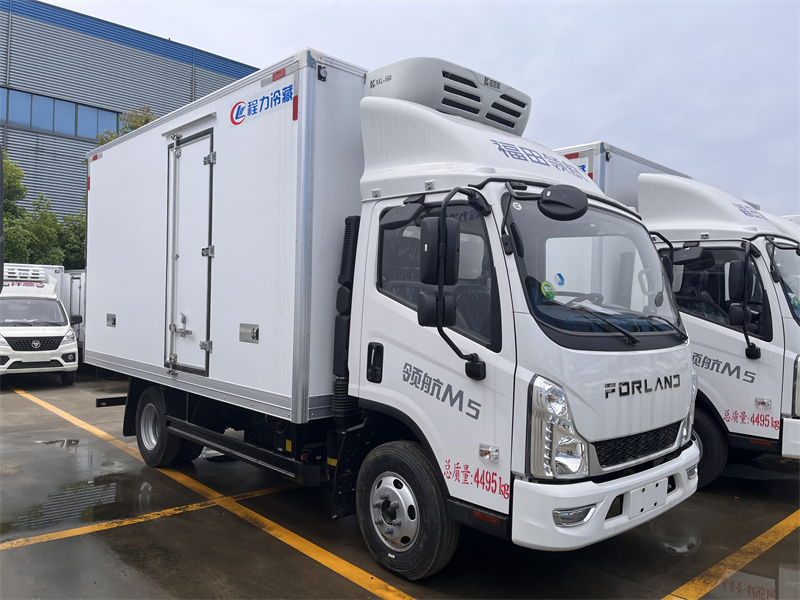
| Forland M5 4x2 | FRP skin, 80 mm PU | Hanya | About minus 15 °C |
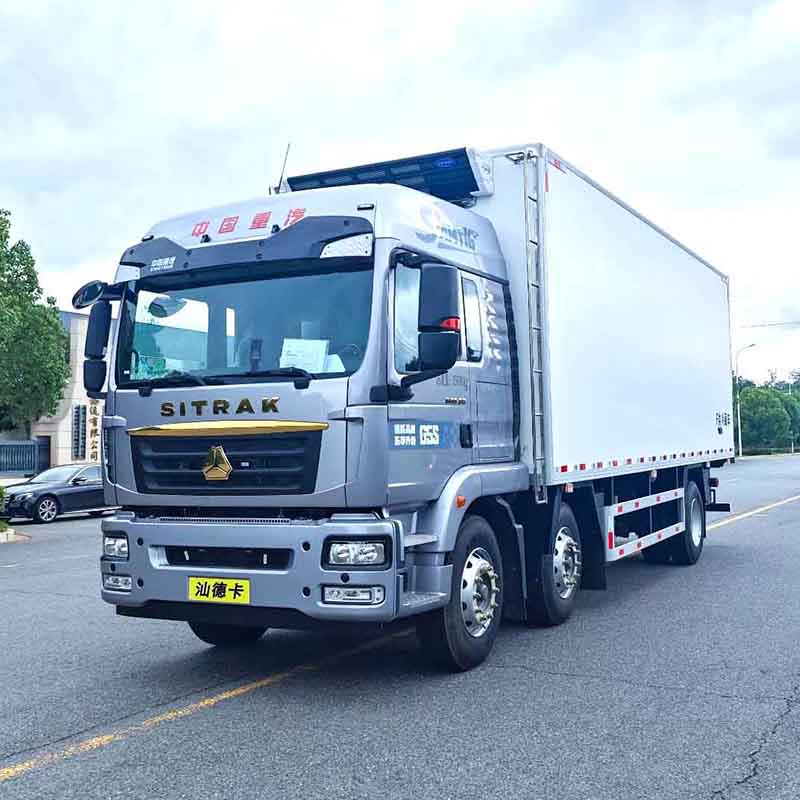
| Sinotruk HOWO 4x2, 5 t, meat hook rails | GRP skins, 8 cm PU foam | KC-500 | 0 to minus 15 °C |
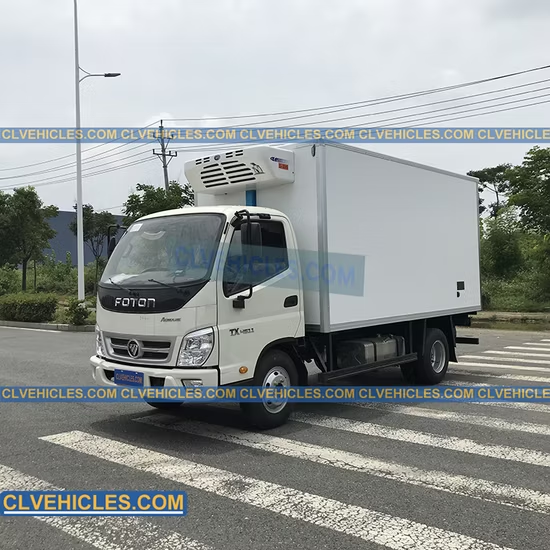
| Foton 4x2 freezer truck for fish | Fibreglass skins, 80 mm PU foam | Thermo King, Carrier or Hanxue | Minus 18 °C to 0 °C |
| Sinotruk HOWO 4x2, 10 t | FRP skin, 80 mm PU | Hanya or Songhan | 5 °C to minus 25 °C |
| Dongfeng 8x4, 9.6 m box | FRP skins, 80 mm PU, 100 mm on request | Hanya or SongHan | Plus 5 °C to minus 25 °C |
So a buyer cannot judge a reefer by wall thickness alone. A box with an 80 mm wall and a small unit will not hold the same temperature as one with a large unit.
What thickness does not tell you
- Foam type and density. Polyurethane and XPS foams insulate differently. Ask which foam is used and how it is fixed to the skins.
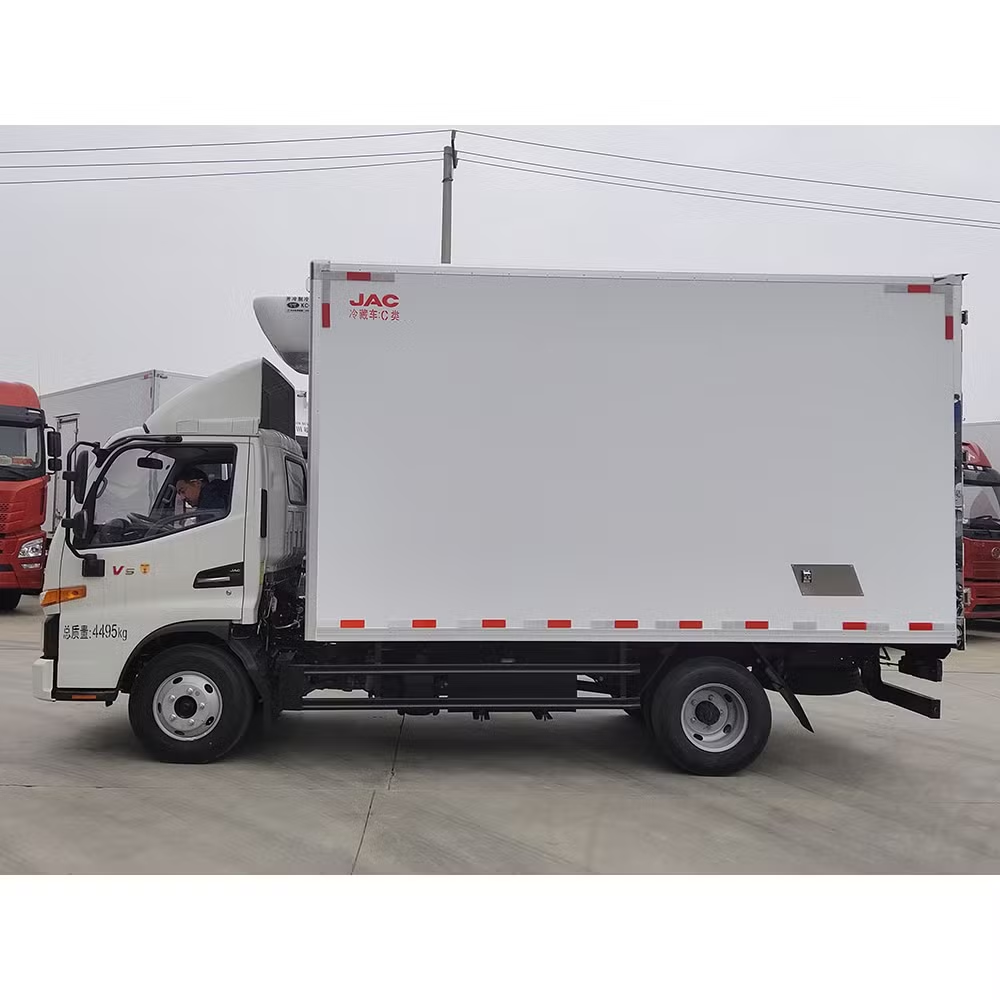
- Skin material. The JAC 4x2 box offers FRP, colour steel or stainless steel skins. Skins affect strength, cleaning and repair more than insulation.
- Cold bridges. Steel frames and corners can carry heat past the foam. The JAC box frame uses galvanised steel tube with waterproof wood strips to stop this.
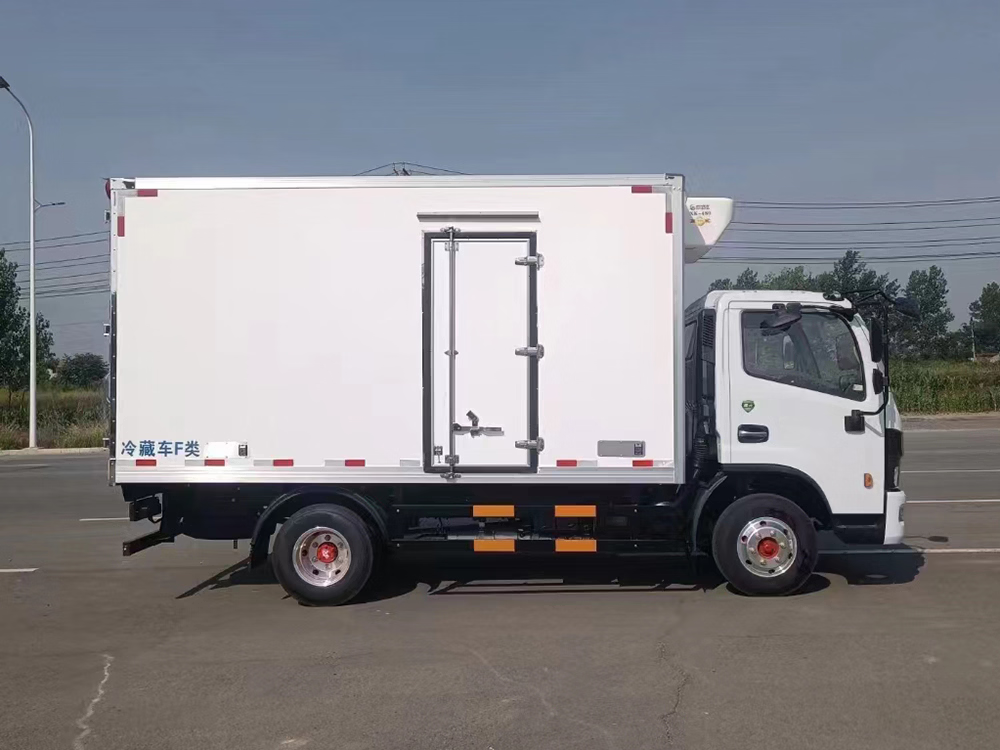
- Door seals. Doors open many times a day. The Dongfeng 4.1 m box has five-layer rubber seals on its rear doors.
- Floor build. The floor carries the load and the forklift or trolley. The Dongfeng 8x4 and Sinotruk HOWO 10 t boxes use a corrugated aluminium floor.
The space cost of a thicker wall
Every extra millimetre of wall comes off the inside, unless the outside of the box grows. Adding 20 mm to each wall takes about 40 mm off the inside width, height and length.
The Dongfeng 8x4 box is 9,600 x 2,450 x 2,500 mm inside, about 58 m3, with 80 mm walls. If it moved to 100 mm walls in the same outer size, it would lose roughly 2 m3. For dense cargo such as frozen meat this rarely matters. For light, bulky cargo such as flowers or bread it can matter.
When a thicker wall is worth it
Thicker walls pay back on long runs in hot weather with few door openings. Examples are fish from Mwanza to Dar es Salaam, or frozen goods from Mombasa to Nairobi. The unit runs less, and the box holds temperature better if the unit stops for a while.
On short city rounds with many stops, door openings let in more heat than the walls. Here the unit size, quick loading and good door seals often matter more than an extra 20 mm of foam.
What to ask for in the quotation
- A section drawing of the wall, roof and floor, with each layer and its thickness.
- Foam type and how it is bonded or injected.
- Inside box size after insulation.
- Door type, number of doors and seal design.
- Cooling unit brand, model and temperature range for your cargo.
Refrigerated trucks to compare
Each price below is the listed reference price (FOB China, ex-factory list). The written quotation fixes the final price.
- Forland M5 4x2 Light Refrigerated Truck, 4 m Freezer Box, 115 hp Diesel: town deliveries of frozen food, US$16,000-18,000.
- JAC 4x2 Refrigerated Truck, 4.1 m Insulated Box, 1,200 kg Payload: a choice of skin materials, US$17,150-21,800.
- Dongfeng 4x2 Refrigerated Truck, 4.1 m Box, 1,100 kg Payload: many stops with well-sealed rear doors, US$17,800-21,800.
- Foton 4x2 Freezer Truck for Fresh Fish, Fibreglass Box to -18 C: fish from the lake or coast to market, US$20,000-30,000.
- Sinotruk HOWO 4x2 Refrigerated Truck, 5 t Payload, Meat Hook Rails: hanging meat from the abattoir, US$12,500-19,996.
- Sinotruk HOWO 4x2 Refrigerated Truck, 10 Ton Payload, 6.8 m Freezer Box: dairy and wholesale food, US$34,800-35,800.
- Dongfeng 8x4 Refrigerated Truck, 9.6 m Insulated Box to Minus 25 °C: long hot routes, with 100 mm walls on request, US$64,300-66,800.
See every reefer in the cargo truck range, and the refrigerated trailer under semi-trailers. The page on how a refrigerated truck works explains the cooling cycle. For a route example, read refrigerated trucks for the Kenya cold chain. Then contact CLW with your cargo and its temperature.