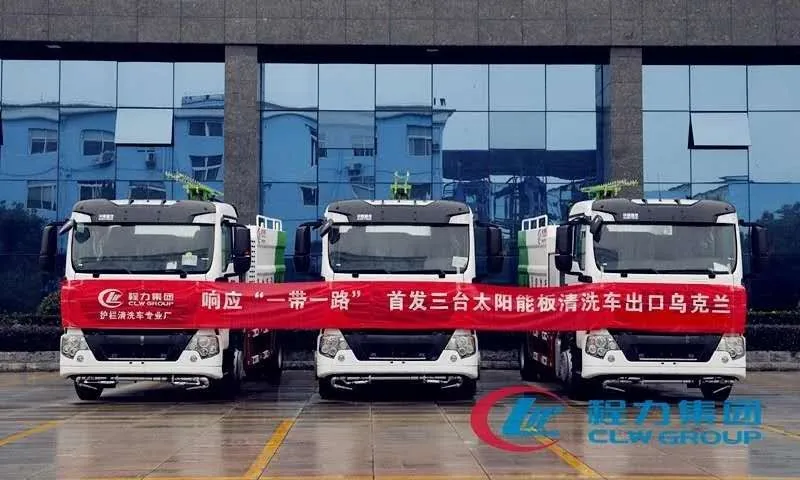
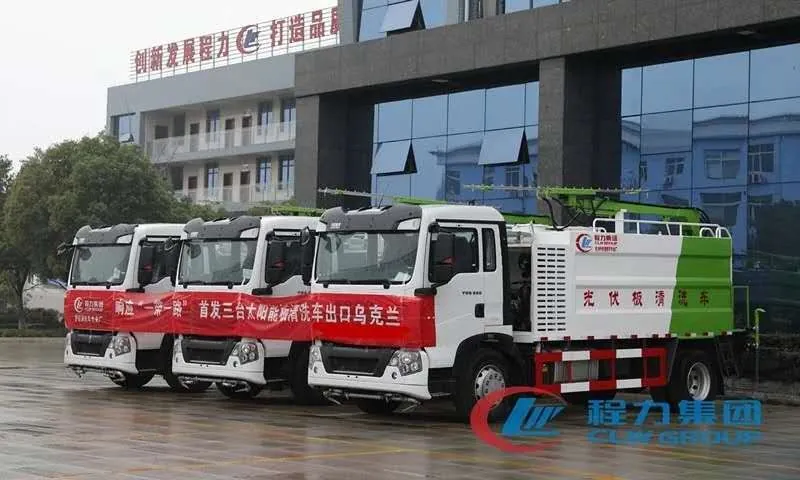
The CLW factory designed and built its first three solar panel cleaning trucks and exported them to Ukraine. A banner at the plant, written in Chinese, marked this first dispatch of three units. The trucks were tested several times to confirm that they clean panels fast without damaging them.
The order
Solar panels left outdoors collect dust, bird droppings and insect waste. This dirt lowers the power output of the plant. A cleaning truck washes the panels where they stand, so the plant keeps its generating efficiency without crews climbing onto the panels.
The trucks
The trucks have white cabs and white and green tank bodies, with a boom arm mounted on top. The vehicle was designed around the features of solar panels.
- Water tank: holds the cleaning water. Its size sets how many panel rows can be washed before a refill.
- Water pump: sends water to the cleaning head at the right flow and pressure.
- Boom arm: holds the cleaning head over the panels. Reach and height decide how many rows it covers from one position.
- Cleaning head: does the washing and is matched to the panel surface.
- Hydraulics and controls: move the arm, guided from the cab or a control position.
The work cycle is simple. The crew fills the tank, drives along a row, washes one section at a time and returns to a water point when the tank runs low. Gentle washing matters more than force, because hard brushes or strong jets can scratch panel glass. Hard water can also leave mineral marks.
Photos
Related trucks on this site
This site has no separate page for solar panel cleaning trucks yet. The trucks below carry a water tank and pump, which is the starting point for a cleaning body:
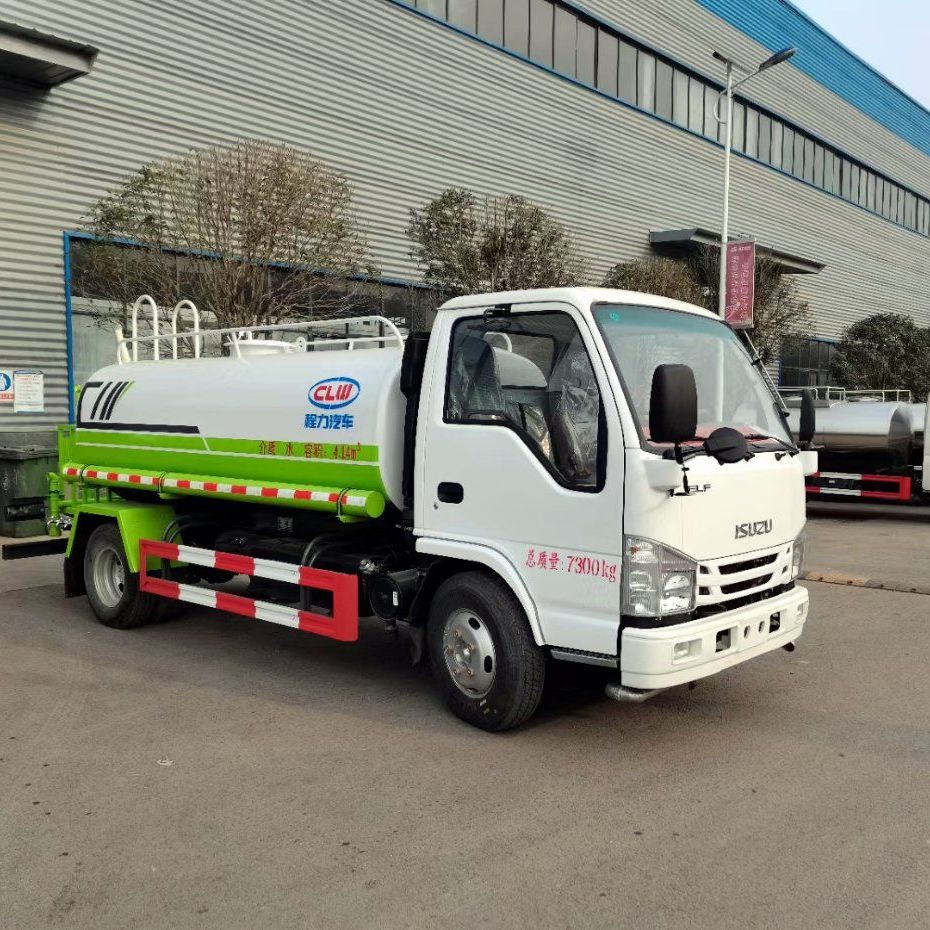
- Isuzu 4x2 Small Water Bowser, 98 hp Engine, 28 m Water Cannon: a small tanker for tight rows.
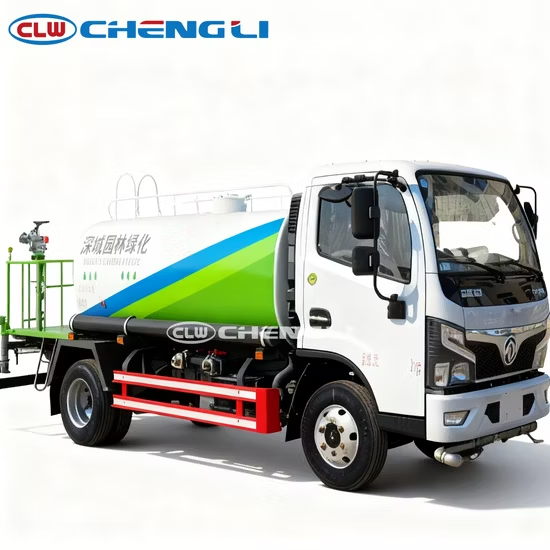
- Dongfeng D6 Light 4x2 Water Truck, 5,000 Litre Tank, Small Water Bowser: a light chassis for soft site tracks.
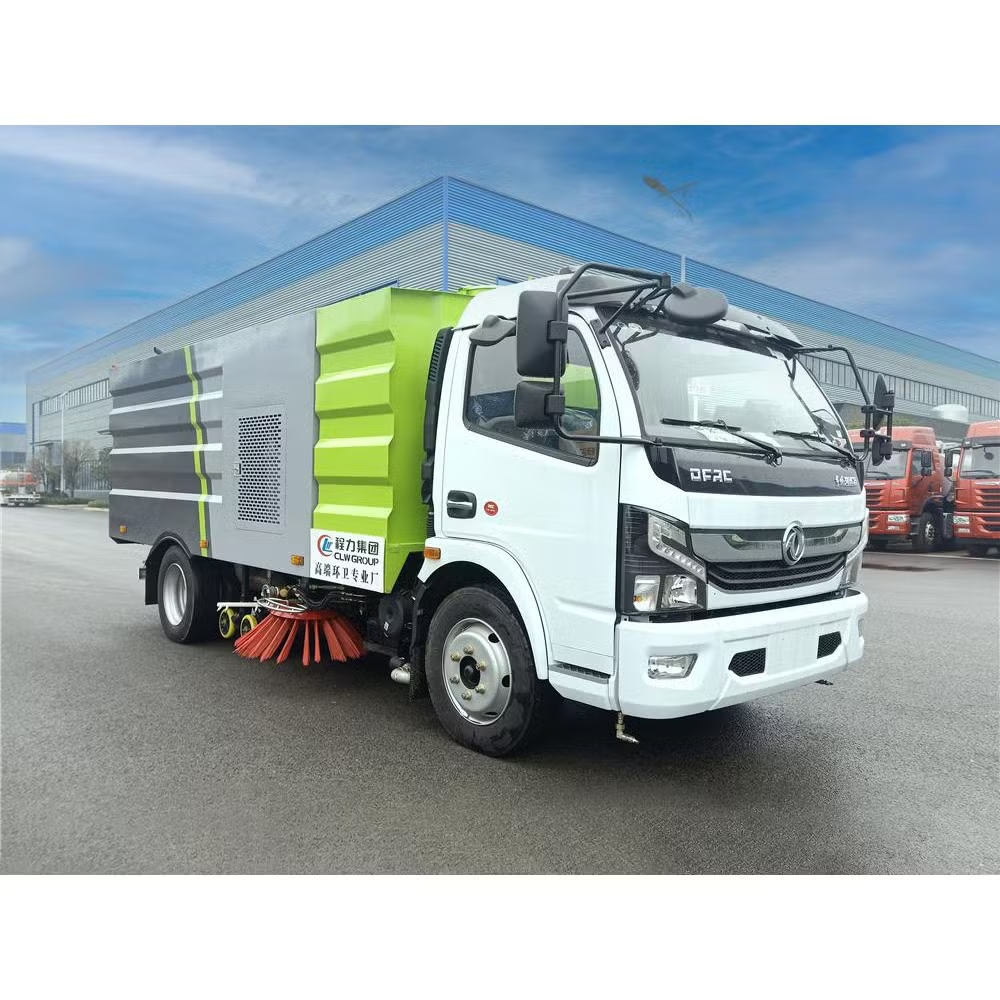
- Dongfeng Dolica 4x2 Wash and Sweep Truck, 5 m³ Dustbin, 4 m³ Water Tank: a washing truck for site roads.
See also the water bowsers and road sweepers ranges. Send your panel width, tilt and row spacing when you contact the CLW team.