Choose a water bowser by how much water the job uses and how far the truck travels to refill. Small 4x2 tankers of about 5,000 to 12,500 litres suit village supply, street washing and small sites, while 6x4 water bowsers of 20,000 to 24,000 litres suit dust suppression on haul roads and large road compaction jobs. Remember that 1,000 litres of water weighs about 1 tonne, so the tank size must match the chassis.
Water weight and chassis choice
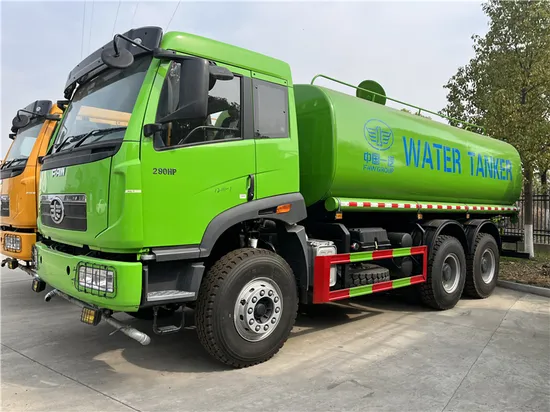
Because 1,000 litres weighs about 1 tonne, a 12,000 litre tank carries about 12 tonnes of water before the weight of the tank, pump and body. A 20,000 litre tank carries about 20 tonnes. That is why smaller and medium tanks usually sit on 4x2 chassis, while 20,000 litres and above need a 6x4. Water also surges when the truck brakes or turns, so the chassis must be rated for the full load with a margin, and the tank needs baffles.
Match tank size to the job
| Job | Typical tank size | Chassis |
|---|---|---|
| Village, school and site water supply | 5,000 to 12,000 litres | Light or medium 4x2 |
| Street washing and town greening | 8,000 to 12,500 litres | 4x2 |
| Road compaction and earthworks | 12,000 to 20,000 litres | 4x2 or 6x4 |
| Dust suppression on mine and quarry haul roads | 20,000 to 24,000 litres | 6x4 |
These are starting points, not rules. A short refill trip makes a smaller tank efficient, while a long trip to a borehole, dam or river favours a larger tank.
4x2 or 6x4
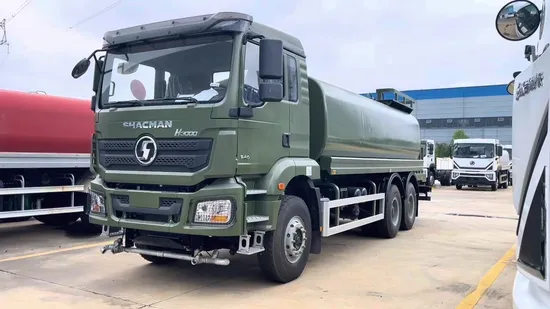
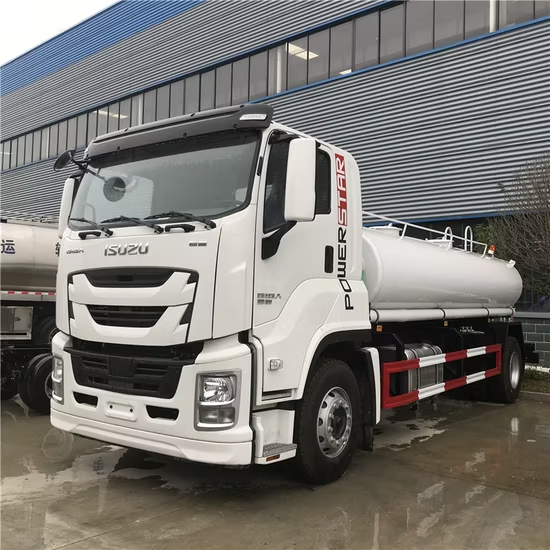
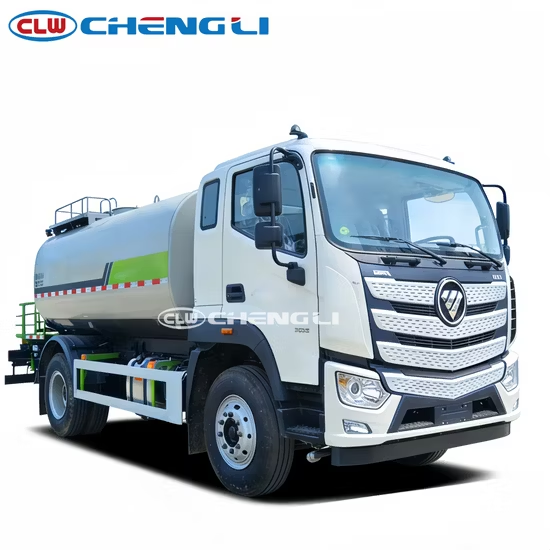
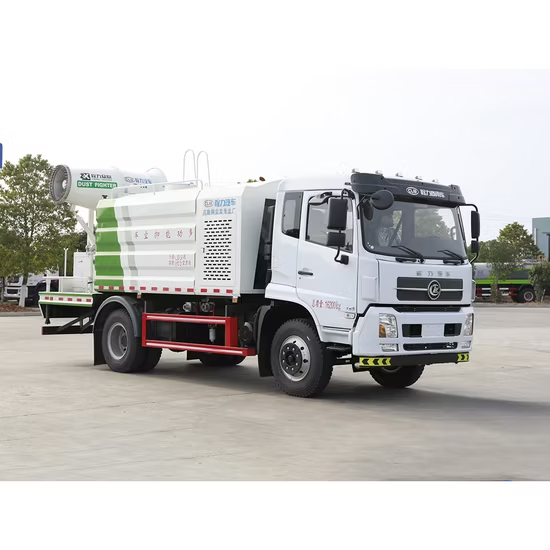
A 4x2 bowser is cheaper to buy and run, turns tightly in town and is easy to drive on paved roads. Examples are the Dongfeng 4x2 12,000 litre bowser with fog cannon at a listed reference price of US$28,800, and the Foton 4x2 12,500 litre bowser listed at US$22,000 to 30,000. A 6x4 carries 20,000 litres or more and copes better with gravel haul roads and site ramps, such as the FAW 6x4 20,000 litre bowser with Weichai WP10 at US$43,000, the Shacman H3000 6x4 20,000 litre bowser at US$39,000, and the Isuzu 6x4 24,000 litre bowser with rear water cannon (price on request).
Pump flow, sprays and cannon range
The water pump is usually driven from the gearbox PTO. Ask for the pump model, its rated flow and the cannon range in the quotation, since these decide how wide a strip of road you can wet in one pass. Common outlets include:
- Front spray bar: for street washing and wetting the road ahead.
- Rear spray bar or sprinklers: even coverage for compaction and dust control.
- Water cannon on the rear platform: for wide haul roads, stockpiles and tree watering.
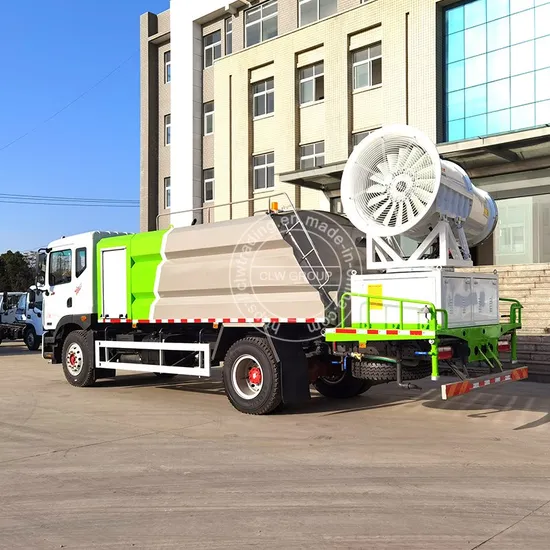
- Mist or fog cannon: a fine spray for dust at crusher sites and in towns, as on the CLW 4x2 dust suppression mist truck.
Carbon steel or stainless steel
Carbon steel tanks, often Q235 grade, cost less and suit dust suppression, construction and washing water. Ask for an internal anti-rust coating. For drinking water, choose stainless steel or a food-grade lining, such as the 6x4 stainless steel 20,000 litre food-grade tanker. Its listed range is wide, so confirm the exact steel grade and price in the quotation. Health authorities may have their own rules for drinking water tankers, so check locally before you order.
Self-filling, baffles and fittings
- Self-filling suction hose: lets the pump draw water from a river, dam or storage tank without a separate pump. Ask for the hose length and suction lift.
- Baffles: internal plates that stop water surging. They protect the chassis and make braking safer.
- Manhole, ladder and walkway: for inspection and top filling.
- Drain valve and level gauge: for cleaning the tank and checking the load.
Prices and next steps
All prices above are reference prices (FOB China, ex-factory list). The final price depends on chassis, engine, tank, pump, drive side and shipping, and is fixed in the written quotation. See the water bowser price guide, browse all water bowsers or compare with our fuel tankers. Check the drive side for your country on the drive side by country page, read how to buy, and tell us your job, tank size and water source through the contact page.